Before you start
What this method is trying to achieve
Chocolate cake dries out most easily when flour is overmeasured or the bake continues after the crumb is set. Weigh the flour, mix only until smooth, divide the batter evenly and start checking before the upper end of the baking range.
Success looks like
Know the target before you cook
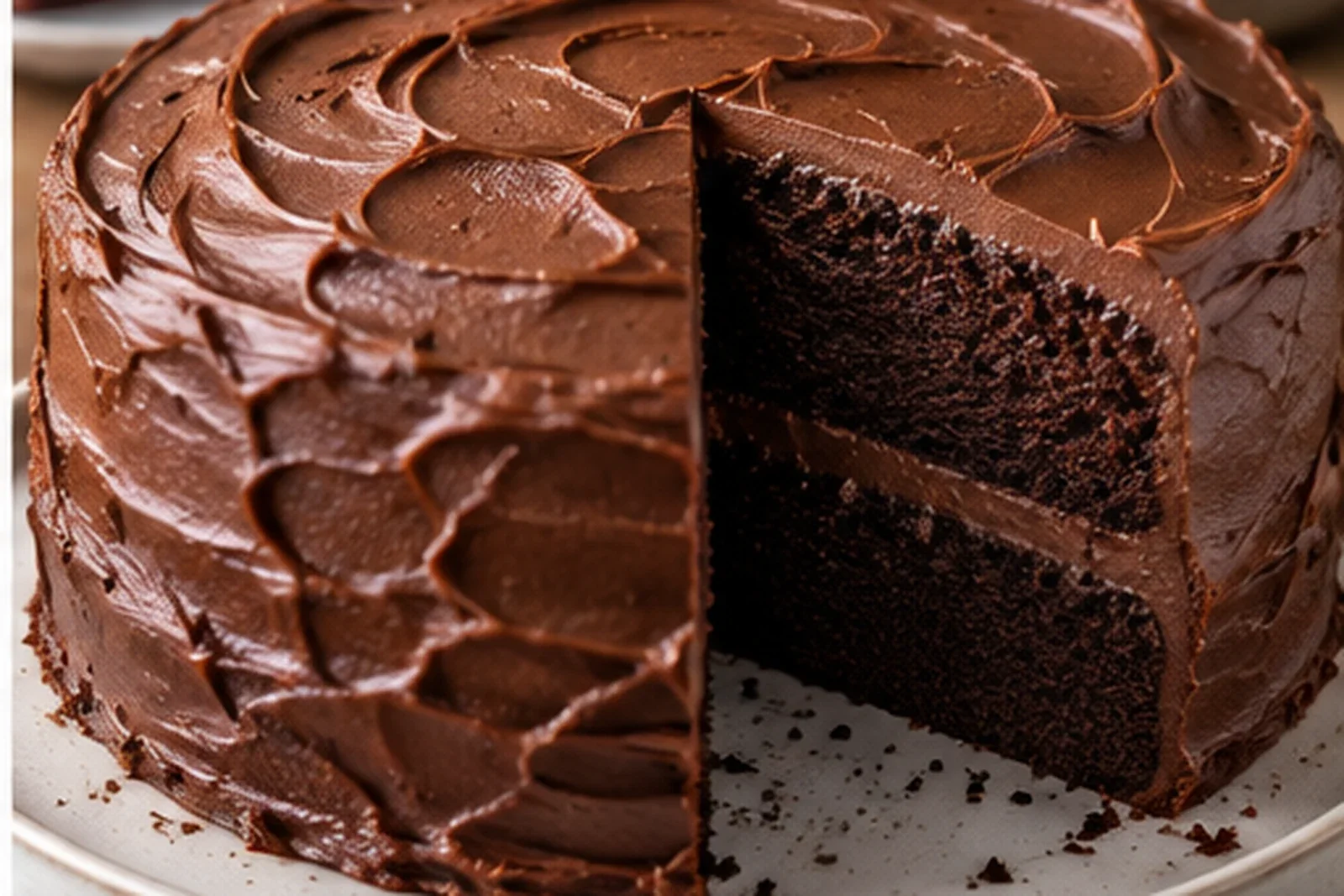
The layers should rise evenly, feel springy at the center and cut into a moist tender crumb without a wet streak or dry sawdust texture.
Ingredients
What you need
Cake
- 270 g all-purpose flour
- 64 g unsweetened cocoa powder
- 350 g granulated sugar
- 1.5 tsp baking powder
- 1.5 tsp baking soda
- 0.75 tsp fine salt
- 2 large eggs, room temperature
- 240 ml whole milk
- 120 ml neutral oil
- 2 tsp vanilla extract
- 240 ml hot brewed coffee or hot water
Frosting
- 1 batch chocolate frosting, fully prepared and cooled as required
Method
Cook by the cues, not just the clock
Prepare pans
Heat the oven to 350°F / 175°C. Grease two 9-inch round pans, line the bottoms with parchment, and lightly coat the sides.
Combine dry ingredients
Whisk or sift flour, cocoa, sugar, baking powder, baking soda and salt until evenly blended.
Mix batter
Add eggs, milk, oil and vanilla, mixing only until smooth. Blend in the hot coffee or water in a steady stream; the batter will be fairly thin.
Bake to the crumb cue
Divide evenly between the pans and bake until the centers spring lightly and a tester comes out clean or with only a few moist crumbs, about 30 to 35 minutes depending on the pans and oven.
Cool and frost
Cool the layers in their pans briefly, turn onto racks, and cool completely before frosting and stacking.
Critical checkpoints
Stop here and check
Before oven: batter divided evenly?
Both pans hold nearly the same depth of batter.Redistribute batter before baking so one layer does not overbake while the other catches up.
Near the endpoint: crumb set but not dried out?
The center springs lightly and a tester shows no wet batter, ideally only a few moist crumbs.Remove once set instead of extending time for a completely dry tester.
Before frosting: layers fully cool?
The layers feel room temperature through the center and no steam is trapped under them.Wait longer before frosting if any warmth remains.
If yours looks different
Route the failure before changing the recipe
After cooking
Storage, reheating & substitutions
Storage
Keep the frosted cake covered at cool room temperature for a short period or refrigerate for longer storage. Bring chilled slices toward room temperature before serving.
Reheating
Warm a refrigerated slice only very briefly; overheating drives off more moisture.
Substitutions
Hot water may replace coffee. Natural or Dutch-process cocoa can be used only when the chosen formula is compatible with its leavening system; do not swap casually in unrelated recipes.
Evidence
Sources & methodology
Technical claims and method decisions are tied to sources. Recipe-specific advice is not presented as a universal food-science law.
- Basic Chocolate CakeFood Network Kitchen
Food Network Kitchen uses a thin cocoa batter, divides it between round pans, bakes until a center tester is clean and cools the layers on racks.
publisherPassage verified - Chocolate CakeKing Arthur Baking
King Arthur uses weighed flour, cocoa, butter plus oil, milk and coffee or water in a chocolate cake designed for a moist crumb.
publisherPassage verified