Before you start
What this method is trying to achieve
Cookie spread is controlled before the tray ever reaches the oven. This version uses weighed flour, butter that is soft but not greasy, a brief chill and fully cooled sheet pans between batches. Bake by edge color rather than waiting for the center to look dry; the cookies finish setting on the hot pan.
Success looks like
Know the target before you cook
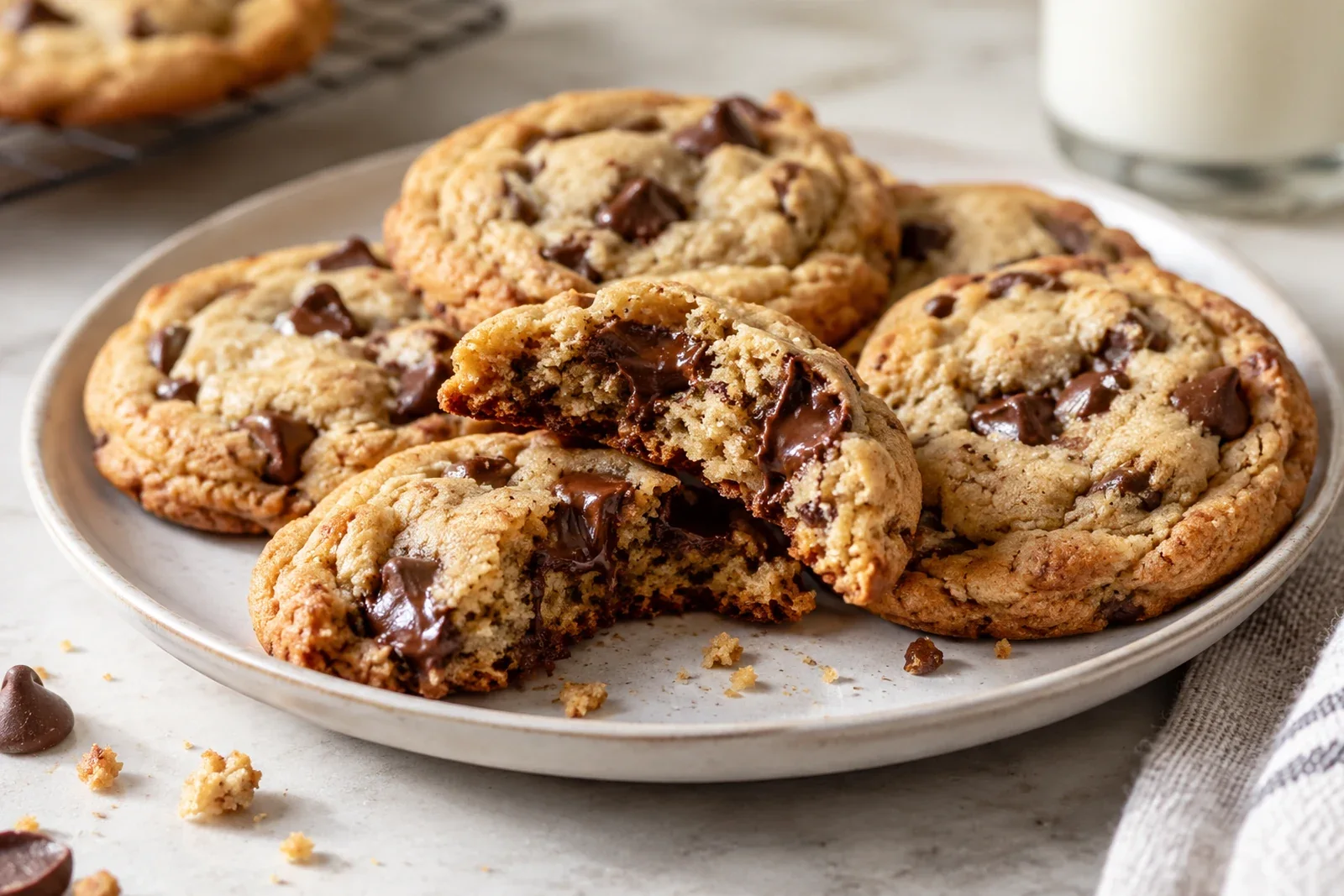
The cookies should be round with browned, crisp-looking edges and soft centers that remain slightly pale when they first leave the oven. They should spread enough to look relaxed, not merge into thin greasy puddles.
Ingredients
What you need
Dough
- 170 g unsalted butter, softened but still cool to the touch — It should indent under a finger without looking melted or greasy.
- 150 g light brown sugar
- 100 g granulated sugar
- 1 large egg
- 1 large egg yolk — Adds richness without as much extra water as another whole egg.
- 2 tsp vanilla extract
Dry
- 240 g all-purpose flour — Weighing is strongly preferred for predictable spread.
- 1/2 tsp baking soda
- 3/4 tsp fine salt
Mix-ins
- 250 g semisweet chocolate chips or chopped chocolate
Method
Cook by the cues, not just the clock
Cream
Beat the cool-soft butter with both sugars just until creamy and slightly lightened, about 2 minutes. Beat in the egg, yolk and vanilla until combined.
Finish dough
Whisk the flour, baking soda and salt together, then mix them into the butter mixture on low speed or by hand just until the dough is uniform. Fold in the chocolate.
Chill
Cover and chill the dough for 30 minutes. Meanwhile heat the oven to 190°C / 375°F and line cool baking sheets with parchment.
Portion
Scoop portions of about 40 g each and place them at least 5 cm / 2 inches apart on the prepared sheet.
Bake
Bake one sheet at a time until the edges are medium golden brown while the centers remain lighter and soft, usually 10 to 12 minutes. Let the cookies stand on the sheet for 5 minutes before moving them to a rack.
Critical checkpoints
Stop here and check
Before scooping: is the dough cool and firm?
The dough holds a rounded scoop instead of immediately slumping into a glossy puddle.If the dough is very soft or greasy, chill it longer before baking the first tray.
First test cookie: did it spread too far?
A test cookie becomes thin, very wide or greasy before its edges set.Keep the remaining dough chilled, verify the oven is fully hot, weigh the flour, and make sure the next sheet pan is cool.
At removal: are the edges browned but the center still soft?
The perimeter is clearly colored while the middle remains lighter and looks just set.Remove the tray and let carryover heat finish the center instead of baking until the entire cookie is hard.
If yours looks different
Route the failure before changing the recipe
After cooking
Storage, reheating & substitutions
Storage
Store completely cooled cookies in an airtight container at room temperature for up to 4 days. Freeze shaped dough balls or baked cookies for longer storage.
Reheating
Warm a baked cookie for a few minutes in a low oven if you want the chocolate soft again.
Substitutions
Use chopped semisweet chocolate instead of chips if preferred. Dark brown sugar deepens molasses flavor. Do not replace all butter with melted butter unless you also redesign the flour and chilling balance.
Evidence
Sources & methodology
Technical claims and method decisions are tied to sources. Recipe-specific advice is not presented as a universal food-science law.
- Classic Chocolate Chip CookiesKing Arthur Baking
King Arthur's current recipe bakes chocolate chip cookies on prepared sheets until the edges are deeply colored while the centers remain lighter, then lets them set on the pan.
publisherPassage verified - Why are my cookies spreading?King Arthur Baking
King Arthur identifies overly warm butter, inaccurate ratios, weak leavening, a cool oven, hot sheet pans, and insufficient chilling as common drivers of excessive cookie spread.
publisherPassage verified