Before you start
What this method is trying to achieve
Pound cake is intentionally rich and close-crumbed, but it should not be dry or crumbly. Beat the butter and sugar until light, add the eggs gradually, alternate the dry and liquid ingredients, and start checking the loaf before the upper end of the baking window.
Success looks like
Know the target before you cook
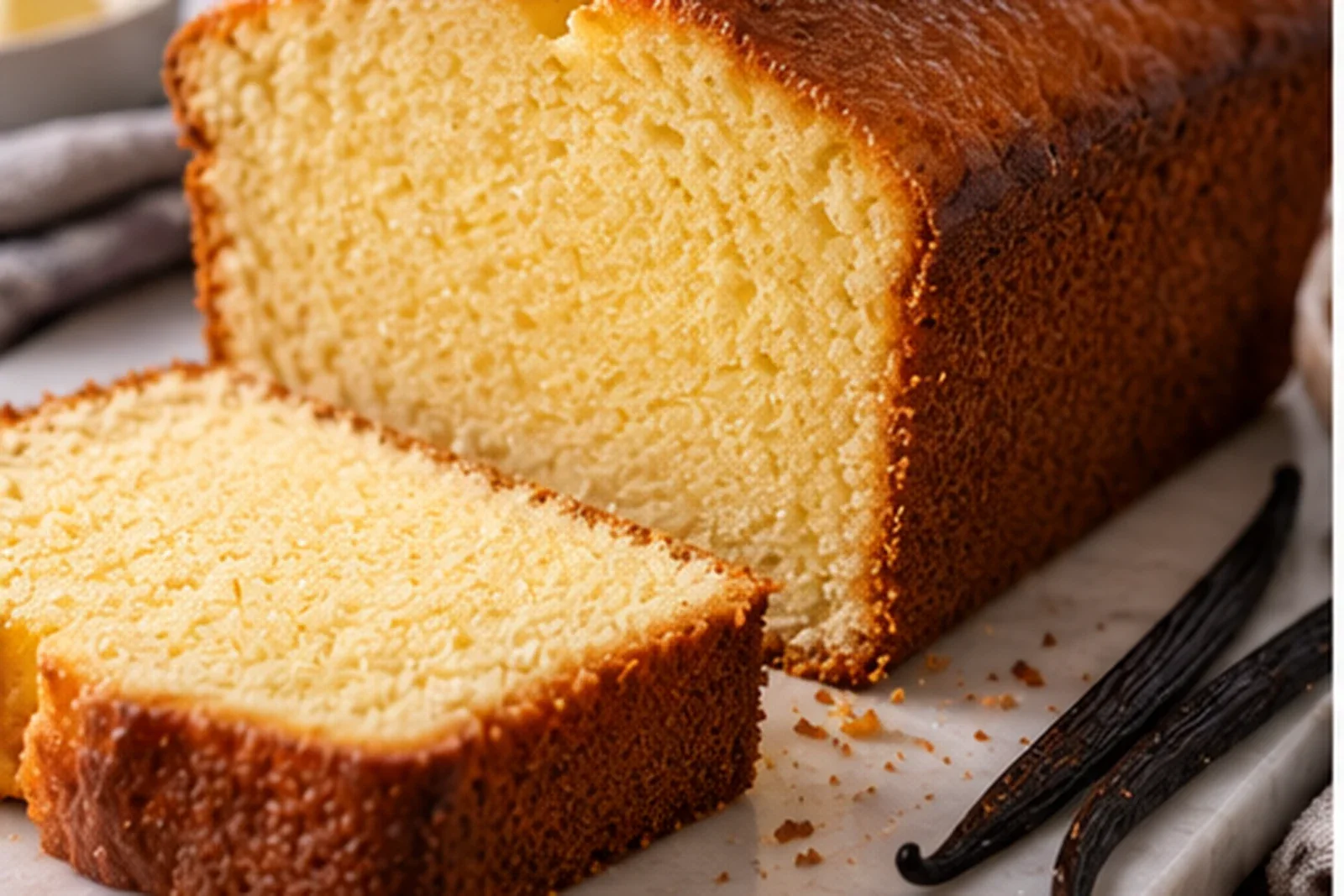
The loaf should rise evenly, spring back lightly on top and slice into a fine buttery crumb that holds together without dryness.
Ingredients
What you need
Cake
- 227 g salted butter, softened to room temperature
- 198 g granulated sugar
- 4 large eggs, room temperature
- 240 g all-purpose flour
- 1.5 tsp baking powder
- 0.5 tsp fine salt
- 113 ml whole milk, room temperature
- 1 tsp vanilla extract
Method
Cook by the cues, not just the clock
Prepare
Heat the oven to 350°F / 177°C and grease a 9-by-5-inch loaf pan.
Cream
Beat the butter until light, then gradually beat in the sugar until the mixture is visibly fluffy.
Add eggs
Beat in the eggs one at a time, scraping the bowl between additions.
Finish the batter
Whisk flour, baking powder and salt separately. Add the dry mixture and milk alternately to the butter mixture, beginning and ending with the dry ingredients; mix only until smooth.
Bake
Spread into the pan and bake about 60 to 65 minutes, until the top springs lightly and a long tester inserted in the center comes out clean. Cool before slicing.
Critical checkpoints
Stop here and check
After creaming: visibly light and fluffy?
The butter-sugar mixture is paler and aerated instead of dense and greasy.Continue creaming before adding eggs if it still looks heavy.
Near 60 minutes: center just done?
The top springs lightly and a long tester comes out clean or with a few dry crumbs.Remove once done; extra bake time drives off more moisture.
After cooling: dry or crumbly slices?
The loaf breaks into dry crumbs or feels dry throughout.Use cake-dry-or-crumbly to check flour measurement, bake exposure, pan and ingredient balance.
If yours looks different
Route the failure before changing the recipe
After cooking
Storage, reheating & substitutions
Storage
Wrap the completely cooled loaf tightly and keep at room temperature for short storage. Freeze well wrapped for longer storage.
Reheating
Serve at room temperature. If desired, warm individual unfrosted slices very briefly.
Substitutions
Use unsalted butter only if the salt is adjusted. Keep eggs and milk near room temperature to help the batter emulsify smoothly.
Evidence
Sources & methodology
Technical claims and method decisions are tied to sources. Recipe-specific advice is not presented as a universal food-science law.
- 8 reasons your cakes turn out dryKing Arthur Baking
King Arthur identifies excess flour and excessive baking among common reasons cakes turn dry and recommends weighing flour.
publisherPassage verified - King Arthur's Original Pound CakeKing Arthur Baking
King Arthur creams butter and sugar, adds eggs gradually, alternates dry and liquid ingredients and bakes until the center tester comes out clean.
publisherPassage verified