Before you start
What this method is trying to achieve
Pumpkin pie is a custard, so the center should not look completely firm when it leaves the oven. Mix the filling smoothly, load it into a chilled crust, then watch the movement of the center instead of waiting for a rigid matte surface.
Success looks like
Know the target before you cook
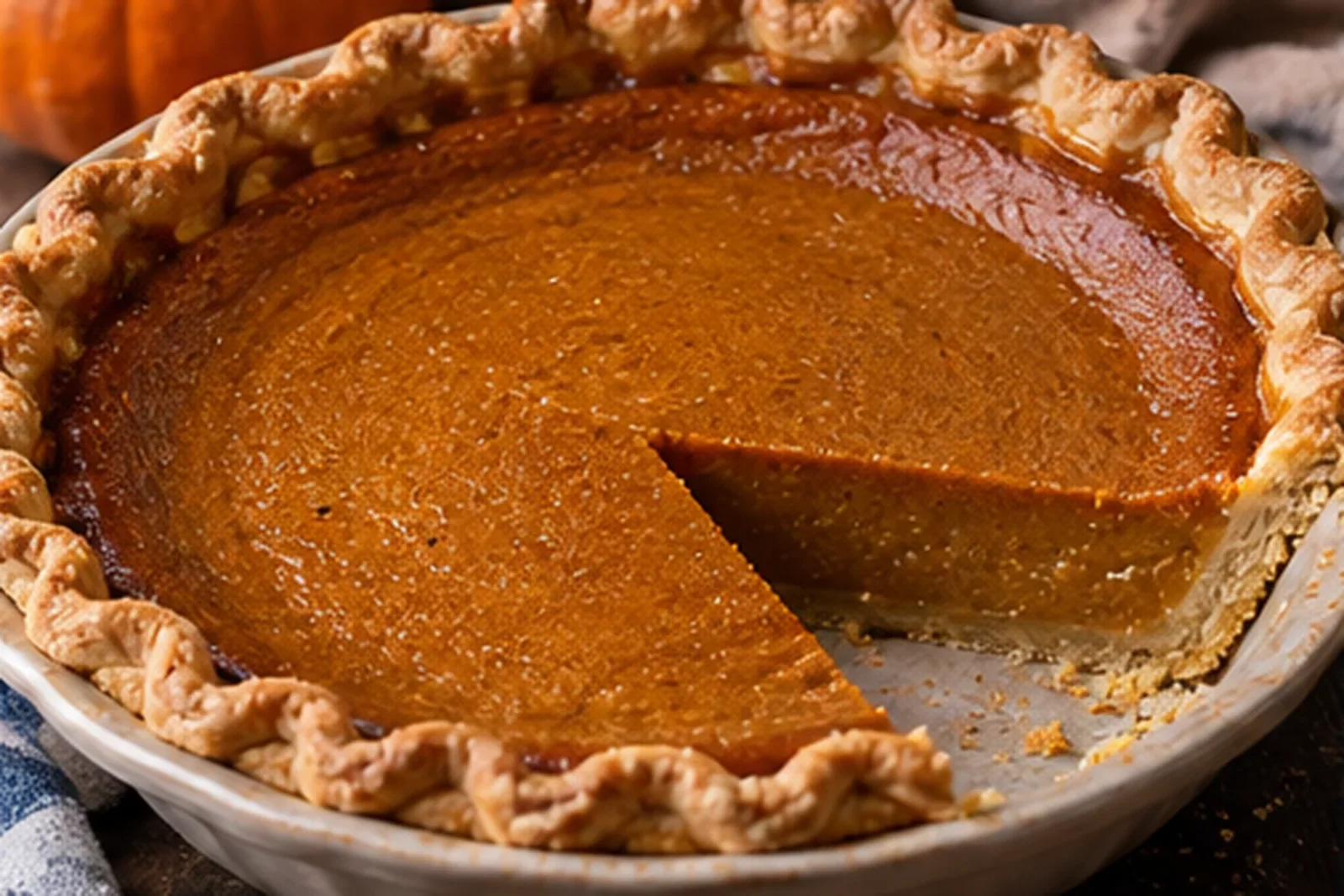
The cooled pie should slice cleanly with a smooth creamy pumpkin filling and an intact surface, with no deep fissures caused by an over-tightened egg custard.
Ingredients
What you need
Crust
- 1 9-inch unbaked pie crust, chilled in the pan
Filling
- 99 g granulated sugar
- 106 g brown sugar, packed
- 1 tbsp all-purpose flour
- 1/2 tsp table salt
- 1 tsp ground ginger
- 1 tsp ground cinnamon
- 1/2 tsp ground nutmeg
- 3 large eggs, beaten
- 425 g pumpkin purée
- 340 g evaporated milk
Method
Cook by the cues, not just the clock
Heat the oven and chill the crust
Preheat the oven to 400°F. Keep the fitted pie crust refrigerated until the filling is ready so the fat stays firm.
Mix the spiced base
Whisk both sugars, flour, salt and spices until evenly blended, then whisk in the eggs and pumpkin until smooth.
Finish the filling
Whisk in the evaporated milk gradually until the filling is uniform, then pour it into the chilled shell on a baking sheet.
Bake to a wobble, not firmness
Bake until the filling is set around the outer 2 inches while the center still moves softly when the pan is nudged, about 45 to 50 minutes.
Cool completely
Transfer the pie to a rack and let it cool fully before refrigerating or slicing.
Critical checkpoints
Stop here and check
Is the center still softly wobbly?
The edges are set but a broad center area moves like soft gelatin rather than sloshing liquid.Remove the pie at this stage; a rigid center is already moving toward overbaked.
Is the crust edge darkening too fast?
The rim is browning before the custard reaches its endpoint.Shield the rim with foil or a pie shield while the filling finishes.
Did the surface crack?
Fissures appear around the edge or across the center, often after the filling became very firm.Use CookClue’s pumpkin-pie-cracked diagnosis to check overbaking, carryover heat and oven accuracy.
If yours looks different
Route the failure before changing the recipe
After cooking
Storage, reheating & substitutions
Storage
Cool completely, then cover and refrigerate. Keep leftovers refrigerated.
Reheating
Pumpkin pie is usually served cool or at room temperature; avoid reheating the whole pie because extra heat can tighten the custard further.
Substitutions
Use plain pumpkin purée rather than pumpkin-pie filling so the sugar and spice balance stays controlled. A trusted unbaked 9-inch pie crust can be used for the shell.
Evidence
Sources & methodology
Technical claims and method decisions are tied to sources. Recipe-specific advice is not presented as a universal food-science law.
- How to keep pumpkin pie from crackingKing Arthur Baking
King Arthur identifies overbaking as the main cracking mechanism and explains that residual heat can continue tightening the egg custard even after the pie leaves the oven.
publisherPassage verified - Pumpkin PieKing Arthur Baking
King Arthur instructs bakers to remove pumpkin pie when it is set near the edges but still wobbly in the center because carryover heat finishes the set.
publisherPassage verified