Before you start
What this method is trying to achieve
A classic vanilla layer cake is simple enough that technique shows clearly. Weigh the flour, keep the dairy and eggs close to room temperature, mix only as long as needed for a smooth batter and protect the layers from sticking with parchment-lined pans.
Success looks like
Know the target before you cook
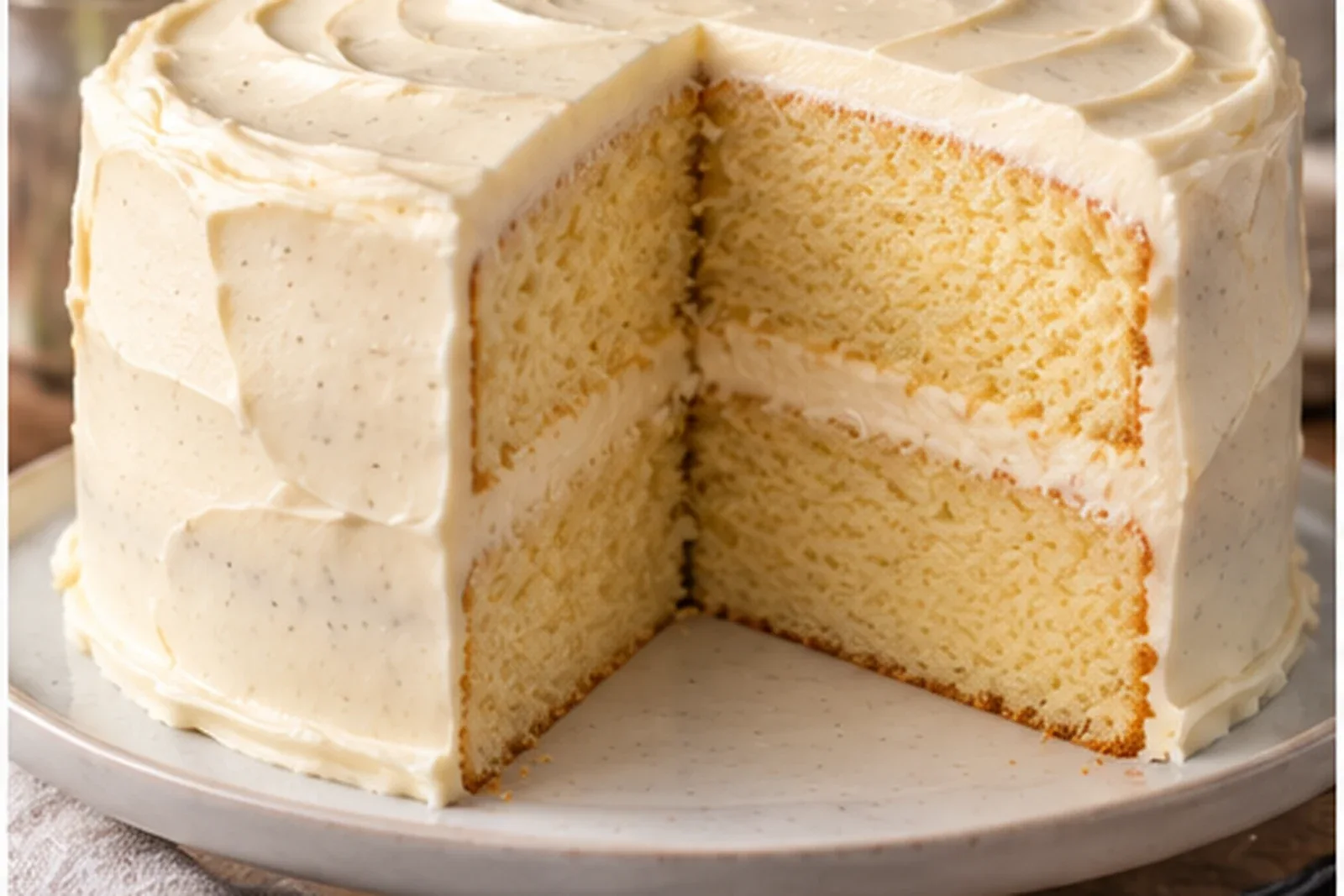
The cake should have an even pale-golden crumb, a clear vanilla aroma, level layers and clean pan release.
Ingredients
What you need
Cake
- 300 g granulated sugar
- 300 g all-purpose flour
- 2.5 tsp baking powder
- 0.75 tsp fine salt
- 170 g unsalted butter, softened
- 300 ml whole milk, room temperature
- 1 tbsp vanilla extract
- 4 large eggs, room temperature
Frosting
- 170 g unsalted butter, softened
- 340 g confectioners' sugar
- 2 tsp vanilla extract
- 45 ml milk, plus a little more if needed
- 1 pinch fine salt
Method
Cook by the cues, not just the clock
Prepare the pans
Heat the oven to 350°F / 177°C. Grease two 9-inch round pans, line the bottoms with parchment and lightly grease the parchment.
Build the batter
Whisk flour, baking powder and salt. Beat the softened butter and sugar until combined and lighter, then add eggs gradually and mix in the vanilla.
Add milk and flour
Add the dry ingredients and milk in alternating additions, mixing only until the batter is smooth and uniform.
Bake
Divide evenly between the pans and bake about 30 to 35 minutes, until the centers spring lightly and a tester comes out clean.
Cool and frost
Cool the layers briefly in the pans, loosen the edges, turn out onto racks and remove the parchment. Frost with vanilla buttercream only when fully cool.
Critical checkpoints
Stop here and check
Before batter: parchment in place?
Both pan bottoms are fully covered and sides are evenly greased.Finish lining and greasing before mixing the batter.
At doneness: center springs and tester clean?
The center looks set and the tester shows no wet batter.Remove promptly once done to protect moisture.
At unmolding: layer sticking?
The layer holds to the pan, tears at the bottom or leaves large patches behind.Use cake-stuck-to-pan to check pan preparation and cooling timing.
If yours looks different
Route the failure before changing the recipe
After cooking
Storage, reheating & substitutions
Storage
Keep the frosted cake covered. Store at cool room temperature briefly or refrigerate if the frosting requires it.
Reheating
Do not heat a frosted layer cake. Let chilled slices come toward room temperature before serving.
Substitutions
A small amount of almond extract can complement vanilla but is optional. Keep the flour type and liquid balance consistent with the formula.
Evidence
Sources & methodology
Technical claims and method decisions are tied to sources. Recipe-specific advice is not presented as a universal food-science law.
- Baking trials: What's the best way to prep your cake pan to prevent sticking?King Arthur Baking
King Arthur's pan tests identify parchment plus nonstick spray as the most reliable standard approach for clean cake release.
publisherPassage verified - Golden Vanilla CakeKing Arthur Baking
King Arthur uses softened butter, milk, vanilla and eggs in a sturdy vanilla cake formula suitable for layers.
publisherPassage verified