Before you start
What this method is trying to achieve
Key lime pie gets much of its body before and during baking: yolks are whipped for volume, condensed milk thickens the base, and lime juice tightens the mixture further. The oven finishes the egg custard, while refrigeration turns the warm wobble into a clean slice.
Success looks like
Know the target before you cook
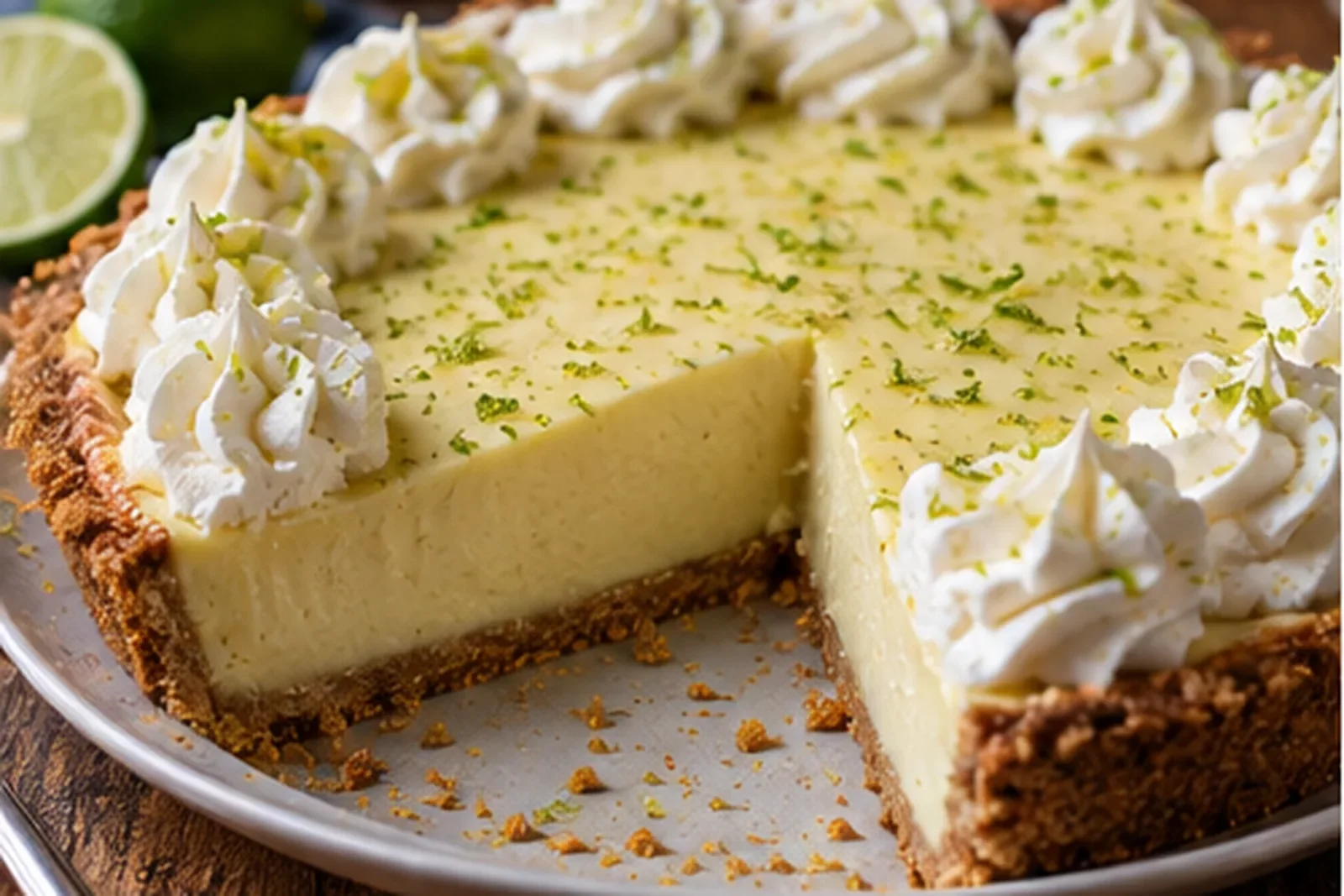
The chilled pie should have a smooth tangy filling that holds a clean wedge, with a crisp crumb crust and no watery center.
Ingredients
What you need
Crust
- 150 g graham cracker crumbs
- 28 g confectioners sugar
- 1/8 tsp table salt
- 85 g unsalted butter, melted
Filling
- zest of 2 limes
- 3 large egg yolks
- 397 g sweetened condensed milk
- 152 g Key lime juice or fresh lime juice
Serving
- lightly sweetened whipped cream, optional
Method
Cook by the cues, not just the clock
Bake the crumb crust
Heat the oven to 325°F. Mix graham crumbs, confectioners sugar, salt and melted butter, press firmly into a 9-inch pie pan and bake about 15 minutes. Cool while making the filling.
Whip yolks and zest
Beat the lime zest and egg yolks at high speed for about 4 minutes until lighter and somewhat thickened.
Build the lime custard
Mix in the condensed milk until smooth, beat for several minutes, then stir in the lime juice just until combined.
Bake to a soft center
Pour into the crust and bake about 25 minutes, until the edges are set and the center remains slightly wobbly; a thermometer target near 145°F can be used if desired.
Cool and chill fully
Cool the pie to room temperature, then refrigerate for several hours before slicing and serving.
Critical checkpoints
Stop here and check
Did the filling thicken after lime juice?
The yolk-condensed-milk mixture becomes noticeably thicker once the citrus is mixed in.Recheck ingredient measurements if the mixture remains unexpectedly thin.
Is the center softly wobbly at removal?
The outer filling is set but the middle still moves slightly as one mass.Remove the pie and let chilling finish the set rather than baking until firm.
Is the chilled filling still runny?
After several hours refrigerated, the center cannot hold a slice or remains watery.Use CookClue’s custard-runny diagnosis to separate undercooking, ratio and cooling causes.
If yours looks different
Route the failure before changing the recipe
After cooking
Storage, reheating & substitutions
Storage
Keep the finished pie covered in the refrigerator. Serve chilled for the cleanest set.
Reheating
Do not reheat. This custard is intended to be chilled after baking.
Substitutions
Fresh Persian lime juice can replace Key lime juice; the flavor changes slightly. Keep the total juice, condensed milk and egg-yolk quantities controlled so the custard ratio stays predictable.
Evidence
Sources & methodology
Technical claims and method decisions are tied to sources. Recipe-specific advice is not presented as a universal food-science law.
- Classic Key Lime PieKing Arthur Baking
King Arthur’s Key lime pie prebakes the crumb crust, whips yolks and zest, mixes in condensed milk and lime juice, bakes to set edges with a slightly wobbly center near 145°F, then chills for several hours.
publisherPassage verified - How to prebake pie crust — and why you shouldKing Arthur Baking
King Arthur explains that prebaking gives a pie crust a head start so it can become crisp and structured instead of remaining soft under a wet filling.
publisherPassage verified