Before you start
What this method is trying to achieve
Lemon meringue pie combines three temperature-sensitive parts: prebaked crust, starch-and-egg lemon filling, and an egg-white foam. Cook the filling until it is very thick, whip the meringue to stiff glossy peaks, spread it all the way to the crust edge over hot filling, then brown it promptly.
Success looks like
Know the target before you cook
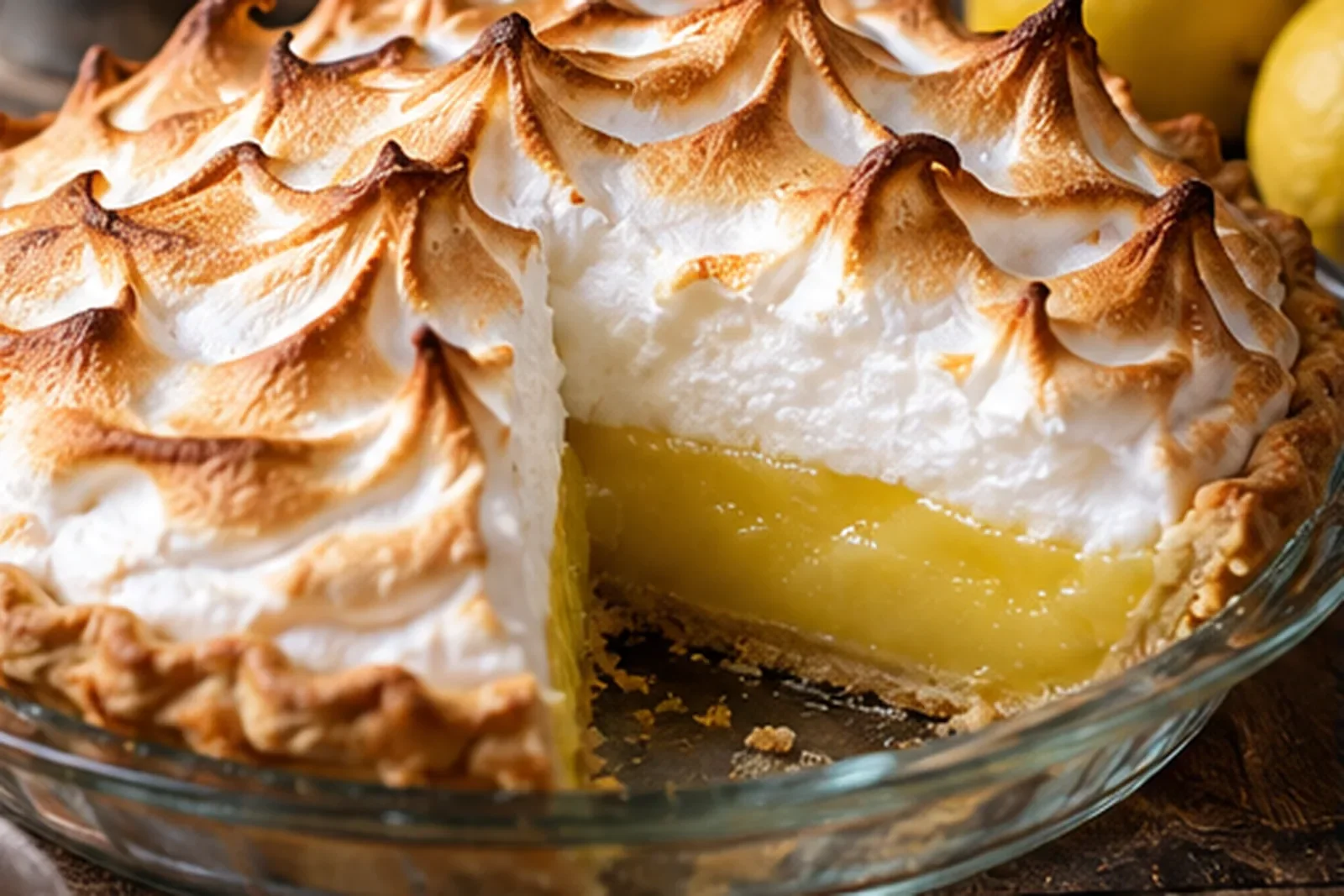
The cooled pie should have a crisp baked shell, thick lemon filling and a lofty browned meringue without syrupy beads or a water layer underneath.
Ingredients
What you need
Crust
- 163 g all-purpose flour
- 1/2 tsp table salt
- 67 g vegetable oil
- 43 g cold milk
Filling
- 298 g granulated sugar
- 43 g cornstarch
- 340 g cold water
- 3 large egg yolks, whites reserved
- 43 g unsalted butter
- zest of 1 lemon
- 113 g lemon juice
Meringue
- 3 large egg whites
- 1/4 tsp cream of tartar
- 67 g granulated sugar
- 1 tsp vanilla extract
Method
Cook by the cues, not just the clock
Bake the crust
Mix the flour and salt, stir together oil and cold milk, then combine into a cohesive dough. Roll into a 9-inch pie pan, dock the base and bake at 425°F until beginning to brown, about 12 to 15 minutes.
Cook the lemon base
Whisk sugar and cornstarch with water in a saucepan. Cook over medium heat until thick and boiling, then boil for about 1 minute while stirring.
Temper yolks and finish filling
Whisk some hot mixture into the yolks, return everything to the pan and bring it back to a thick boil for about 1 minute. Off heat, stir in butter, lemon zest and juice, then spoon the very thick filling into the crust.
Whip and apply meringue
Beat egg whites with cream of tartar until foamy, then add sugar gradually and continue to stiff glossy peaks. Spread the meringue over the still-hot filling all the way to the crust edge.
Brown and cool
Bake at 400°F for about 8 to 10 minutes until the peaks are golden. Cool for several hours before slicing, then refrigerate leftovers.
Critical checkpoints
Stop here and check
Is the lemon filling very thick before assembly?
The hot filling mounds from the spoon rather than flowing like sauce.Keep cooking through the specified thick boil if it is still loose.
Does the meringue hold stiff glossy peaks?
A lifted beater leaves a peak that stands with only the tip curling over.Continue beating before topping if the foam is still soft and slumping.
Is the meringue weeping?
Beads form on top or a watery layer collects beneath the topping after baking or storage.Use CookClue’s meringue-weeping diagnosis to distinguish surface overbaking, underside underbaking, sugar and humidity causes.
If yours looks different
Route the failure before changing the recipe
After cooking
Storage, reheating & substitutions
Storage
Cool fully, then refrigerate covered. Meringue texture is best when served reasonably soon after assembly.
Reheating
Do not reheat after chilling; extra heat can destabilize the meringue and overcook the filling.
Substitutions
Use the stated cornstarch amount for predictable filling thickness. Cream of tartar provides acid stabilization for the meringue; do not omit it casually.
Evidence
Sources & methodology
Technical claims and method decisions are tied to sources. Recipe-specific advice is not presented as a universal food-science law.
- Classic Lemon Meringue PieKing Arthur Baking
King Arthur thickens the starch filling to a strong boil, returns the tempered-yolk mixture to a thick boil, spreads stiff-peak meringue over hot filling to the crust edge, then browns it for 8 to 10 minutes.
publisherPassage verified - Meringue rules: What to abide and what to let slideKing Arthur Baking
King Arthur explains that acid improves foam stability and that sugar attracts moisture; starch can help absorb free moisture and reduce weeping in humid conditions.
publisherPassage verified