Before you start
What this method is trying to achieve
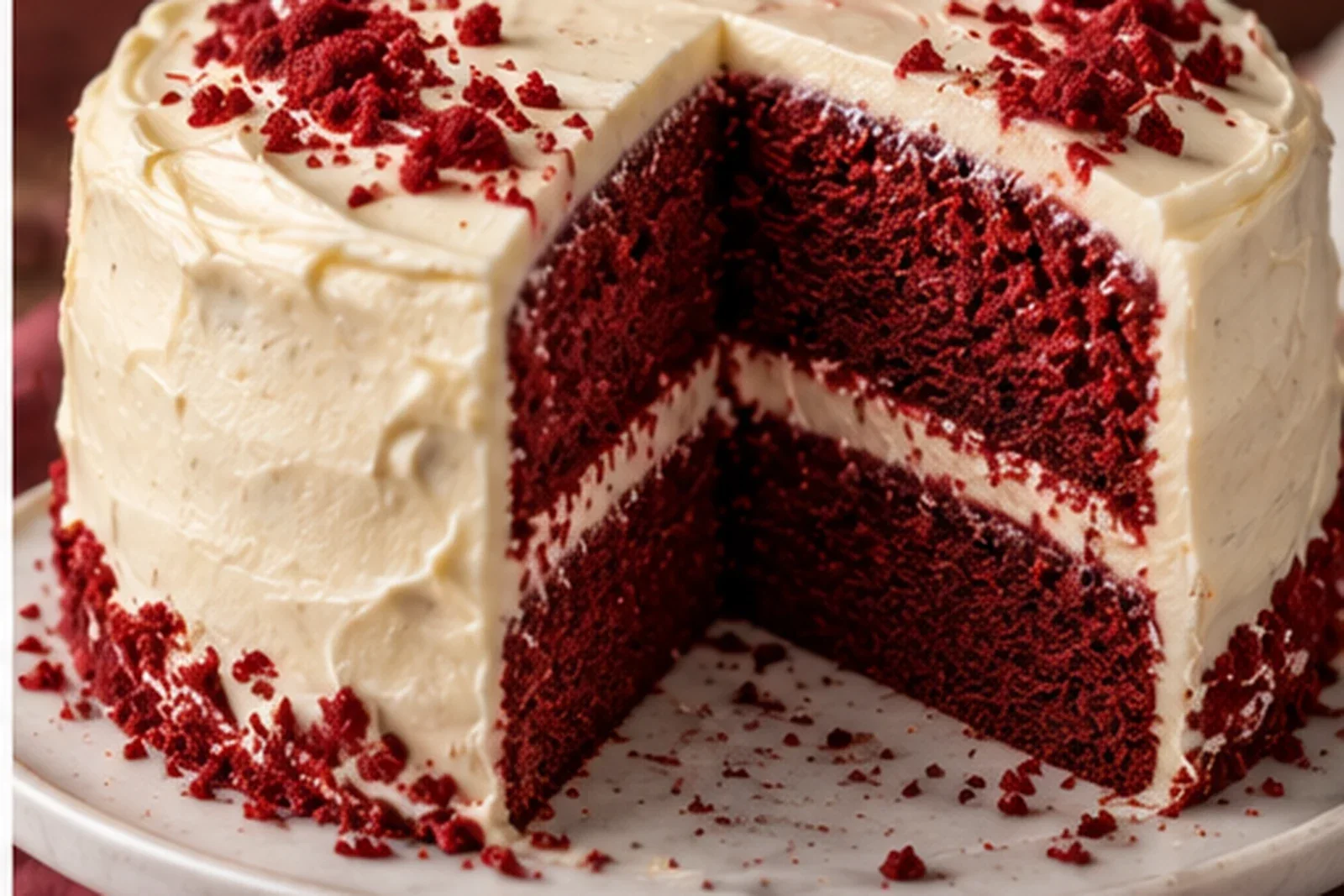
Red velvet cake should be tender and moist rather than simply red. Use the specified flour amount, keep the buttermilk and eggs near room temperature, mix in stages for a smooth batter and stop baking as soon as the center tests clean.
Success looks like
Know the target before you cook
The cake should have an even deep-red crumb, mild cocoa flavor, tender slices and a smooth tangy frosting without a dry edge.
Ingredients
What you need
Cake
- 113 g unsalted butter, softened
- 266 g granulated sugar
- 2 large eggs, room temperature
- 28 g red food coloring — optional amount may be adjusted to preference
- 14 g Dutch-process cocoa
- 1 tsp fine salt
- 1 tsp baking soda
- 1 tsp white or cider vinegar
- 270 g all-purpose flour
- 227 ml buttermilk, room temperature
Frosting
- 85 g unsalted butter, softened
- 227 g cream cheese, softened
- 340 g confectioners' sugar
- 1 tsp vanilla extract
- 1 pinch fine salt
Method
Cook by the cues, not just the clock
Prepare the pans
Heat the oven to 350°F / 177°C. Grease two 8-inch round pans, line the bottoms with parchment and lightly grease the parchment.
Cream and add eggs
Beat the butter and sugar until well combined and lighter. Add the eggs one at a time, scraping the bowl after each.
Finish the batter
Mix in the coloring, cocoa, salt, baking soda and vinegar. Add the flour alternately with the buttermilk, beginning and ending with flour, mixing only until smooth.
Bake and cool
Divide between the pans and bake about 25 to 30 minutes, until the tops feel set and a tester inserted in the center comes out clean. Cool briefly, then turn out onto racks.
Frost
Beat the softened butter and cream cheese with vanilla and salt until smooth, then add the confectioners' sugar gradually. Frost only after the layers are completely cool.
Critical checkpoints
Stop here and check
Before flour: mixture smooth and emulsified?
Butter, sugar and eggs form a smooth cohesive mixture rather than a separated greasy mass.Scrape the bowl and mix briefly before continuing if needed.
At 25 to 30 minutes: tester clean?
The center feels set and the tester comes out without wet batter.Remove promptly once done.
After cooling: crumb dry or crumbly?
Slices feel dry throughout or break into dusty crumbs.Use cake-dry-or-crumbly to check flour amount, bake exposure, pan choice and substitutions.
If yours looks different
Route the failure before changing the recipe
After cooking
Storage, reheating & substitutions
Storage
Refrigerate the cream-cheese-frosted cake covered. Bring slices toward cool room temperature before serving.
Reheating
Do not reheat a frosted layer cake. Temper refrigerated slices briefly before serving.
Substitutions
Plain low-fat yogurt can replace buttermilk only when using a tested formula that permits it. Avoid casual flour substitutions because they change moisture balance.
Evidence
Sources & methodology
Technical claims and method decisions are tied to sources. Recipe-specific advice is not presented as a universal food-science law.
- Cream Cheese FrostingKing Arthur Baking
King Arthur beats butter, cream cheese and vanilla until light and gradually adds confectioners' sugar for a spreadable frosting.
publisherPassage verified - Red Velvet CakeKing Arthur Baking
King Arthur's red velvet cake uses butter, cocoa and buttermilk, alternates flour with dairy and bakes until the center tester comes out clean.
publisherPassage verified