Before you start
What this method is trying to achieve
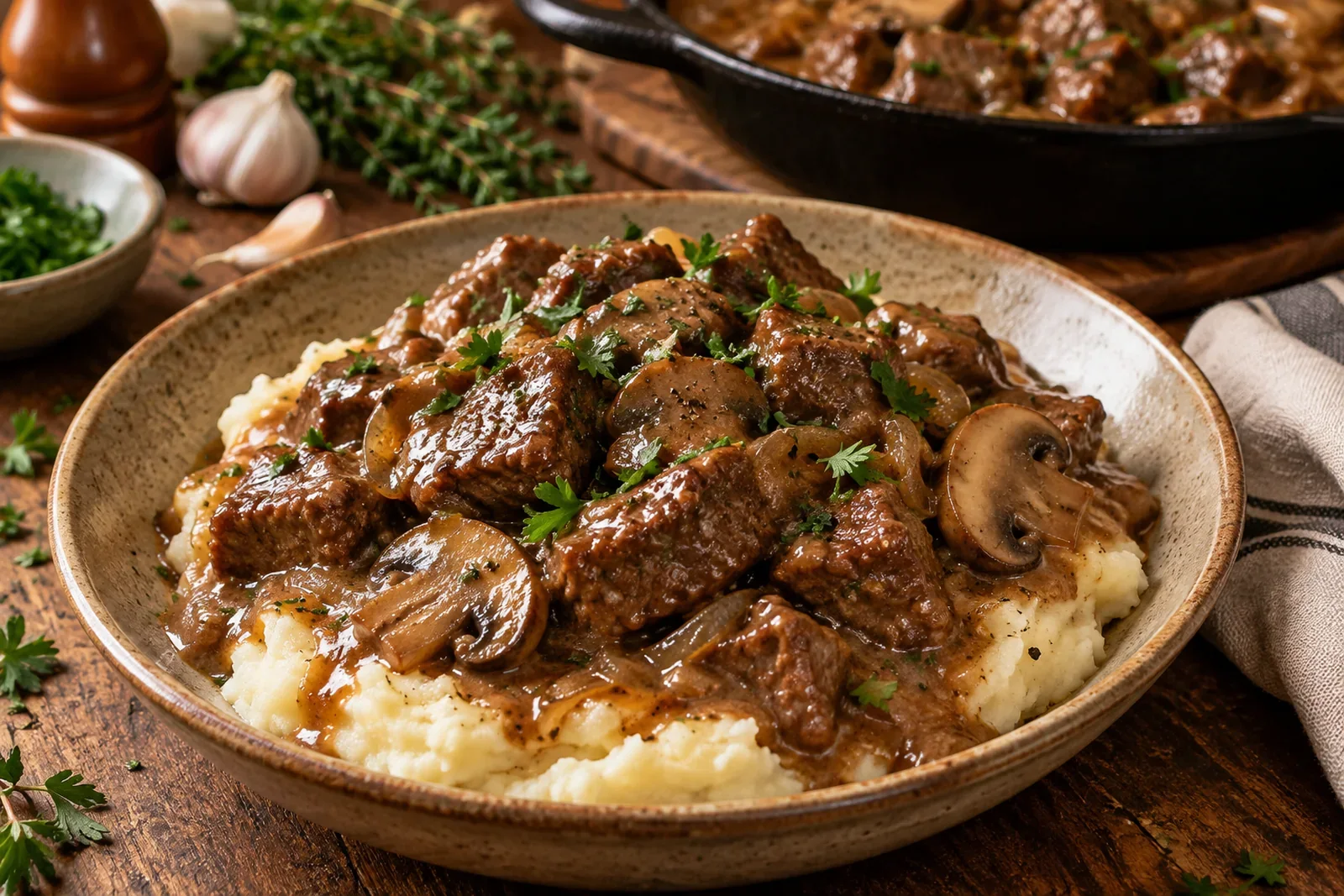
Beef tips and gravy work best when tenderness and gravy texture are checked separately. Brown the beef first, build the roux-based gravy, braise until the chuck yields, then uncover so the sauce can tighten without simply cooking the meat forever.
Success looks like
Know the target before you cook
The beef should be fork-tender and moist, while the gravy should be smooth, rich and coating with no visible oil pool on top.
Ingredients
What you need
Beef
- 1150 g boneless beef chuck, cut into 3 to 4 cm pieces — About 2 1/2 lb.
Seasoning
- 2 tsp dried thyme
- 1 1/2 tsp kosher salt
- 1 tsp black pepper
Browning
- 2 tbsp neutral oil
Gravy
- 2 tbsp unsalted butter
- 30 g all-purpose flour — 1/4 cup.
- 720 ml low-sodium beef broth — 3 cups.
- 1 tbsp Worcestershire sauce
- 1 tbsp low-sodium soy sauce
Aromatics
- 1 yellow onion, diced
- 3 cloves garlic, minced
Optional vegetables
- 225 g cremini mushrooms, sliced
Finish
- 2 tbsp chopped parsley
Method
Cook by the cues, not just the clock
Season and brown beef
Season chuck with thyme, salt and pepper. Brown in two batches in hot oil, searing two or more sides before transferring to a plate.
Cook aromatics and roux
Add butter and onion; cook until soft, then add garlic. Stir in flour and cook until it coats the onions and begins to brown lightly.
Whisk in liquid
Gradually whisk in broth, Worcestershire and soy sauce until no flour lumps remain. Return beef and juices; bring just to a boil.
Braise covered
Reduce to a gentle simmer, cover, and cook about 60 minutes, stirring periodically.
Finish uncovered
Uncover and continue simmering until the beef is very tender and the gravy has thickened, roughly 45 to 60 minutes more. Add mushrooms during this stage if using; finish with parsley.
Critical checkpoints
Stop here and check
After browning: fond developed?
Browned bits coat the pot and beef surfaces are dark, not gray.Brown in batches and avoid crowding.
Before serving: beef truly fork-tender?
The fork enters easily and a piece yields without springy resistance.Continue the gentle braise if chuck is still tight.
Gravy finish: smooth or greasy?
The gravy is cohesive with no large removable oil layer or broken sheen.Use CookClue gravy-greasy if fat pooling or emulsion failure is the problem.
If yours looks different
Route the failure before changing the recipe
After cooking
Storage, reheating & substitutions
Storage
Refrigerate in an airtight container for up to 4 days. For make-ahead use, cool promptly and store the beef in its gravy.
Reheating
Reheat gently over medium-low heat, stirring often; add a splash of broth only if the gravy is too thick.
Substitutions
Chuck roast gives the most forgiving long-braise texture. Stew meat can work when the pieces are well-marbled and similar in size.
Evidence
Sources & methodology
Technical claims and method decisions are tied to sources. Recipe-specific advice is not presented as a universal food-science law.
- Beef Tips and Gravy101 Cooking For Two
101 Cooking For Two braises beef tips until fork-tender and then thickens the cooking liquid into a brown gravy with a flour slurry.
publisherPassage verified - Beef Tips and GravyThe Kitchn
The Kitchn uses chuck, browns it in batches, builds a flour-thickened gravy and braises covered before an uncovered finish until the beef is very tender and the gravy thickens.
publisherPassage verified