Before you start
What this method is trying to achieve
Slow-cooked beef can be safely cooked yet still feel tough because tenderness and food safety are different endpoints. This method uses chuck roast, low heat and enough time for the meat to become fork-tender instead of stopping when it merely looks cooked.
Success looks like
Know the target before you cook
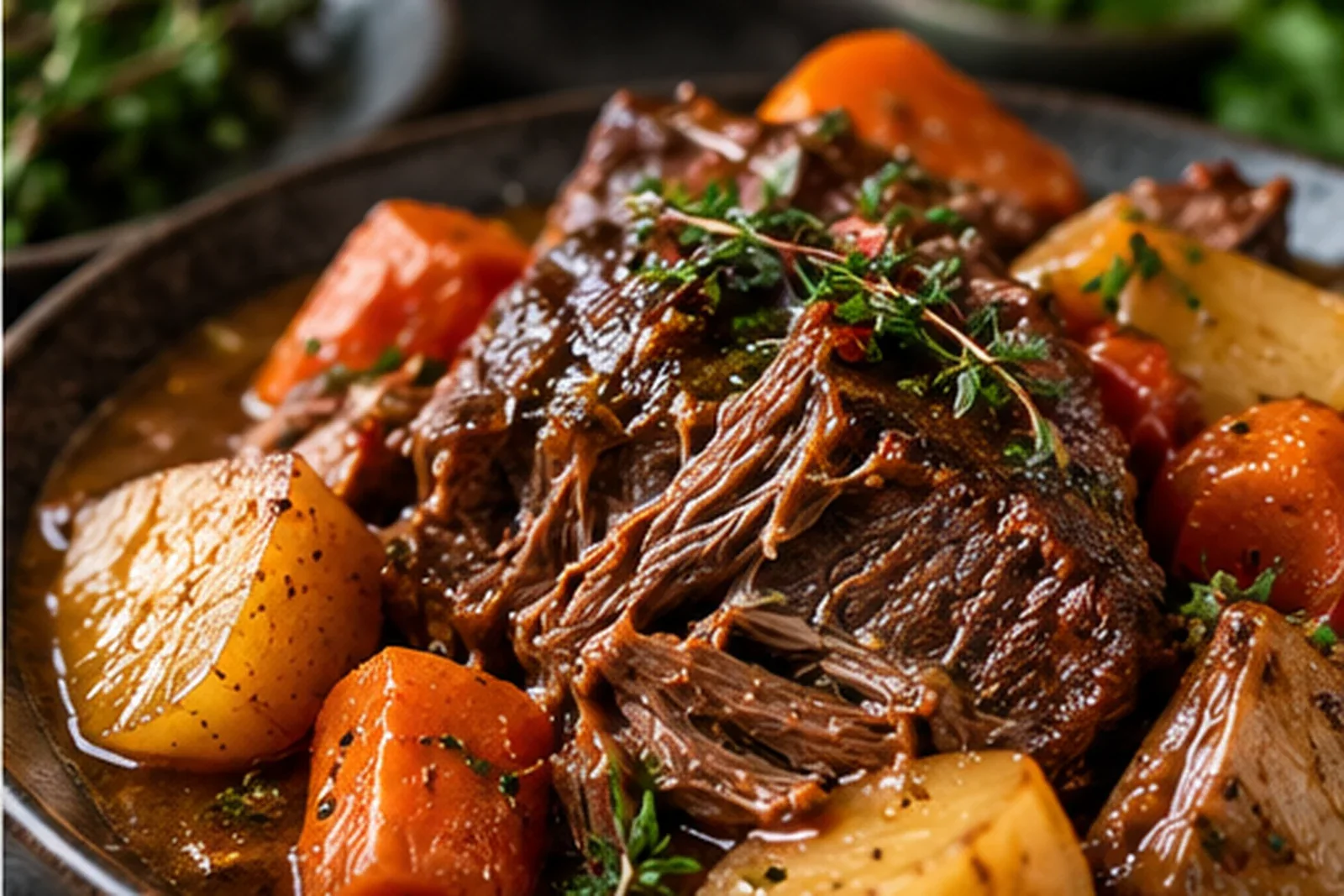
The roast should pull into moist strands with a fork and slice without springy resistance. Vegetables should be tender but still recognizable.
Ingredients
What you need
Beef
- 1.6 kg boneless chuck roast, patted dry — About 3 1/2 pounds.
- 2 tsp kosher salt
- 1 tsp black pepper
Sear
- 2 tbsp neutral oil
Base
- 1 large yellow onion, chopped
- 3 cloves garlic, minced
- 2 tbsp tomato paste
- 2 tbsp all-purpose flour
- 240 ml dry red wine — Optional; replace with broth.
- 480 ml beef broth
- 1 tbsp Worcestershire sauce
Vegetables
- 4 medium carrots, cut into large chunks
- 700 g Yukon Gold potatoes, cut into large chunks
Herbs
- 4 sprigs thyme
- 2 leaves bay leaves
Method
Cook by the cues, not just the clock
Brown roast
Season the chuck roast. Sear in hot oil until deeply browned on multiple sides, then transfer to the slow cooker.
Build gravy base
Cook onion and garlic, then tomato paste. Stir in flour, add wine and broth gradually, scrape up browned bits and simmer until smooth.
Load cooker
Add carrots, potatoes, thyme and bay leaves around the roast and pour in the gravy base.
Cook low
Cover and cook on LOW for about 8 hours, then test the thickest part with a fork.
Finish
Rest the roast briefly, discard herb stems and bay leaves, then slice against the grain or pull into large pieces and spoon over gravy.
Critical checkpoints
Stop here and check
At 6 to 7 hours: cooked but still tough?
The meat is hot and cooked-looking but still resists a fork and springs back.Keep cooking on LOW and recheck later; do not switch to a fierce boil.
At the finish: does a fork slide and twist easily?
The meat yields with little resistance and separates into moist strands.Stop cooking once fork-tender to avoid unnecessary drying.
If it never softens: was the cut suitable?
A lean roast can remain firm even after a long cook.Use the CookClue slow-cooker-beef diagnosis to distinguish not-enough-time from wrong-cut or drying problems.
If yours looks different
Route the failure before changing the recipe
After cooking
Storage, reheating & substitutions
Storage
Cool promptly and refrigerate meat and gravy covered for up to 3 to 4 days.
Reheating
Reheat gently in gravy until hot throughout.
Substitutions
Chuck roast is preferred because it is suited to long moist cooking. Very lean roasting cuts behave differently.
Evidence
Sources & methodology
Technical claims and method decisions are tied to sources. Recipe-specific advice is not presented as a universal food-science law.
- Slow Cooker Pot RoastFood Network Kitchen
Food Network browns the roast, builds a broth-based gravy and cooks on low for about 8 hours until the roast and vegetables are tender.
publisherPassage verified