Before you start
What this method is trying to achieve
Sandwich bread is easier to troubleshoot when you judge the dough and proof rather than the clock alone. Start with enough liquid to make a soft, smooth dough, knead until elastic, then let the shaped loaf rise until it crowns above the pan and a fingertip mark springs back slowly. Bake until the center reaches about 190°F, then cool before slicing so the crumb can finish setting.
Success looks like
Know the target before you cook
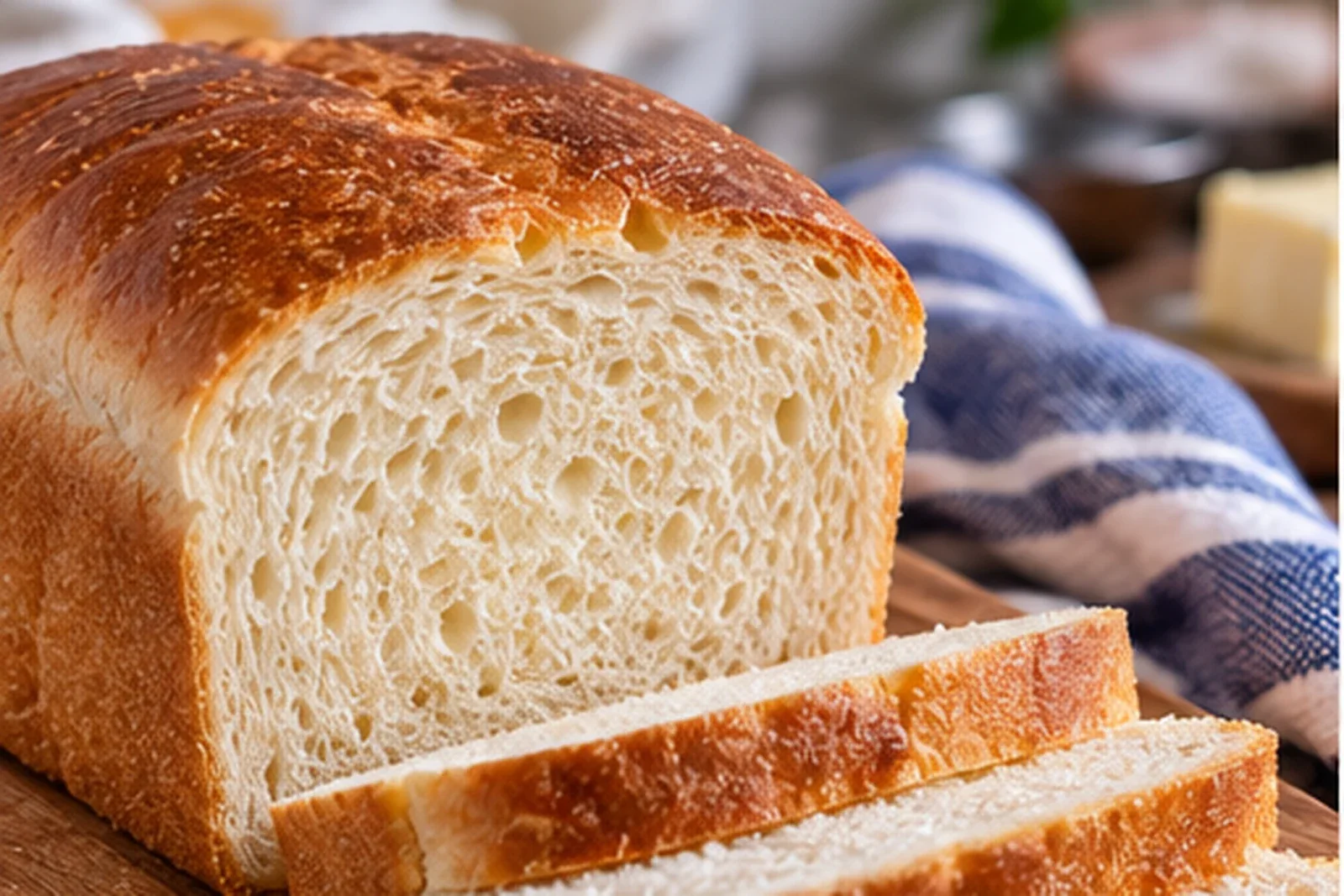
The loaf should rise above the pan with a light golden crust and an even, fine, tender crumb that slices cleanly without a compressed gummy band or a dry crumbly interior.
Ingredients
What you need
Dough
- 360 g all-purpose flour — Weigh for the most repeatable hydration.
- 113 g milk — Any standard dairy milk works.
- 113 to 152 g water, hot enough that the milk-water blend is lukewarm — Start at the low end and add only enough for a soft smooth dough.
- 57 g unsalted butter, melted — Vegetable oil can be substituted.
- 25 g granulated sugar
- 8 g fine salt
- 2 tsp instant yeast
Method
Cook by the cues, not just the clock
Mix and knead
Combine the flour, milk, the lower amount of water, butter, sugar, salt and yeast. Mix and knead until the dough becomes smooth and elastic, adding only enough of the remaining water to make it soft rather than stiff.
First rise
Cover the dough and let it rise until clearly puffy, about 1 to 2 hours depending on room temperature.
Shape
Gently deflate the dough, shape it into an 8-inch log and place it seam-side down in a lightly greased 8 1/2 x 4 1/2-inch loaf pan.
Final proof
Cover loosely and proof until the loaf is domed about 1 inch above the rim, roughly 60 minutes. Near the end, heat the oven to 175°C / 350°F.
Bake and cool
Bake until light golden and the center reaches about 88°C / 190°F, generally 30 to 35 minutes. Turn the loaf out onto a rack and cool completely before slicing.
Critical checkpoints
Stop here and check
After kneading: soft dough or stiff dough?
The dough is smooth, elastic and soft enough to yield under a finger without slumping into batter.If it feels hard and dry, work in the reserved water gradually before the first rise rather than accepting a low-hydration dough.
Before baking: did the shaped loaf actually proof?
The crown sits about an inch above the pan rim and a light press rebounds slowly.If it still springs back rapidly and sits low in the pan, give it more proofing time.
At removal: is the center around 190°F?
The center reaches roughly 190°F and the crust is light golden.If significantly below 190°F, continue baking. If already at temperature, remove and cool rather than drying the crumb further.
If yours looks different
Route the failure before changing the recipe
Why Is My Bread Dense?
Why Is My Bread Crumbly?
After cooking
Storage, reheating & substitutions
Storage
Cool completely, then store well wrapped at room temperature for several days. Freeze sliced bread for longer storage.
Reheating
Toast slices as needed. For a whole loaf, warm briefly in a low oven rather than reheating until dry.
Substitutions
Vegetable oil can replace the butter. Flour absorption changes with humidity, so use the lower water amount first and add more only until the dough is soft and smooth.
Evidence
Sources & methodology
Technical claims and method decisions are tied to sources. Recipe-specific advice is not presented as a universal food-science law.
- Classic Sandwich BreadKing Arthur Baking
King Arthur's current Classic Sandwich Bread recipe uses 360 g all-purpose flour, milk, adjustable water, butter, sugar, salt and instant yeast; it kneads to a smooth dough, proofs until about an inch above the pan rim with slow spring-back, and bakes at 350°F until the center reaches 190°F.
publisherPassage verified - Using a thermometer with yeast breadKing Arthur Baking
King Arthur's testing found that pan sandwich loaves baked to about 190°F remain fully baked while softer and moister than otherwise similar loaves baked substantially hotter.
publisherPassage verified