Before you start
What this method is trying to achieve
Bagels reward structure. The dough should be much stiffer than ordinary sandwich bread, kneaded long enough to build strong gluten and preshaped into smooth tight balls before the center holes are opened. The water bath then sets the exterior before the hot bake.
Success looks like
Know the target before you cook
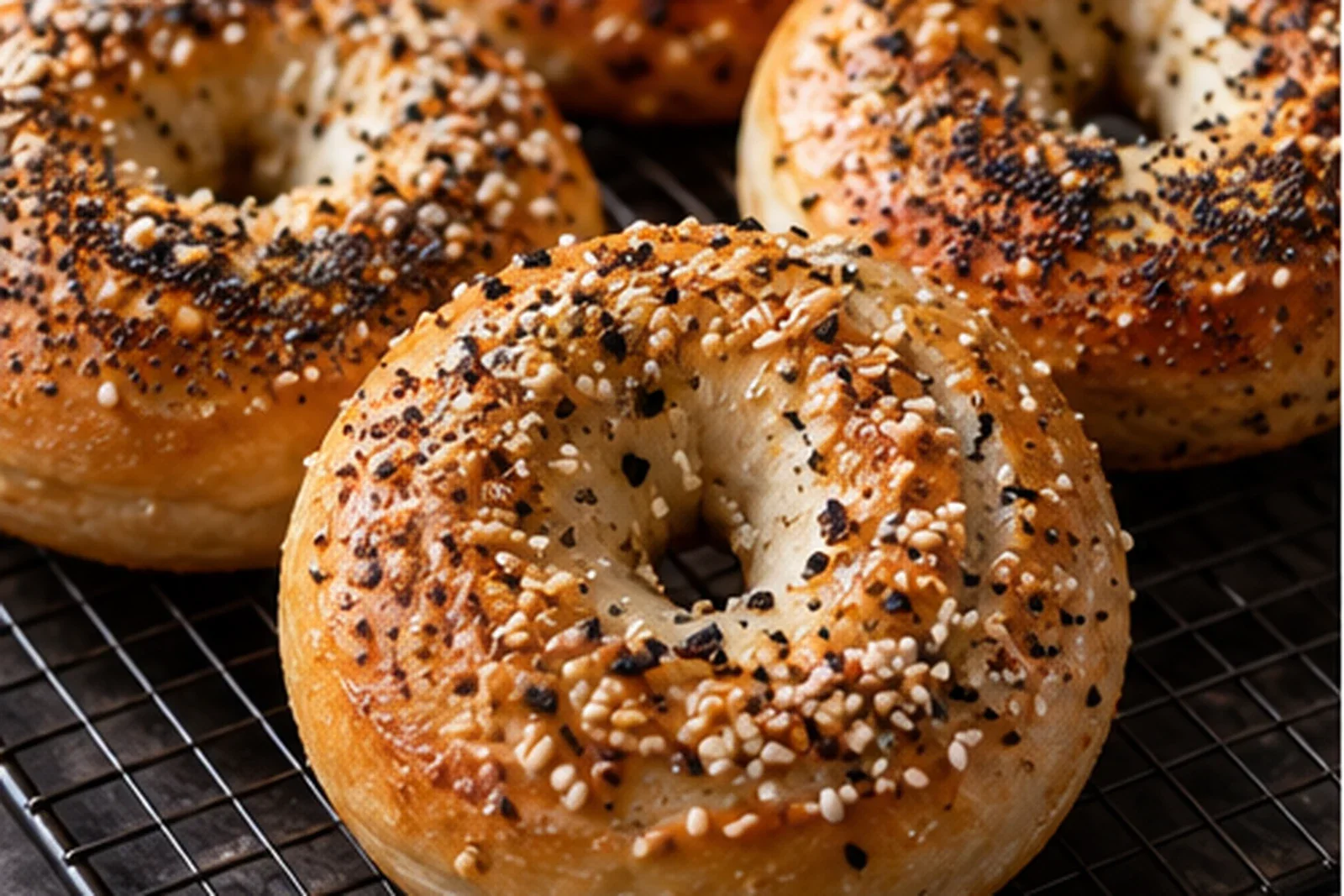
Finished bagels should be plump and rounded with a deep brown chewy crust, a fine resilient crumb and a smooth surface rather than collapsed wrinkles.
Ingredients
What you need
Dough
- 9 g instant yeast
- 480 g bread flour
- 12 g table salt
- 9 g non-diastatic malt powder — Or 14 g dark brown sugar or barley malt syrup.
- 303 g water, lukewarm
Water bath
- 1814 g water — About 2 quarts.
- 18 g non-diastatic malt powder — Or 28 g dark brown sugar or barley malt syrup.
- 14 g granulated sugar
Topping
- 2 tbsp everything bagel seasoning — Optional; add immediately after boiling.
Method
Cook by the cues, not just the clock
Knead a stiff dough
Combine the dough ingredients and knead vigorously for about 10 minutes by mixer or up to 15 minutes by hand until very smooth and elastic.
First rise
Cover the dough and let it rise 1 to 1 1/2 hours until noticeably puffy but not necessarily doubled.
Divide and preshape tightly
Divide into 8 equal pieces. Pull each piece into a tight smooth ball on an unfloured surface, building surface tension, then cover and rest about 30 minutes.
Shape and boil
Poke a hole through each ball and stretch it to roughly 1 1/2 to 2 inches. Bring the water, malt and sugar to a gentle boil. Boil bagels in batches for 2 minutes on the first side and 1 minute on the second, then drain and add topping if using.
Bake
Bake at 425°F / 218°C for 20 to 25 minutes until deeply browned, turning the bagels over around the 15-minute mark if desired for an evenly rounded shape. Cool completely before slicing.
Critical checkpoints
Stop here and check
After kneading: is the dough truly stiff?
The dough is smooth, elastic and holds its shape instead of spreading when the mixer stops.If it is unusually slack, recheck flour and water measurements before continuing.
Before final shaping: is the preshape tight and smooth?
Each ball has visible surface tension with a smooth exterior and no loose folds.If the ball is slack or creased, tighten the preshape and allow the short rest before opening the center hole.
After boiling: did the bagel stay plump?
The boiled ring looks matte and swollen but still rounded, not wrinkled or collapsed.If the surface wrinkles badly, use the linked bagels-wrinkled diagnosis before changing the boil or proof at random.
If yours looks different
Route the failure before changing the recipe
After cooking
Storage, reheating & substitutions
Storage
Cool completely and store well wrapped at room temperature for a day or two. Slice before freezing for convenient toaster portions.
Reheating
Toast split bagels directly from room temperature or frozen. Avoid sealing warm bagels, which traps steam and softens the crust.
Substitutions
Dark brown sugar or barley malt syrup can replace non-diastatic malt powder where noted. Use bread flour rather than low-protein flour for the intended chew and structure.
Evidence
Sources & methodology
Technical claims and method decisions are tied to sources. Recipe-specific advice is not presented as a universal food-science law.
- Bagels RecipeKing Arthur Baking
King Arthur uses a stiff bread-flour dough, kneads it thoroughly, rises only until noticeably puffy, then boils shaped bagels in a malted water bath before a 425°F bake.
publisherPassage verified - How to make your best bagels (from someone who's made hundreds)King Arthur Baking
King Arthur specifically identifies a tight preshape as a primary way to prevent wrinkled bagels and explains that surface tension during shaping improves the final exterior.
publisherPassage verified