Before you start
What this method is trying to achieve
Rough puff succeeds because the butter is not blended completely into the flour. Keep visible cold butter pieces, bring the shaggy dough together without overworking it, then build layers through folds. Whenever the dough turns soft, greasy or springy, stop and chill before continuing.
Success looks like
Know the target before you cook
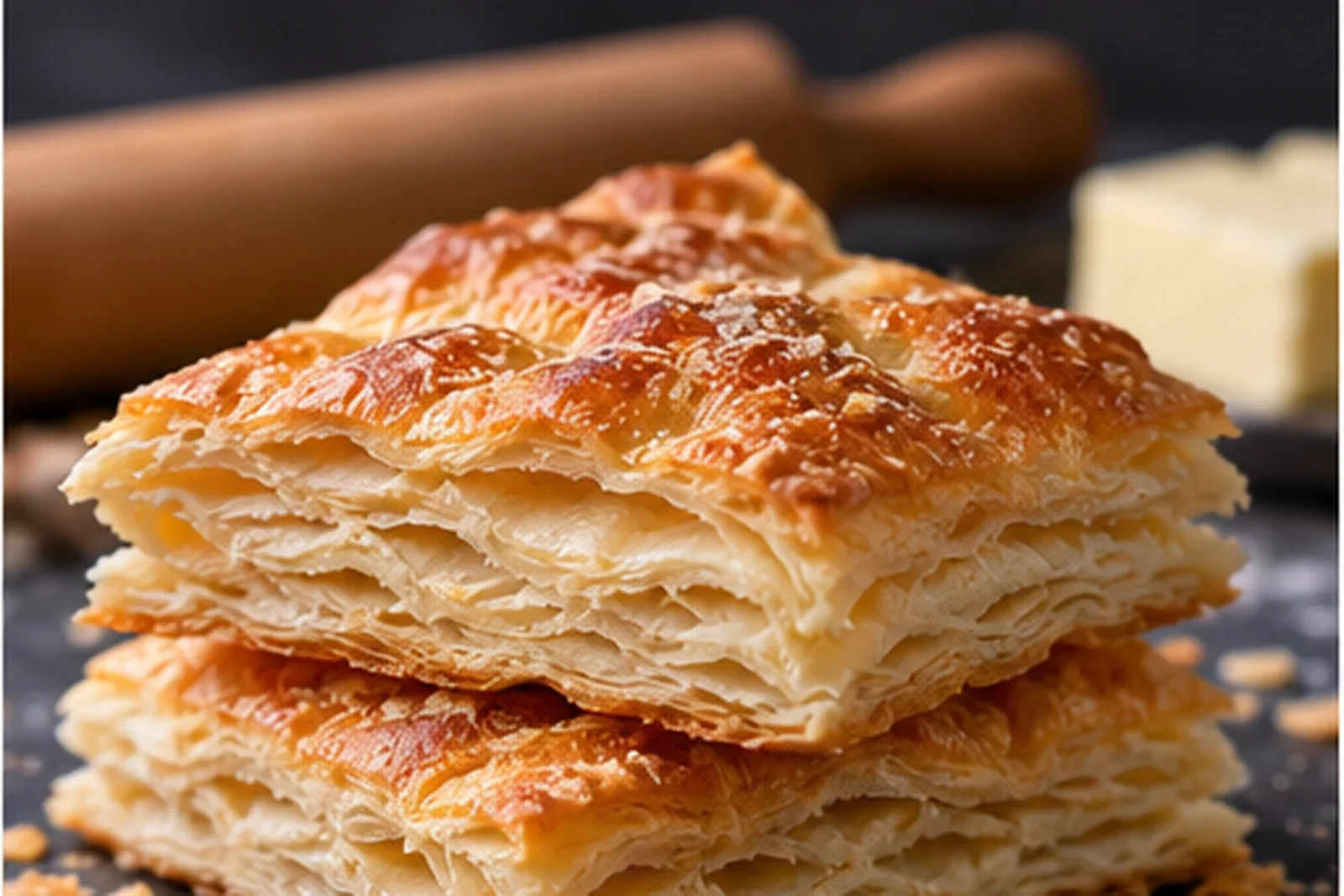
The chilled dough should show visible streaks of butter and bake into crisp, irregular laminated layers with clear lift rather than a flat biscuit-like slab.
Ingredients
What you need
Dough
- 360 g all-purpose flour
- 340 g unsalted butter, chilled and cut into small cubes — Butter must stay cold and visibly distinct.
- 2 tsp fine salt
- 227 g cold water
Method
Cook by the cues, not just the clock
Create butter shards
Toss the cold butter with the flour and flatten many of the cubes between your fingertips into thin shards, leaving visible pieces throughout the mixture.
Make shaggy dough
Dissolve the salt in the cold water, add it to the flour-butter mixture and mix only until a shaggy crumbly mass begins to form. Fold and press just enough to bring it together.
First chill
Shape into a rough square, wrap and refrigerate for 30 minutes.
Fold
Roll into a long rectangle and perform one letter fold. Roll again, perform a book fold, turn the dough, then repeat another book fold. Use only enough flour to prevent sticking.
Final chill
After the last fold, wrap tightly and refrigerate at least 30 minutes before using in a recipe that calls for puff pastry.
Critical checkpoints
Stop here and check
Before rolling: can you still see cold butter?
Distinct butter streaks or pieces remain inside the rough dough.If the butter has melted into the flour, chill immediately; a fully homogeneous dough will not laminate like rough puff.
During folds: is the dough fighting the rolling pin?
The rectangle rolls without strong spring-back and the butter stays contained.If it shrinks back or feels rubbery, chill for 5 to 10 minutes to relax gluten and firm the butter.
Before baking: is the shaped pastry cold?
The pastry feels firm and cool rather than soft, oily or floppy.Chill the shaped pastry before baking if needed; warm butter layers can merge before steam has a chance to separate them.
If yours looks different
Route the failure before changing the recipe
After cooking
Storage, reheating & substitutions
Storage
Keep wrapped and refrigerated for up to 24 hours before use, or freeze well wrapped for longer storage.
Reheating
This is an uncooked dough; bake according to the final pastry recipe rather than reheating.
Substitutions
Do not replace the butter with a soft spreadable fat if you want laminated lift. The dough can be halved if you need a smaller batch.
Evidence
Sources & methodology
Technical claims and method decisions are tied to sources. Recipe-specific advice is not presented as a universal food-science law.
- Rough Puff PastryKing Arthur Baking
King Arthur's current rough-puff method keeps visible butter pieces in a shaggy dough, begins with a 30-minute chill, builds layers through letter and book folds, pauses for additional chilling if the dough resists, and chills again before use.
publisherPassage verified - Why does butter temperature matter in pastry?King Arthur Baking
King Arthur explains that keeping butter cold and distinct in laminated dough helps preserve layers; the water in those butter layers generates steam in the oven and contributes to flaky lift.
publisherPassage verified