Before you start
What this method is trying to achieve
Dinner rolls turn dense when the dough is too stiff, underdeveloped or rushed through proofing. This formula uses milk, butter and potato flour for tenderness, but the key process cues are still the same: a soft satiny dough, a true first rise and a final proof that visibly fills the pan.
Success looks like
Know the target before you cook
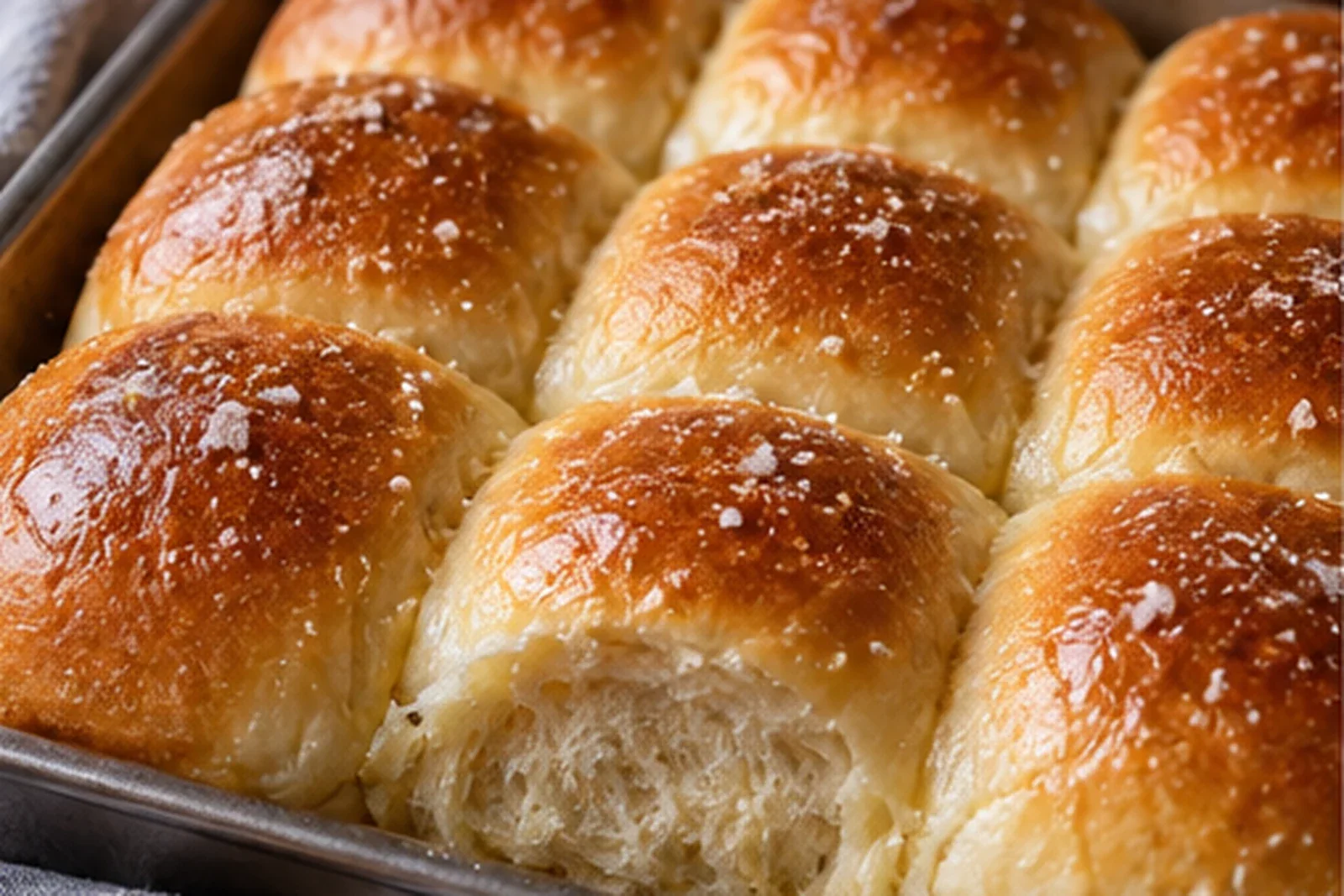
The rolls should be evenly golden with rounded tops and a soft springy crumb that pulls apart in strands rather than feeling heavy or compressed.
Ingredients
What you need
Dough
- 7 g instant yeast — Active dry yeast can also be used.
- 39 g granulated sugar
- 8 g table salt
- 360 g all-purpose flour
- 46 g potato flour — Or 46 g dried potato flakes.
- 71 g water, lukewarm
- 170 g milk, lukewarm
- 43 g butter, softened or melted
Finish
- 1 tbsp melted butter — Optional for brushing warm rolls.
Method
Cook by the cues, not just the clock
Mix and knead
Combine yeast, sugar, salt, flour, potato flour, water, milk and butter until a soft dough forms. Knead about 6 minutes by mixer or 8 minutes by hand until smooth and satiny.
First rise
Place in a greased bowl, cover and let rise for 1 to 2 hours until doubled.
Divide and round
Gently deflate, divide into 16 equal pieces of about 45 g each, and round each into a smooth ball.
Final proof
Arrange in a lightly greased 9 x 13-inch metal pan, cover and let rise for about 1 hour until puffy and just barely touching. Heat the oven to 350°F / 177°C near the end of the rise.
Bake
Bake 20 to 22 minutes until evenly golden. Cool on a rack and brush the warm tops with melted butter if desired.
Critical checkpoints
Stop here and check
After kneading: soft and satiny?
The dough is smooth, soft and elastic with a gentle spring-back when poked.If it feels stiff or tears immediately, recheck flour measurement and kneading before the first rise.
Before baking: puffy and touching?
The rolls look visibly inflated and are just touching or nearly touching their neighbors.If they still look like tight separate balls, extend the final proof.
After baking: light crumb, not heavy?
A cooled roll tears into a soft springy crumb rather than a tight compressed interior.If the rolls are heavy despite good color, use the linked bread-dense diagnosis to separate dough stiffness, kneading and proofing causes.
If yours looks different
Route the failure before changing the recipe
After cooking
Storage, reheating & substitutions
Storage
Cool completely and store airtight at room temperature for several days. Freeze well wrapped for longer storage.
Reheating
Warm rolls briefly in a low oven, covered loosely if needed to protect moisture. Brush with a little melted butter after warming if desired.
Substitutions
Instant potato flakes can replace potato flour by the source formula. Active dry yeast can replace instant yeast using the same listed weight.
Evidence
Sources & methodology
Technical claims and method decisions are tied to sources. Recipe-specific advice is not presented as a universal food-science law.
- Soft Dinner RollsKing Arthur Baking
King Arthur uses all-purpose flour, potato flour, milk, butter and yeast; the dough is kneaded smooth and satiny, risen until doubled, proofed until puffy and barely touching, then baked at 350°F for 20 to 22 minutes.
publisherPassage verified - Soft White Dinner RollsKing Arthur Baking
King Arthur reinforces judging roll dough by visible expansion and puffiness rather than time alone and shapes smooth balls before the final proof.
publisherPassage verified