Before you start
What this method is trying to achieve
This loaf depends entirely on active starter, so the first checkpoint happens before the dough is mixed. Use starter that has recently been fed and is actively rising. Build strength with spaced folds instead of heavy kneading, refrigerate for flavor and scheduling, then give the shaped loaf enough final proof before baking in a covered vessel.
Success looks like
Know the target before you cook
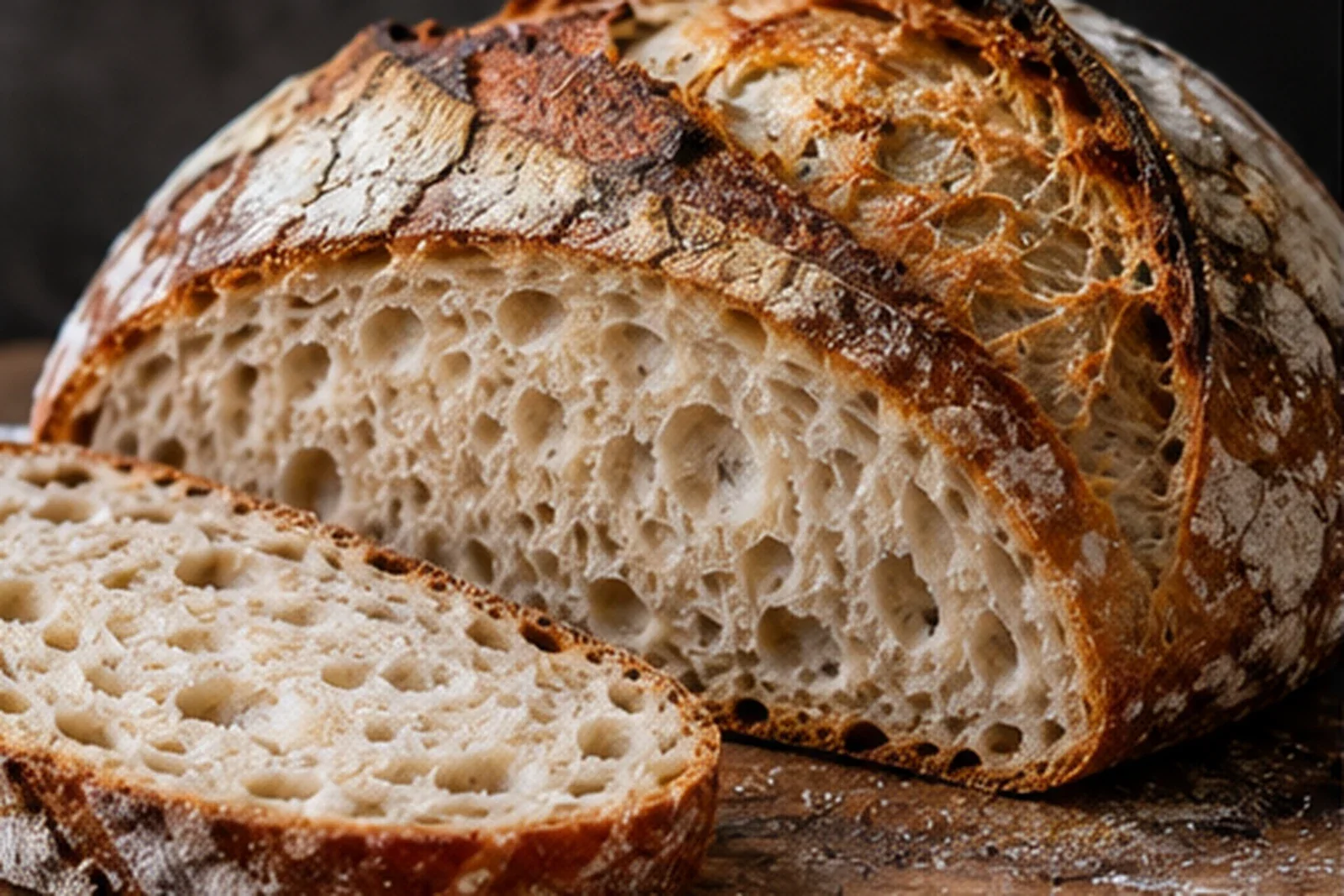
The baked loaf should have a deep brown crust, clear oven spring and an open but supported crumb rather than a low, tight or gummy interior.
Ingredients
What you need
Dough
- 227 g ripe sourdough starter, recently fed and active
- 397 g water, lukewarm
- 600 g bread flour
- 18 g table salt
Optional
- 2 tsp diastatic malt powder — Optional for stronger rise and deeper color.
Method
Cook by the cues, not just the clock
Mix
Combine the ripe starter, water, bread flour, salt and optional malt until no dry flour remains and the dough is sticky and rough. Cover and rest for 1 hour.
Build strength with folds
Fold the dough over itself several times, cover and rest for another hour. Repeat once more so the dough has had about 3 hours at room temperature with folds between rests.
Cold ferment
Cover the dough and refrigerate for at least 8 hours and up to about 48 hours.
Shape and proof
Turn the cold dough onto a well-floured surface, shape a round, rest 15 minutes, then tighten the boule and place it in a prepared covered baker. Let it warm and rise for about 2 1/2 to 3 hours.
Score and bake
Preheat the oven to 500°F / 260°C. Score the loaf, cover the baker, place it in the oven and reduce to 450°F / 232°C. Bake covered for 45 minutes, then uncover for 10 to 15 minutes until deeply browned and at least 210°F / 99°C in the center. Cool completely before slicing.
Critical checkpoints
Stop here and check
Before mixing: is the starter ripe?
The starter is bubbly and has roughly doubled or more after its latest feeding.If it has barely moved, strengthen the starter first rather than expecting the dough to compensate.
Before baking: does the shaped loaf feel aerated?
The dough has relaxed, expanded and feels lighter than immediately after shaping.If it remains cold, stiff and compact, extend proofing rather than baking only because the timer ended.
Finish: is the loaf fully baked?
The crust is deep brown and the center reaches at least 210°F / 99°C.If the loaf is pale or below temperature, continue baking; if it is fully done, cool completely before slicing.
If yours looks different
Route the failure before changing the recipe
After cooking
Storage, reheating & substitutions
Storage
Cool completely, then keep loosely or well wrapped at room temperature for several days depending on preferred crust texture. Freeze for longer storage.
Reheating
Refresh slices in a toaster. For a larger piece, warm briefly in a moderate oven until heated through without drying the crumb.
Substitutions
Diastatic malt powder is optional. Use bread flour for the strongest dough and most reliable height; all-purpose flour will produce a different structure.
Evidence
Sources & methodology
Technical claims and method decisions are tied to sources. Recipe-specific advice is not presented as a universal food-science law.
- How to Bake SourdoughKing Arthur Baking
King Arthur describes active, bubbly starter as essential for naturally leavened sourdough and notes that higher-protein bread flour builds stronger, stretchier dough for a taller, airier loaf.
publisherPassage verified - No-Knead Sourdough BreadKing Arthur Baking
King Arthur uses 227 g ripe starter, 397 g water, 600 g bread flour and 18 g salt; the dough receives hourly folds, an 8- to 48-hour cold rest, a 2 1/2- to 3-hour final rise, and a covered 450°F bake finished to at least 210°F.
publisherPassage verified