Before you start
What this method is trying to achieve
Tender crêpes depend on a batter thin enough to coat the pan quickly and enough resting time for the flour to hydrate. Once the pan is hot, each crêpe should cook fast: set and lightly brown the first side, then give the second side only a brief finish.
Success looks like
Know the target before you cook
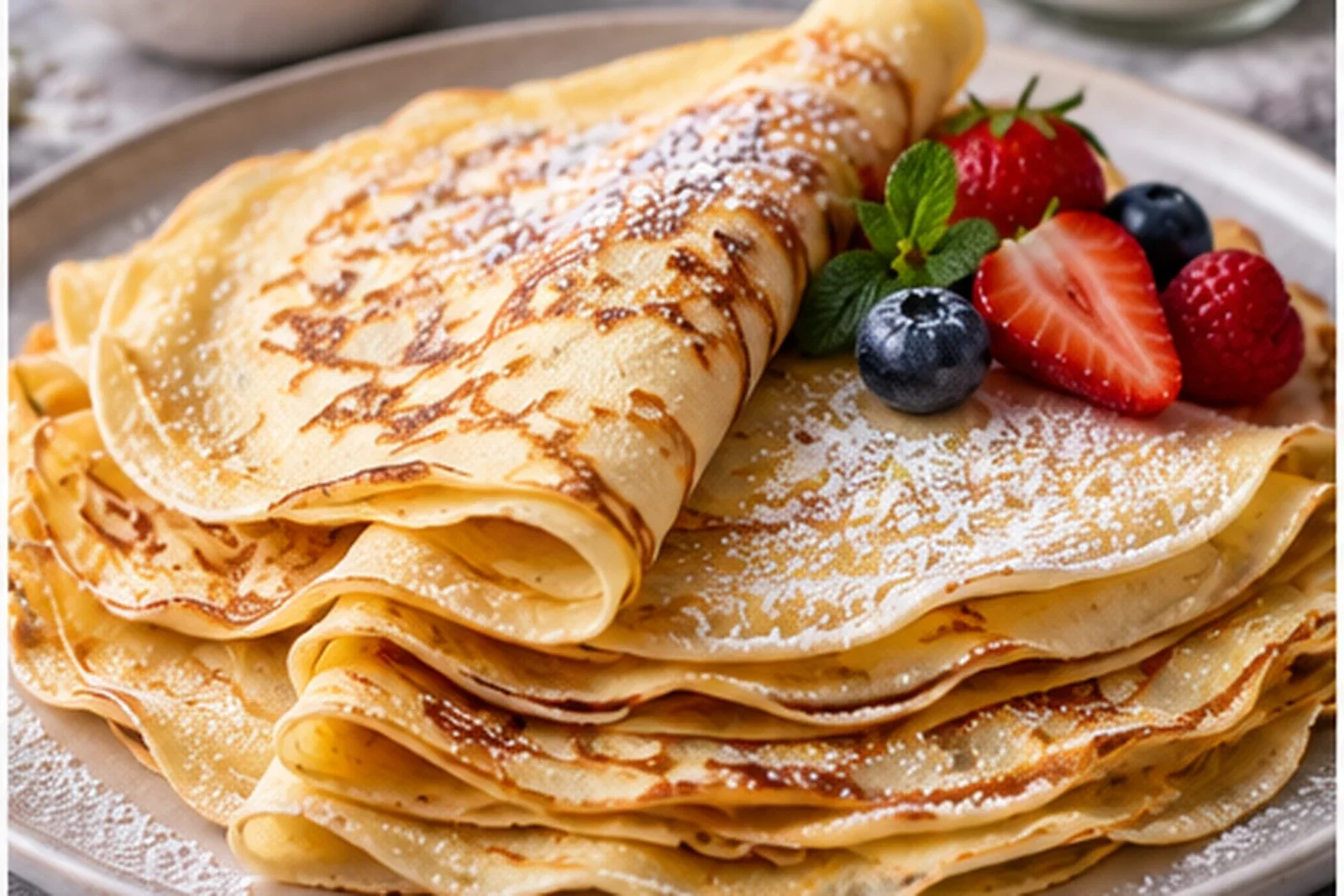
Each crêpe should be thin, flexible and lightly golden, folding without cracking or springing back like rubber.
Ingredients
What you need
Batter
- 240 g all-purpose flour
- 0.75 tsp fine salt
- 480 ml whole milk, room temperature
- 4 large eggs, room temperature
- 57 g unsalted butter, melted and cooled slightly
- 1 tbsp granulated sugar
- 1 tsp vanilla extract — optional for sweet crêpes
Pan
- 1 tbsp butter or neutral oil, for very light pan coating
Method
Cook by the cues, not just the clock
Blend the batter
Combine the milk, eggs, flour, salt, sugar and vanilla until smooth, then blend in the melted butter.
Rest
Cover and let the batter rest for at least 1 hour.
Heat the pan
Heat a 10-inch nonstick or crêpe pan over medium heat and wipe it with the thinnest film of butter or oil.
Cook the first side
Pour in about 60 ml batter and immediately tilt and rotate the pan to spread a thin layer. Cook until the surface looks set and the underside is lightly golden.
Flip briefly
Flip and cook the second side only until set, generally a few tens of seconds. Stack on a plate and cover while the remaining crêpes cook.
Critical checkpoints
Stop here and check
After resting: batter still thin and pourable?
The batter flows easily and coats the pan in a thin film.Add a small splash of milk if resting made the batter noticeably too thick.
First side: lightly golden and releasing?
The edge is lightly colored and a spatula can slide underneath without tearing.Flip now rather than waiting for the crêpe to become dry and stiff.
Finished crêpe: flexible or rubbery?
The crêpe folds softly without elastic chew or leathery resistance.Use the linked crepes-rubbery diagnosis if the texture is bouncy, tough or leathery.
If yours looks different
Route the failure before changing the recipe
After cooking
Storage, reheating & substitutions
Storage
Cool completely, stack with parchment if desired, cover and refrigerate. Freeze well wrapped for longer storage.
Reheating
Warm briefly in a lightly buttered skillet or in short microwave bursts under a cover so the crêpes do not dry out.
Substitutions
Omit vanilla for savory crêpes. If the batter thickens during resting, add a small splash of milk only until it again spreads in a very thin film.
Evidence
Sources & methodology
Technical claims and method decisions are tied to sources. Recipe-specific advice is not presented as a universal food-science law.
- The Best CrepesFood Network Kitchen
Food Network Kitchen emphasizes batter rest for a lighter, softer texture and cooks the crêpes quickly in a hot lightly oiled pan.
publisherPassage verified - Parisian Street Vendor CrêpesKing Arthur Baking
King Arthur rests the batter, spreads a thin layer in a medium-hot pan and cooks the second side only briefly.
publisherPassage verified