Before you start
What this method is trying to achieve
A classic French omelette is not supposed to develop a browned crust. Stir and shake while the eggs begin to set, smooth the curds into an even layer, reduce the heat for the finish and start rolling while the interior is still tender.
Success looks like
Know the target before you cook
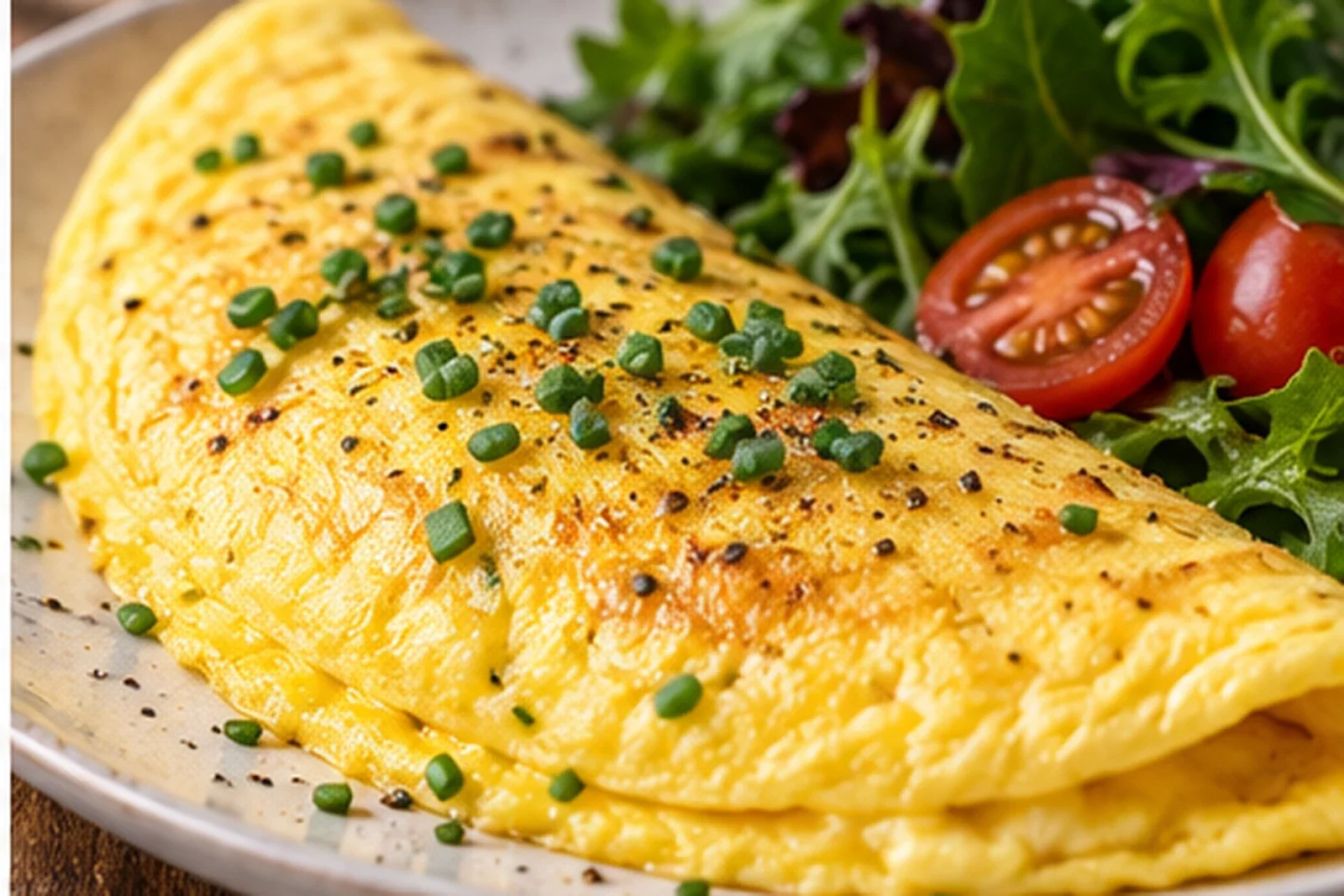
The finished omelette should be pale outside, smoothly rolled and tender inside without rubbery chew, dry cracks or a browned skin.
Ingredients
What you need
Eggs
- 3 large eggs
Seasoning
- 1 pinch kosher salt
- white or black pepper, finely ground — Optional.
Pan
- 14 g unsalted butter — About 1 tablespoon.
Finish
- 1 tbsp fresh chives or fines herbes, finely chopped — Optional.
Method
Cook by the cues, not just the clock
Beat eggs
Beat the eggs with salt and pepper until completely homogeneous with no streaks of white.
Start controlled heat
Melt the butter in a small nonstick skillet over medium heat without letting it brown.
Stir early
Add the eggs and immediately stir with a spatula while shaking the pan so small soft curds form evenly.
Reduce and shape
When the eggs are about half set, lower the heat and smooth the curds into an even layer. Add herbs if using.
Roll and plate
Fold or roll the omelette gently into thirds and slide it seam-side down onto a warm plate while still pale and tender.
Critical checkpoints
Stop here and check
Before eggs: butter melted but not brown?
The butter is foamy and melted without nutty brown specks.Reduce or lift the pan if the butter browns too fast.
At rolling: still moist and flexible?
The egg is set enough to hold shape but the top remains tender rather than dry.Begin rolling now instead of cooking until rigid.
Omelette browned, cracked or rubbery?
The exterior takes unwanted color or the finished egg is firm and bouncy.Use CookClue's omelette-rubbery-or-browned diagnosis to check heat, pan size, overcooking and fold timing.
If yours looks different
Route the failure before changing the recipe
After cooking
Storage, reheating & substitutions
Storage
Serve immediately; this style loses its tender texture quickly after cooling.
Reheating
Not recommended. Reheating tends to make the eggs firmer and drier.
Substitutions
A small amount of chopped herbs can be folded in before rolling. Keep fillings light so the omelette can close without overcooking.
Evidence
Sources & methodology
Technical claims and method decisions are tied to sources. Recipe-specific advice is not presented as a universal food-science law.
- French OmeletFood Network Kitchen
Food Network Kitchen's French omelet method actively moves the eggs and manages the heat so the omelet stays pale and tender instead of browning.
publisherPassage verified - Classic French OmeletteGeoffrey Zakarian / Food Network
Food Network's current French omelette method stirs until the eggs are half set, reduces the heat to low and finishes gently before rolling.
publisherPassage verified