Before you start
What this method is trying to achieve
French toast should be moist inside, not raw or waterlogged. Start with sturdy thick bread, dry it lightly if fresh, soak only until it feels heavy but still holds together, then cook gently enough that the center sets before the exterior burns.
Success looks like
Know the target before you cook
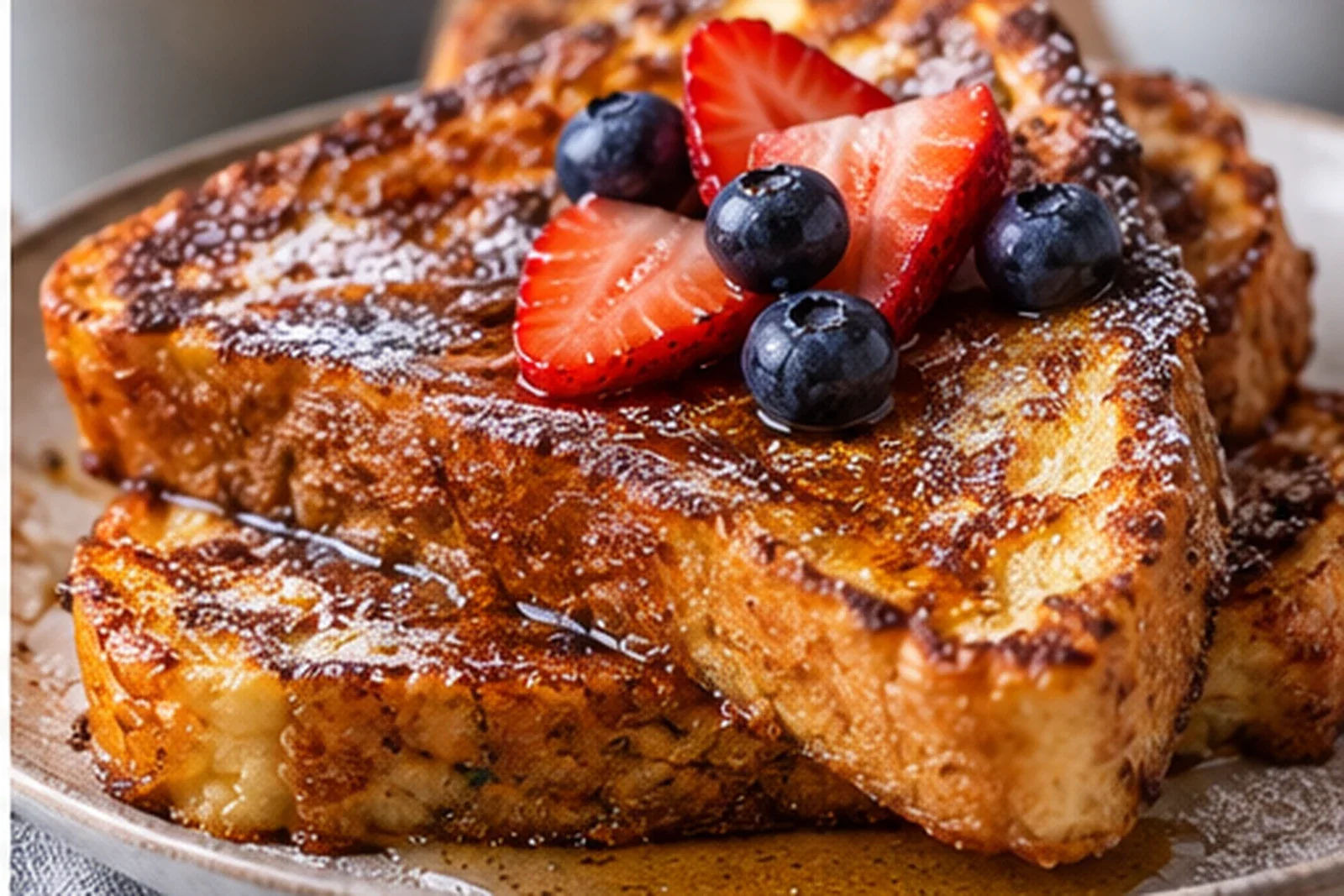
The toast should have a deep golden exterior and a soft custardy center that is fully set, not wet, leaking or collapsed.
Ingredients
What you need
Bread
- 8 slices pain de mie, brioche or challah, cut about 3/4 inch thick — Lightly dry fresh bread before soaking.
Custard
- 5 large eggs
- 240 ml half-and-half — About 1 cup.
- 25 g light brown sugar — About 2 tablespoons packed.
- 1 1/2 tsp vanilla extract
- 1 tsp ground cinnamon
- 1/4 tsp fine salt
Pan
- 56 g unsalted butter, divided — About 4 tablespoons.
Method
Cook by the cues, not just the clock
Dry fresh bread
If the bread is very fresh, bake the slices in a 150°C / 300°F oven for about 10 to 12 minutes, turning once, until lightly dried but not hard. Cool briefly.
Mix custard
Whisk the eggs until no white streaks remain, then whisk in half-and-half, sugar, vanilla, cinnamon and salt.
Soak
Press two slices at a time into the custard for about 1 minute per side, or less for softer bread, until they feel heavy but still hold their shape. Let excess custard drip off.
Cook gently
Melt a little butter in a nonstick skillet over medium-low heat. Cook two slices at a time until deep golden and the center is cooked through, about 4 to 5 minutes per side, adjusting the heat as needed.
Hold warm
Move cooked slices to a rack or sheet pan in a 95°C / 200°F oven while finishing the batch.
Critical checkpoints
Stop here and check
After soaking: heavy but still intact?
The slice has absorbed custard but can be lifted without tearing or collapsing.Shorten the soak if the loaf is softer than expected.
During cooking: browning too quickly?
The outside colors before the center has enough time to set.Reduce the skillet heat and extend the gentle cook.
Center still wet or mushy?
The toast is browned outside but the middle leaks custard or feels waterlogged.Use CookClue's french-toast-soggy diagnosis to check bread dryness, soak time, thickness and pan heat.
If yours looks different
Route the failure before changing the recipe
After cooking
Storage, reheating & substitutions
Storage
Refrigerate cooked leftovers promptly in a covered container.
Reheating
Reheat on a rack in a moderate oven until hot so the outside can dry again.
Substitutions
Pain de mie, brioche or challah all work. Very fresh soft bread should be lightly dried before soaking.
Evidence
Sources & methodology
Technical claims and method decisions are tied to sources. Recipe-specific advice is not presented as a universal food-science law.
- How to Make Perfect French ToastFood Network Kitchen
Food Network Kitchen recommends sturdy 3/4-inch bread, preferably stale or lightly dried, and controlling soak time so the slice absorbs custard without losing structure.
publisherPassage verified - The Best French ToastFood Network Kitchen
Food Network Kitchen lightly dries thick bread, soaks it until heavy but still intact, and cooks over medium-low heat until deep golden and cooked through.
publisherPassage verified