Before you start
What this method is trying to achieve
The main mistake with scrambled eggs is waiting for the pan to look completely dry. Low heat gives you time to form tender curds, and the eggs should leave the pan while they are still slightly softer and glossier than the final texture you want.
Success looks like
Know the target before you cook
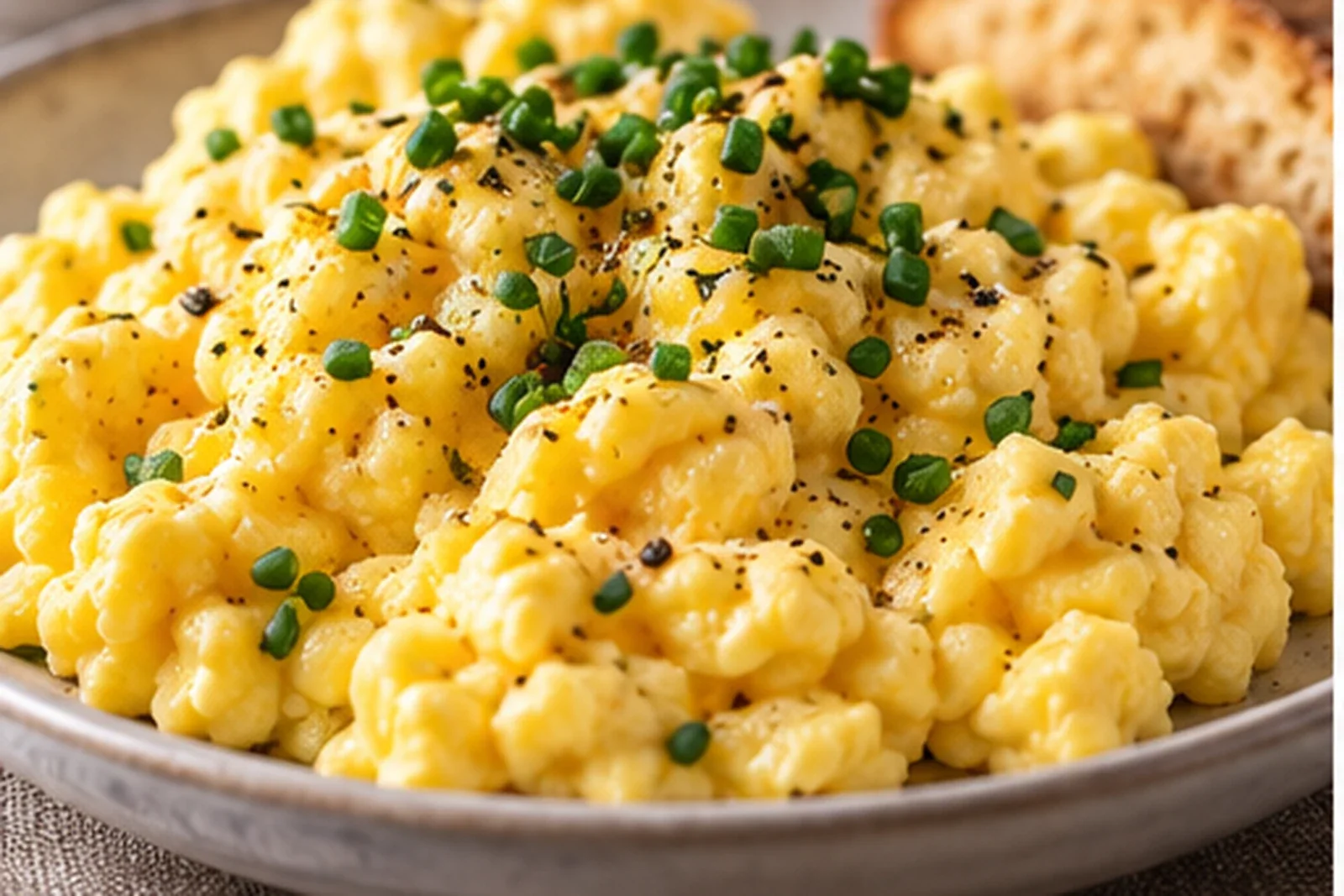
The eggs should form soft moist curds that hold together without browning, squeaking or releasing a puddle of water.
Ingredients
What you need
Eggs
- 8 large eggs
Seasoning
- 3/4 tsp kosher salt — Adjust to crystal size and taste.
- black pepper, freshly ground — To taste.
Pan
- 28 g unsalted butter, divided — About 2 tablespoons.
Finish
- 1 tbsp fresh chives, finely chopped — Optional.
Method
Cook by the cues, not just the clock
Beat eggs
Beat the eggs with the salt and pepper until the whites and yolks are fully blended but not aggressively foamy.
Start low
Melt half the butter in a medium nonstick skillet over low heat and swirl to coat the surface.
Form soft curds
Add the eggs and cook slowly, scraping and folding with a silicone spatula every few seconds so soft curds form gradually.
Stop early
Remove the skillet from the heat when most liquid has thickened but the curds are still soft and slightly glossy, usually around 8 to 10 minutes depending on pan and burner.
Finish
Fold in the remaining butter and chives, then transfer immediately to a warm plate.
Critical checkpoints
Stop here and check
During cooking: any browning at the edges?
The curds stay pale while forming slowly.Lower the heat immediately if brown spots appear.
At removal: slightly glossy and soft?
Most liquid is thickened but the curds are still softer than the final target.Plate now and let carryover heat finish the last bit.
Eggs dry, squeaky or rubbery?
The curds are firm, dry, bouncy or releasing water.Use CookClue's scrambled-eggs-rubbery diagnosis to separate high heat, overcooking and hot-pan carryover.
If yours looks different
Route the failure before changing the recipe
After cooking
Storage, reheating & substitutions
Storage
Scrambled eggs are best eaten immediately. Refrigerate leftovers promptly if necessary.
Reheating
Reheat very gently over low heat or in short microwave bursts; extra heat quickly makes the curds firmer.
Substitutions
A splash of cream can be added for richness, but the low heat and early stop matter more than dairy.
Evidence
Sources & methodology
Technical claims and method decisions are tied to sources. Recipe-specific advice is not presented as a universal food-science law.
- Simple Scrambled EggsFood Network Kitchen
Food Network Kitchen cooks scrambled eggs slowly over low heat, scraping occasionally, and removes them while soft rather than cooking to a dry finish.
publisherPassage verified - How to Make Creamy, Restaurant-Style Scrambled Eggs at HomeSerious Eats
Serious Eats recommends low gentle heat, controlled stirring and stopping while the eggs are still slightly underdone so residual heat does not make them tough.
publisherPassage verified