Before you start
What this method is trying to achieve
This method leans on gradual rendering rather than a sudden blast of heat. Arrange the strips so they do not overlap, place the pan in a cold oven, then bring the oven to 400°F / 204°C and cook until the bacon reaches your preferred crispness.
Success looks like
Know the target before you cook
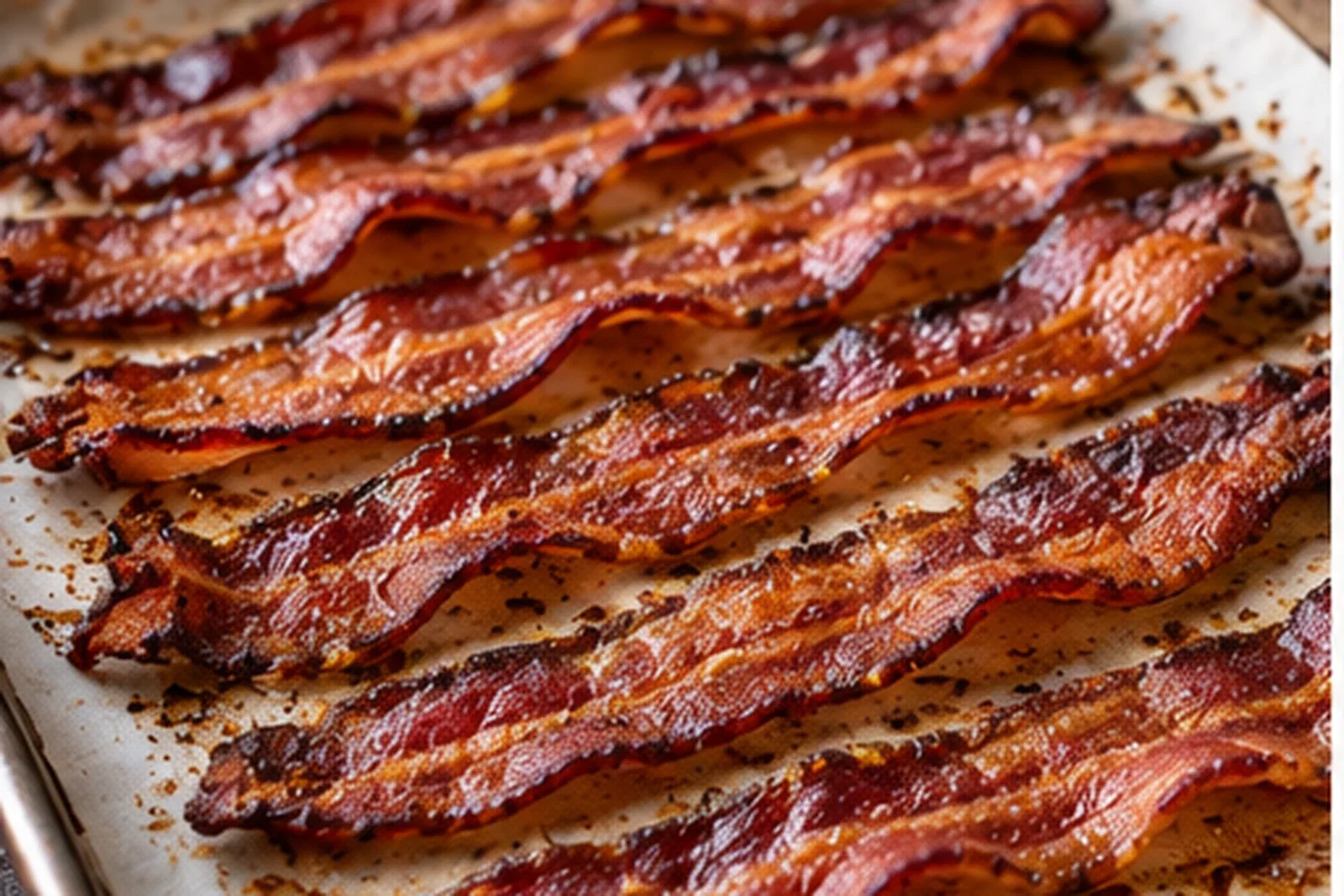
The bacon should be evenly browned with rendered fat, crisp edges and no pale chewy patches where slices overlapped.
Ingredients
What you need
Bacon
- 12 slices bacon
Pan
- foil or parchment, for lining the sheet pan
Seasoning
- 0.25 tsp freshly ground black pepper — optional
Method
Cook by the cues, not just the clock
Arrange
Line a rimmed sheet pan and place the bacon in a single layer so the strips may touch slightly but do not overlap. Sprinkle lightly with black pepper if using.
Cold start
Place the sheet pan into a cold oven, then set the oven to 400°F / 204°C.
Bake
Bake until the bacon is browned and approaching your preferred crispness, usually around 18 to 24 minutes depending on thickness.
Drain
Transfer the bacon immediately to paper towels or a rack.
Serve
Let the bacon sit for 1 to 2 minutes, then serve while crisp.
Critical checkpoints
Stop here and check
Before baking: any overlap?
The strips lie flat in one layer with no slice covering another.Rearrange or use a second pan before the oven is turned on.
Near the end: fat rendered and edges crisping?
The fat bands look translucent-to-golden and the strip edges are crisp.Continue in short intervals if the bacon is still pale and flexible.
After draining: still chewy?
The bacon is cooked but remains soft or rubbery in the fat bands.Use bacon-chewy-not-crispy to check overlap, rendering, thickness, cook time and draining.
If yours looks different
Route the failure before changing the recipe
After cooking
Storage, reheating & substitutions
Storage
Refrigerate cooled cooked bacon in a covered container. Reheat only the amount needed.
Reheating
Re-crisp briefly in a hot skillet, oven or air fryer; avoid long reheating that can burn the lean edges.
Substitutions
Thick-cut bacon works, but usually needs more time. Thin bacon may finish sooner, so start checking early.
Evidence
Sources & methodology
Technical claims and method decisions are tied to sources. Recipe-specific advice is not presented as a universal food-science law.
- How To Cook Bacon in the Oven So It's Perfectly CrispFood Network
Food Network recommends placing bacon in a single layer, starting it in a cold oven, heating to 400°F and draining once it reaches the desired crispness.
publisherPassage verified - Farmer's BreakfastFood Network / Ree Drummond
The recipe cooks bacon until crisp and pairs it with breakfast potatoes and eggs, supporting a clear crisp endpoint for breakfast bacon.
publisherPassage verified