Before you start
What this method is trying to achieve
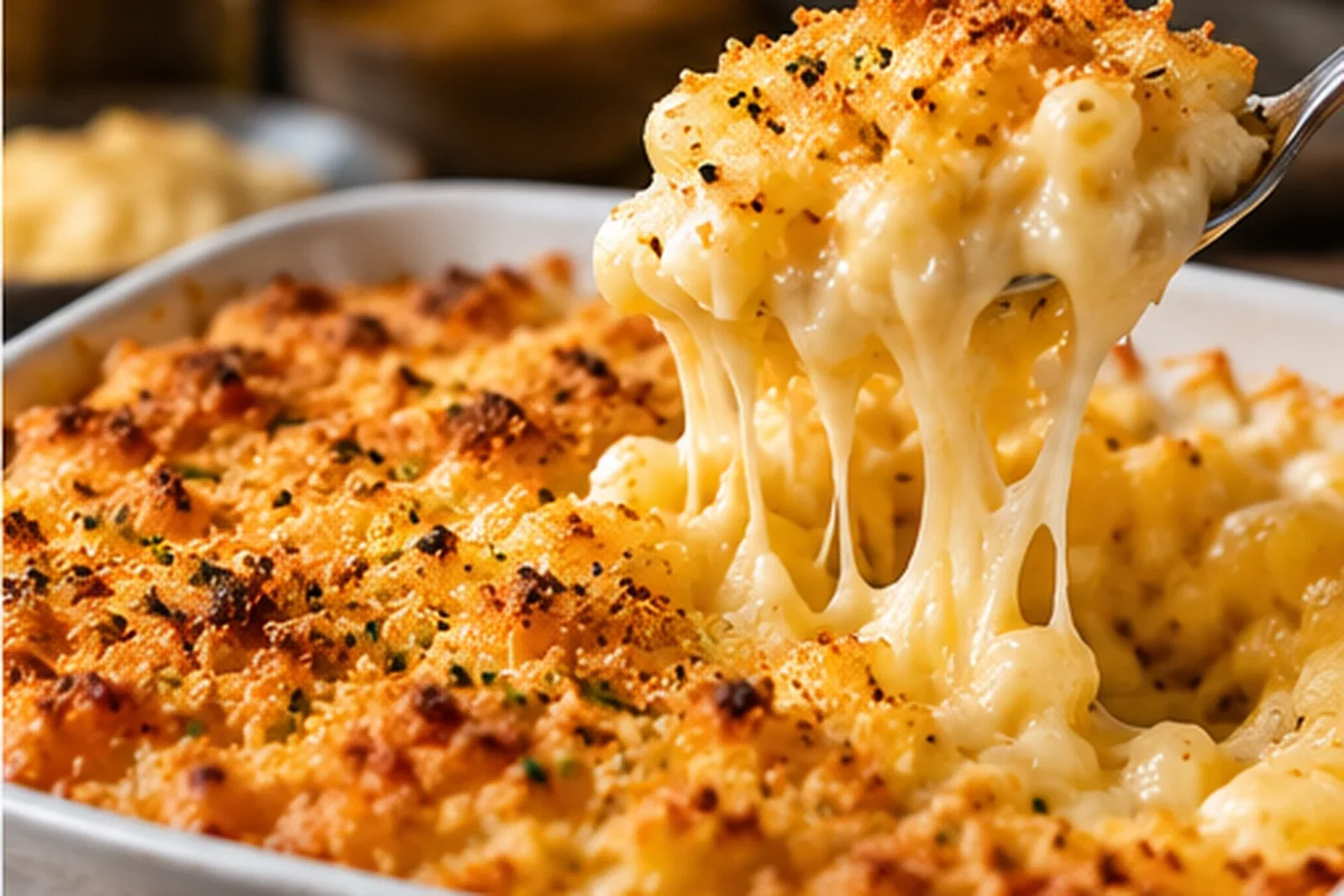
The oven should finish the casserole, not repair a broken cheese sauce. Start with pasta that is still firm, build a smooth roux-and-milk base, lower the heat before adding freshly grated cheese, then bake only long enough to brown the topping and heat the center.
Success looks like
Know the target before you cook
The macaroni should stay distinct and tender while the sauce clings smoothly. There should be no gritty curds or puddles of separated fat.
Ingredients
What you need
Pasta
- 450 g elbow macaroni or cavatappi
Sauce
- 55 g unsalted butter
- 45 g all-purpose flour
- 720 ml whole milk, warmed
- 1 tsp Dijon mustard
Cheese
- 250 g sharp cheddar, freshly grated
- 150 g Gruyère or fontina, freshly grated
Topping
- 60 g panko breadcrumbs
- 20 g unsalted butter, melted
Seasoning
- kosher salt and black pepper — To taste.
Method
Cook by the cues, not just the clock
Cook pasta
Heat the oven to 175°C / 350°F. Boil the pasta only until al dente, about 2 minutes short of very soft, then drain well.
Make roux
Melt butter over medium heat, whisk in flour and cook 2 to 3 minutes until smooth and pale.
Add milk
Whisk in warm milk gradually and cook until the sauce thickens enough to coat a spoon. Stir in Dijon and season.
Add cheese gently
Lower the heat, then remove the pan from direct heat. Add the grated cheeses in handfuls, whisking until smooth.
Bake
Fold in the pasta, transfer to the baking dish, top with buttered panko and bake until bubbling at the edges and lightly browned, about 15 to 20 minutes.
Critical checkpoints
Stop here and check
Before cheese: is the white sauce smooth?
The roux-milk base is lump-free and coats a spoon.Whisk it smooth before any cheese goes in.
While adding cheese: is the sauce below a hard boil?
The sauce is hot enough to melt cheese but not bubbling aggressively.Take the pan off direct heat before adding the cheese.
Finished sauce: creamy, grainy or oily?
A stable sauce is glossy and cohesive; gritty particles or separated fat signal different failures.Use CookClue's cheese-sauce diagnoses before adding more heat.
If yours looks different
Route the failure before changing the recipe
After cooking
Storage, reheating & substitutions
Storage
Cool promptly and refrigerate covered for up to 3 to 4 days.
Reheating
Reheat gently with a small splash of milk. Excessive high heat can make the sauce grainy or greasy.
Substitutions
Fontina or Gruyère can replace part of the cheddar. Grate cheese from a block for more predictable melting.
Evidence
Sources & methodology
Technical claims and method decisions are tied to sources. Recipe-specific advice is not presented as a universal food-science law.
- The Best Baked Mac and CheeseFood Network Kitchen
Food Network recommends al dente pasta, a roux-thickened cheese sauce and freshly grated cheeses for baked mac and cheese.
publisherPassage verified - Why Mac and Cheese Turns Grainy—and the Trick for Keeping It Creamy and DeliciousSerious Eats
Serious Eats explains graininess as cheese-sauce emulsion failure under heat and recommends stabilizing ingredients and gentler heating.
publisherPassage verified