Before you start
What this method is trying to achieve
Chicken and rice casserole works when raw rice gets enough hot liquid and covered time to hydrate, but not so much liquid that broth remains after the grains are tender. Keep the casserole tightly covered for the absorption stage, then uncover briefly only after the rice is tender.
Success looks like
Know the target before you cook
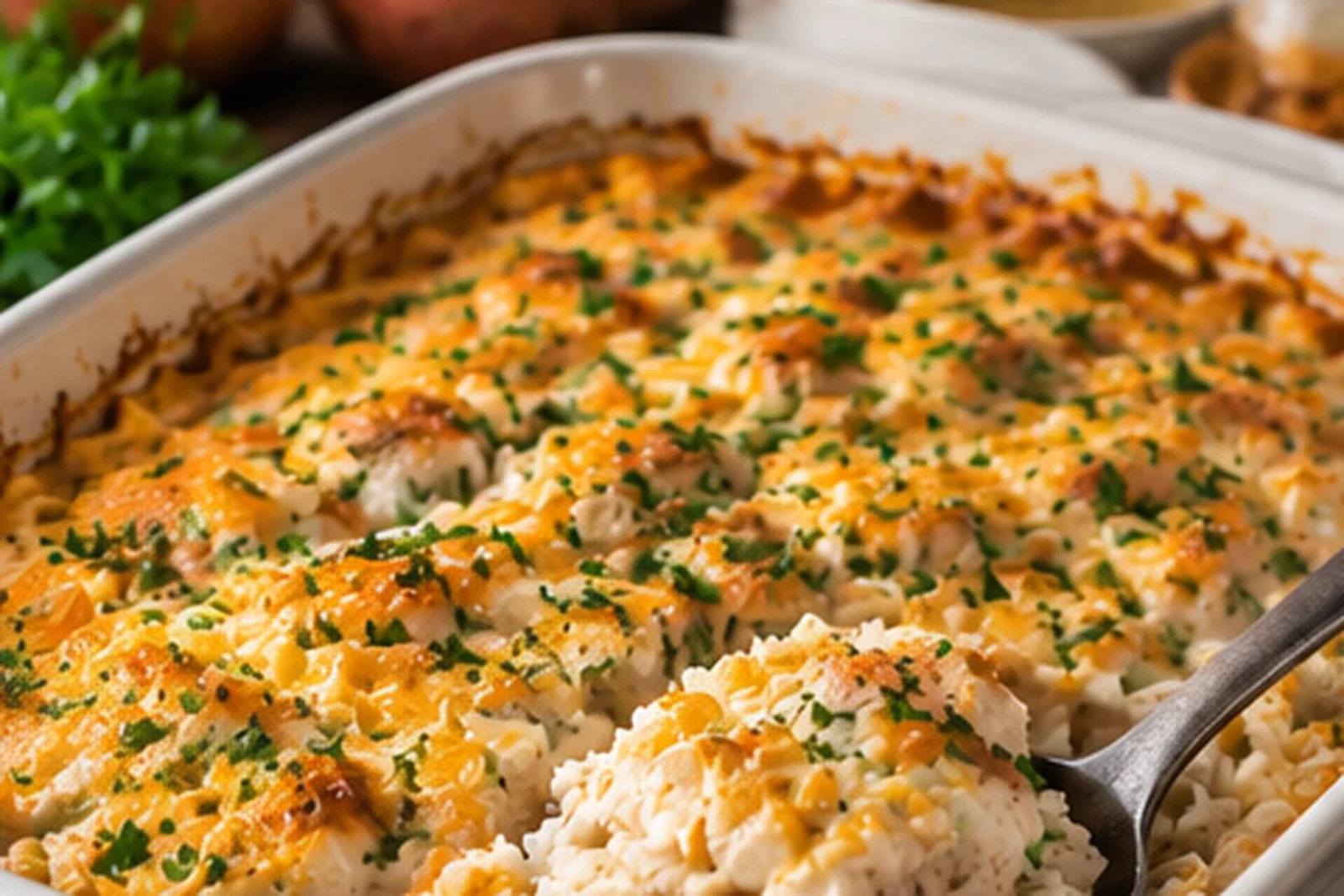
The rice should be tender and separate enough to spoon, the chicken fully cooked, and the surrounding sauce creamy with no puddle of thin broth.
Ingredients
What you need
Casserole
- 1 1/2 cups long-grain white rice, uncooked
- 680 g boneless skinless chicken thighs, cut into 1-inch pieces — about 1 1/2 lb
- 3 cups low-sodium chicken broth, hot
- 1 cup sour cream
Vegetables
- 2 cups broccoli florets, small
- 4 scallions, sliced
Seasoning
- 2 cloves garlic, minced
- 1 tsp kosher salt
- 1/2 tsp black pepper
Finish
- 1 cup shredded cheese, divided
Method
Cook by the cues, not just the clock
Heat and assemble
Heat the oven to 400°F / 205°C. Grease a 9-by-13-inch baking dish. Add rice, chicken, broccoli, most of the scallions, garlic, salt and pepper.
Add the measured liquid
Whisk hot broth and sour cream until smooth, then pour evenly over the casserole. Stir once to distribute the rice.
Cover tightly
Cover the dish tightly with foil and bake for about 35 minutes.
Check rice and chicken
Carefully uncover. The rice should be nearly tender and most liquid absorbed. Stir once, sprinkle with cheese and return uncovered for 10 to 15 minutes, until the center is hot and the chicken reaches at least 165°F / 73.9°C.
Rest before serving
Rest 5 to 10 minutes, then finish with the remaining scallions.
Critical checkpoints
Stop here and check
Mid-bake: firm rice plus liquid?
Firm or chalky rice with visible broth means absorption is incomplete.Re-cover and continue baking before changing the liquid ratio.
Finish: tender rice and 165°F chicken?
Rice is tender, most liquid is absorbed and the chicken reaches at least 165°F / 73.9°C.Do not stop on rice texture alone; verify the chicken.
After rest: creamy or soupy?
The casserole should spoon cleanly with a creamy coating, not release a puddle of thin broth.Use the watery-casserole diagnosis if tender rice still sits in excess liquid.
If yours looks different
Route the failure before changing the recipe
After cooking
Storage, reheating & substitutions
Storage
Cool promptly and refrigerate covered in shallow portions.
Reheating
Reheat covered with a small splash of broth only if the rice has dried during storage.
Substitutions
Long-grain white rice works best with this timing. Brown rice or cooked rice requires a different liquid budget and cooking time.
Evidence
Sources & methodology
Technical claims and method decisions are tied to sources. Recipe-specific advice is not presented as a universal food-science law.
- Chicken and Rice Casserole RecipeFood Network Kitchen
Food Network combines chicken and rice with broth and sour cream, covers tightly and bakes until the rice is tender and most liquid is absorbed.
publisherPassage verified - Chicken and Wild Rice CasseroleFood Network Kitchen
Food Network thickens a chicken-stock-and-cream sauce before combining it with chicken and rice in a casserole.
publisherPassage verified - Safe Minimum Internal Temperature ChartUSDA Food Safety and Inspection Service
USDA FSIS lists 165°F / 73.9°C for all poultry and casseroles.
governmentPassage verified