Before you start
What this method is trying to achieve
Watery lasagna usually starts before assembly: a loose sauce, wet filling or too much trapped moisture. This version keeps the meat sauce thick, drains the meat, cooks noodles only to al dente and rests the finished casserole before cutting.
Success looks like
Know the target before you cook
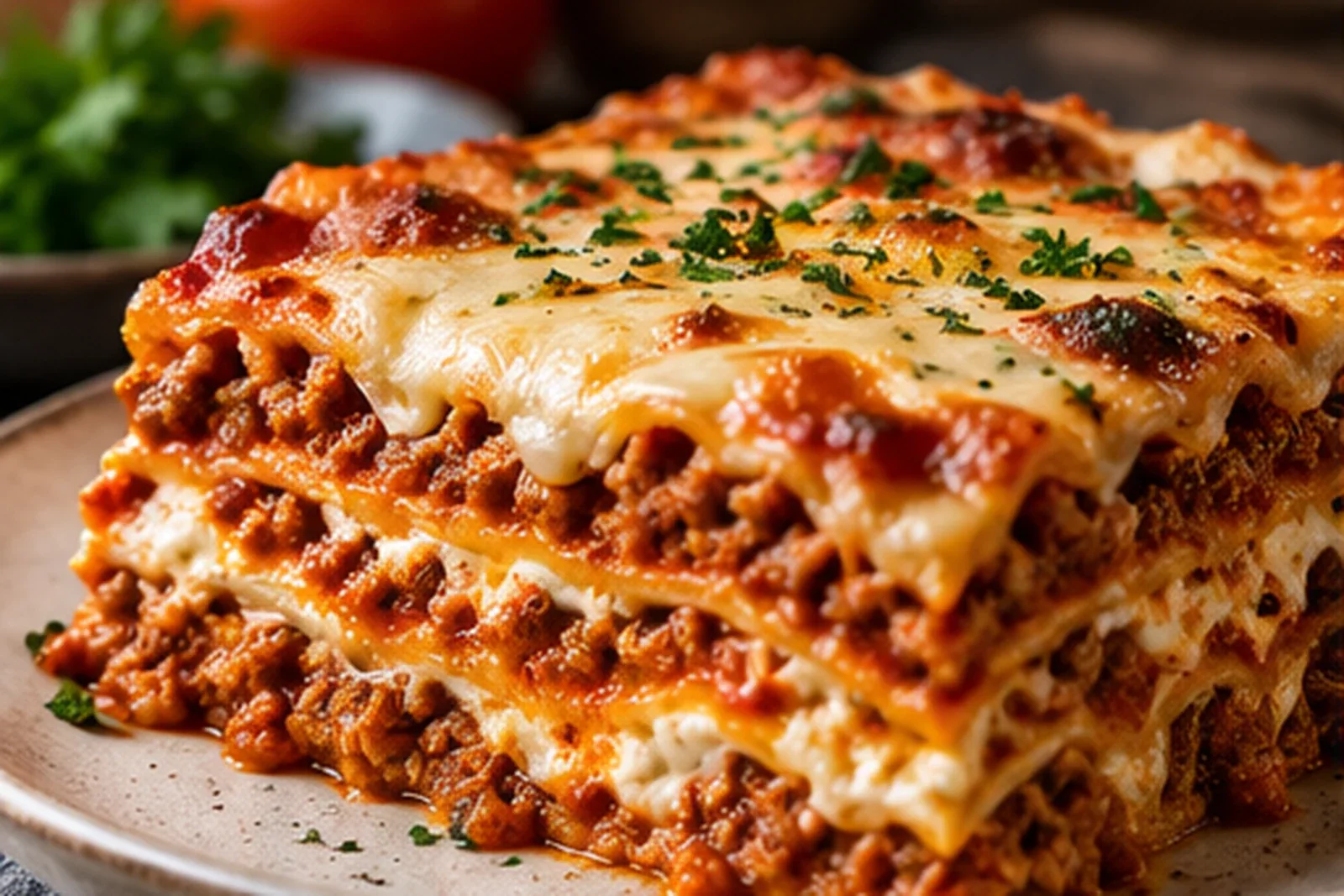
A slice should hold distinct layers with creamy cheese and sauce, but the plate should not fill with watery liquid.
Ingredients
What you need
Sauce
- 450 g ground beef
- 1 small onion, finely diced
- 3 cloves garlic, minced
- 800 g crushed tomatoes
- 2 tbsp tomato paste
- 1 tsp dried oregano
Filling
- 425 g whole-milk ricotta
- 1 large egg
- 50 g Parmesan, grated
Assembly
- 12 sheets lasagna noodles, cooked just to al dente and drained well
- 340 g low-moisture mozzarella, shredded
Seasoning
- kosher salt and black pepper
Method
Cook by the cues, not just the clock
Cook sauce
Brown the beef, drain obvious excess fat, then cook onion and garlic. Add tomatoes, tomato paste and oregano and simmer until thick enough that a spoon dragged across the pot leaves a brief trail.
Prepare filling
Mix ricotta, egg, Parmesan, salt and pepper. Keep the mixture chilled while the sauce cools slightly.
Cook noodles
Boil noodles only to al dente, drain very well and lay them flat so surface water can evaporate.
Layer
Layer sauce, noodles, ricotta mixture and mozzarella in a 9 x 13-inch dish, ending with sauce and cheese.
Bake
Cover and bake at 190°C / 375°F for 30 minutes, uncover and bake 15 to 20 minutes more until bubbling and browned.
Rest
Rest the lasagna at least 20 minutes before cutting.
Critical checkpoints
Stop here and check
Before assembly: is the sauce thick?
It mounds lightly on a spoon rather than running like soup.Reduce longer before assembling if it is still watery.
Before layering: are the noodles drained?
No visible water clings to or pools around the pasta sheets.Let them drain and steam off before assembly.
Before cutting: did the lasagna rest?
The casserole has stood for about 20 minutes after baking.If the center is still bubbling violently, wait longer before slicing.
If yours looks different
Route the failure before changing the recipe
After cooking
Storage, reheating & substitutions
Storage
Cool promptly and refrigerate covered for up to 3 to 4 days.
Reheating
Reheat covered until hot, uncovering briefly at the end if excess surface moisture collects.
Substitutions
Ground beef can be replaced with a beef-pork blend. Whole-milk ricotta is preferred for a richer filling.
Evidence
Sources & methodology
Technical claims and method decisions are tied to sources. Recipe-specific advice is not presented as a universal food-science law.
- Classic Cheese LasagnaFood Network
Food Network cooks the pasta close to al dente and rests the baked lasagna for 20 minutes before cutting.
publisherPassage verified - Classic Italian LasagnaFood Network / Giada De Laurentiis
The recipe uses a thick béchamel, drains excess fat from browned meat and bakes the assembled lasagna covered before finishing uncovered.
publisherPassage verified