Before you start
What this method is trying to achieve
Chicken Parmesan works best as two separate stages: first build a properly browned cutlet, then add sauce and cheese only for a short final finish. Keep the sauce thick and concentrated, leave some breading exposed and have the oven ready before the cutlets are sauced.
Success looks like
Know the target before you cook
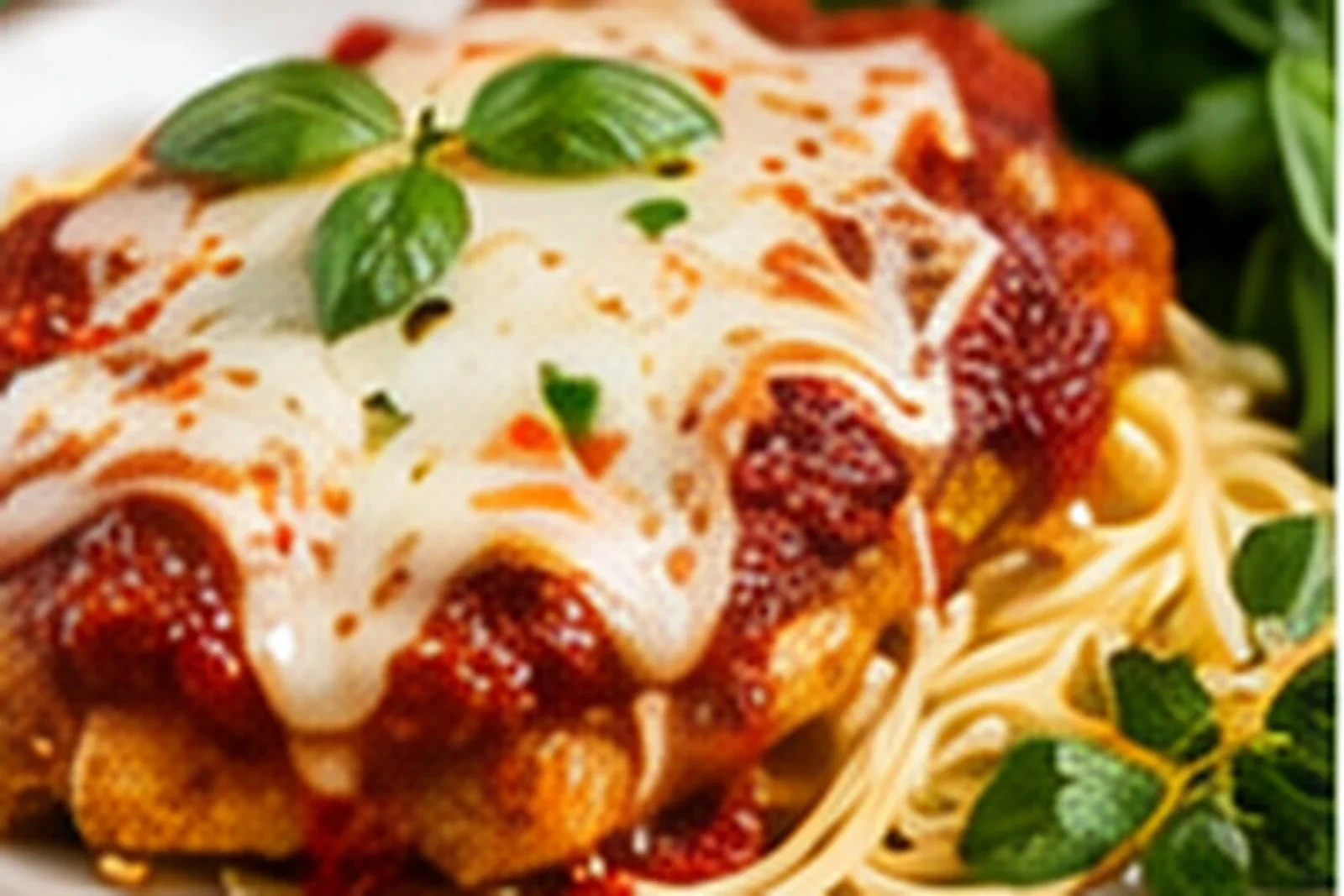
The cutlet should stay crisp around the edges with melted cheese and hot sauce on top, while the chicken reaches a safe 165°F / 73.9°C without drying out.
Ingredients
What you need
Chicken
- 4 pieces boneless skinless chicken breast cutlets, pounded to an even 1/2-inch thickness — about 150 to 170 g / 5 to 6 oz each
Breading
- 1/2 cup all-purpose flour
- 2 large eggs, beaten
- 1 1/2 cups panko breadcrumbs
- 1/2 cup finely grated Parmesan
Seasoning
- 1 tsp kosher salt
- 1/2 tsp black pepper
Cooking
- 1/3 cup olive oil — use enough for a shallow layer in the skillet
Finish
- 1 cup thick marinara sauce, warmed
- 170 g low-moisture mozzarella, shredded — about 1 1/2 cups
- 2 tbsp grated Parmesan
- 2 tbsp fresh basil leaves, torn
Method
Cook by the cues, not just the clock
Prepare the cutlets
Heat the oven to 425°F / 220°C. Pat the chicken dry, pound to an even 1/2-inch thickness and season with salt and pepper.
Bread
Set flour, beaten eggs, and panko mixed with Parmesan in three shallow dishes. Coat each cutlet lightly in flour, then egg, then panko mixture, pressing only enough for an even crust.
Brown the crust
Heat a shallow layer of olive oil over medium-high heat. Cook the cutlets in batches until the coating is deeply golden on both sides, about 2 to 3 minutes per side, then transfer to a sheet pan.
Sauce lightly
Spoon about 1/4 cup thick warm marinara over the center of each cutlet, leaving a border of crust exposed. Top with mozzarella and the remaining Parmesan.
Finish and check
Bake just until the cheese melts and the thickest part of each cutlet reaches at least 165°F / 73.9°C, about 5 to 8 minutes. Garnish with basil and serve immediately.
Critical checkpoints
Stop here and check
Before sauce: is the crust already crisp?
The breading is dry, deeply golden and audibly crisp at the edges.If it is still pale or oily, finish browning before adding sauce.
Assembly: is the sauce thick and restrained?
The marinara sits on the center of the cutlet without running into a large puddle.Reduce loose sauce separately or use less before the final bake.
Finish: crisp edge and safe center?
The cheese is melted, exposed crust remains crisp and the thickest chicken reads at least 165°F / 73.9°C.Use the linked soggy Chicken Parmesan diagnosis if the crust softens despite safe doneness.
If yours looks different
Route the failure before changing the recipe
After cooking
Storage, reheating & substitutions
Storage
Cool promptly and refrigerate covered. For better leftover texture, store extra marinara separately when practical.
Reheating
Reheat on a rack in a hot oven or air fryer until hot; add extra warm sauce only after the crust has re-crisped.
Substitutions
Use another firm melting mozzarella in place of low-moisture mozzarella. Fine dry breadcrumbs can replace panko, but the crust will be less coarse and crisp.
Evidence
Sources & methodology
Technical claims and method decisions are tied to sources. Recipe-specific advice is not presented as a universal food-science law.
- Chicken ParmigianaFood Network / Bobby Flay
Food Network uses panko for a crisper crust, browns the cutlets in hot oil and finishes the sauced chicken in the oven.
publisherPassage verified - Chicken ParmesanFood Network / Robert Irvine
Food Network browns the breaded chicken before adding sauce and warns that over-saucing can make the finished chicken soggy.
publisherPassage verified - Safe Minimum Internal Temperature ChartUSDA Food Safety and Inspection Service
USDA FSIS lists 165°F / 73.9°C as the safe minimum internal temperature for poultry.
governmentPassage verified