Before you start
What this method is trying to achieve
Baked chicken thighs are a moisture-management recipe. Pat the skin dry, keep the pieces apart so steam can escape and roast with the skin fully exposed. Use 165°F / 73.9°C as the safety minimum, but continue gently toward roughly 175°F / 79°C when needed for a more tender dark-meat texture.
Success looks like
Know the target before you cook
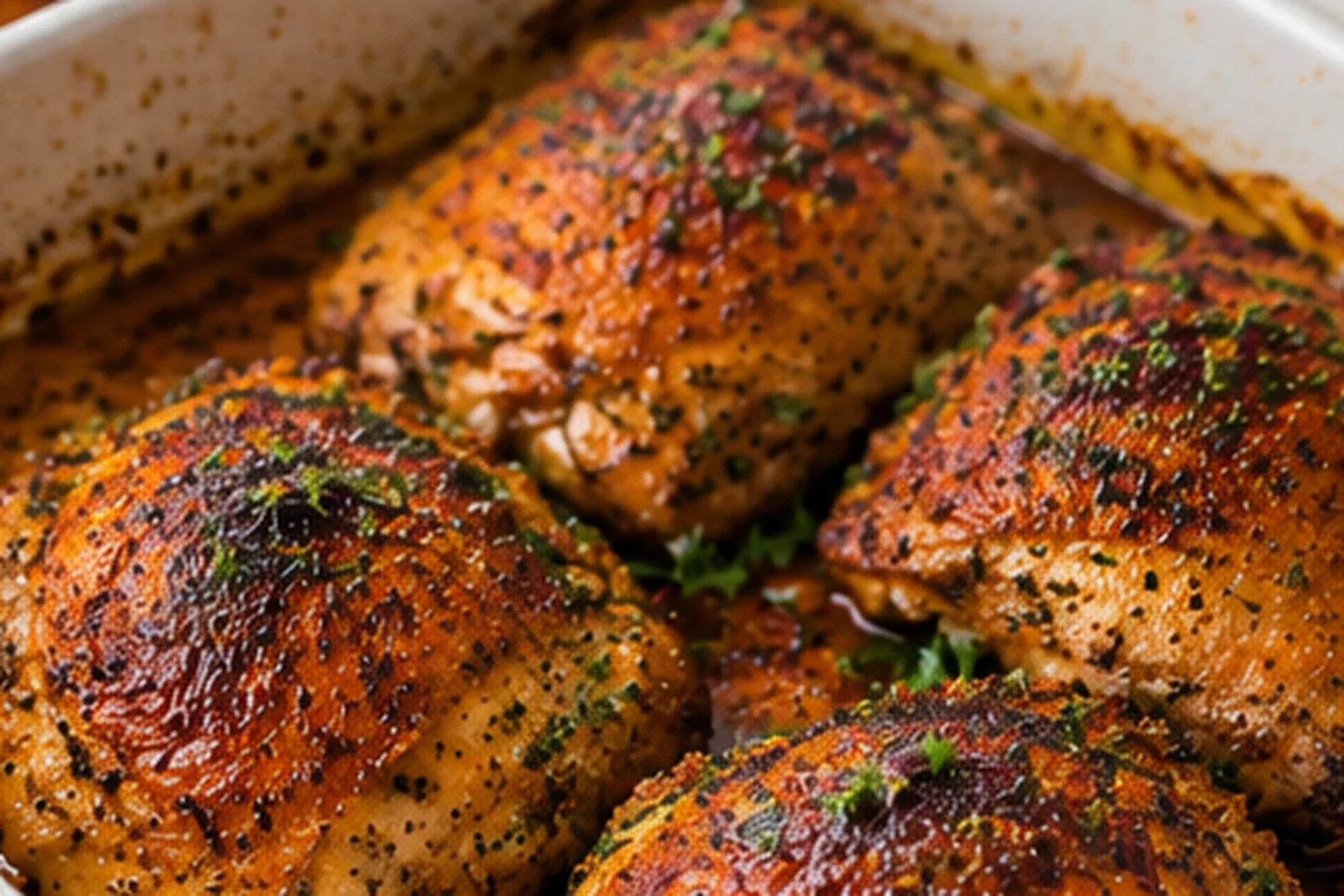
The skin should be deeply browned and crisp, while the thigh meat remains juicy and tender around the bone.
Ingredients
What you need
Chicken
- 8 bone-in skin-on chicken thighs, similar in size
Seasoning
- 2 tsp kosher salt
- 1 tsp black pepper, freshly ground
- 1 tsp garlic powder
- 1 tsp smoked paprika
- 1 tsp dried thyme
Finish
- 1 tbsp olive oil, lightly brushed or rubbed
Serve
- 1 lemon, cut into wedges — optional
Method
Cook by the cues, not just the clock
Heat the oven
Heat the oven to 425°F / 220°C. Set a wire rack over a sheet pan if using.
Dry and season
Pat every thigh very dry, especially the skin. Season with salt, pepper, garlic powder, paprika and thyme, then use only a light film of oil.
Arrange with space
Place thighs skin-side up with open space between pieces.
Roast to safe and tender
Bake until the thickest meat reaches at least 165°F / 73.9°C. For especially tender thighs, continue carefully toward about 175°F / 79°C if the meat is still moist and firm.
Rest and serve
Rest 5 to 10 minutes before serving. Keep the skin facing up so condensation does not soften it.
Critical checkpoints
Stop here and check
Before roasting: is the skin truly dry?
The skin looks matte and dry rather than glossy with water or marinade.Pat again before seasoning if moisture is visible.
Near the finish: safe but tender?
The thickest part is at least 165°F; if still moist and firm, the thigh can continue gently toward about 175°F for tenderness.Use the rubbery-or-chewy diagnosis if the safe thigh still resists.
At serving: crisp or soft?
The skin is browned and crisp instead of pale, rubbery or soggy.Use the skin-not-crispy diagnosis if the meat is cooked but the skin stayed soft.
If yours looks different
Route the failure before changing the recipe
Why Isn’t My Chicken Thigh Skin Crispy?
Why Are My Chicken Thighs Rubbery or Chewy?
After cooking
Storage, reheating & substitutions
Storage
Cool promptly and refrigerate covered. Store uncovered only briefly during cooling; refrigerate once cooled.
Reheating
Reheat skin-side up in a hot oven or air fryer just until hot so the skin has a chance to re-crisp.
Substitutions
Boneless skinless thighs need a shorter cook and will not produce the same crisp-skin result.
Evidence
Sources & methodology
Technical claims and method decisions are tied to sources. Recipe-specific advice is not presented as a universal food-science law.
- Greek Sheet Pan ChickenFood Network Kitchen
Food Network spaces skin-on thighs on a sheet pan for air circulation and roasts until the skin is crisp and the thighs are safely cooked.
publisherPassage verified - How to Cook Chicken ThighsFood Network Kitchen
Food Network recommends drying skin-on thighs, using controlled rendering for crisp skin and notes that dark thigh meat becomes especially tender around 175°F.
publisherPassage verified - Safe Minimum Internal Temperature ChartUSDA Food Safety and Inspection Service
USDA FSIS lists 165°F / 73.9°C as the safe minimum internal temperature for poultry.
governmentPassage verified