Before you start
What this method is trying to achieve
Lemon curd can look loose while hot and still set correctly after chilling, but it must first reach the egg-thickening stage. Temper hot lemon juice into the eggs gradually, whisk continuously as the curd cooks, verify the 170°F endpoint, then strain before adding cold butter.
Success looks like
Know the target before you cook
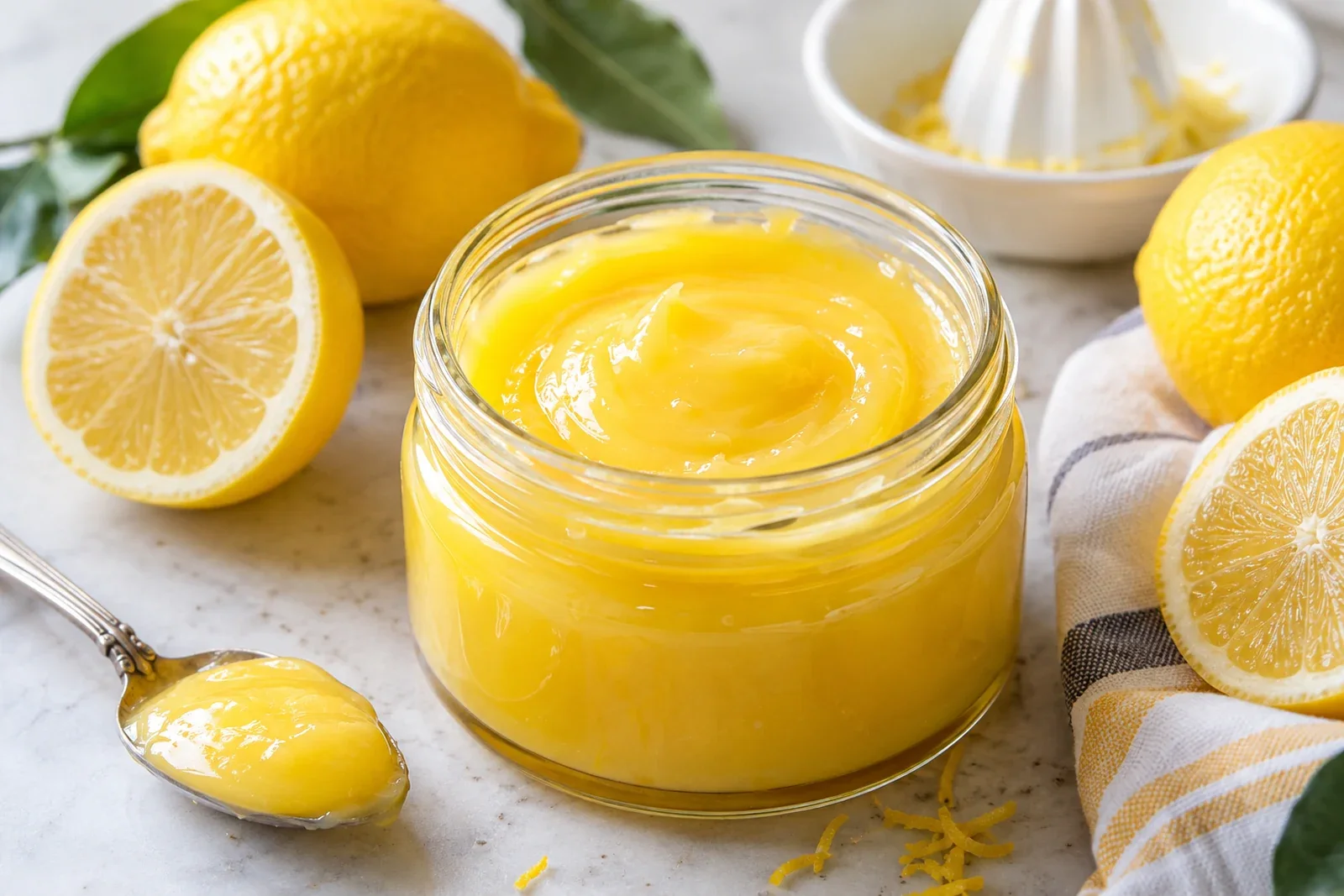
The finished curd should be glossy, intensely lemony and thick enough after chilling to mound softly on a spoon rather than run like juice.
Ingredients
What you need
Curd
- 248 g granulated sugar
- 2 lemons lemon zest, finely grated — Zest only the yellow outer layer.
- 227 g fresh lemon juice — About 1 cup; strain out seeds.
- 4 large eggs
- 2 large egg yolks
Finish
- 113 g unsalted butter, cold and cubed
- 1/2 tsp vanilla extract
- 1/8 tsp fine salt
Method
Cook by the cues, not just the clock
Flavor the sugar
Rub the finely grated lemon zest into the sugar with your fingertips until fragrant and slightly damp.
Heat lemon juice
Warm the lemon juice in a heavy saucepan over low heat until hot but not boiling.
Temper the eggs
Whisk the eggs and yolks until homogeneous, then whisk in the lemon sugar gradually. While whisking constantly, stream the hot lemon juice slowly into the egg mixture.
Cook to endpoint
Return everything to the saucepan and cook over medium heat, whisking constantly and reaching the corners, until the curd coats a spoon and reaches about 77°C / 170°F, usually 6 to 8 minutes.
Strain and finish
Immediately push the hot curd through a fine-mesh sieve. Whisk in the cold butter, vanilla and salt until completely smooth and glossy.
Chill to set
Press wrap directly against the surface and refrigerate about 4 hours before judging final thickness.
Critical checkpoints
Stop here and check
On the stove: did the curd reach about 170°F?
The mixture coats the back of a spoon and the thermometer reads about 170°F.If it is still cooler and thin, continue controlled cooking while whisking.
After cooking: smooth curd or cooked egg bits?
The curd passes through the sieve as a smooth thick liquid rather than containing obvious scrambled particles.Strain immediately and avoid higher heat on the next batch.
After 4 hours cold: still flowing like sauce?
The fully chilled curd still runs freely and will not mound or cling to a spoon.Use CookClue's lemon-curd-wont-thicken diagnosis to separate undercooking, ratio and measurement problems.
If yours looks different
Route the failure before changing the recipe
After cooking
Storage, reheating & substitutions
Storage
Press wrap against the surface and refrigerate in a clean airtight container for up to about 1 week. Freeze for longer storage.
Reheating
Lemon curd is normally served chilled or cool. If using in a warm application, warm gently rather than boiling it.
Substitutions
For a milder lemon profile, reduce or omit the zest without changing the juice and egg structure. Do not sharply reduce the egg content and expect the same set.
Evidence
Sources & methodology
Technical claims and method decisions are tied to sources. Recipe-specific advice is not presented as a universal food-science law.
- Lemon CurdFood Network Kitchen
Food Network Kitchen cooks yolks, sugar and lemon over gentle indirect heat until thick enough to coat a spoon, then incorporates cold butter and chills the curd thoroughly.
publisherPassage verified - Lemon Curd RecipeKing Arthur Baking
King Arthur's July 2026 update heats lemon juice, tempers it into eggs and sugar, cooks the curd while whisking until it coats a spoon and reaches 170°F, then strains and finishes with cold butter.
publisherPassage verified