Before you start
What this method is trying to achieve
Pavlova needs a stable, glossy meringue before it reaches the oven and enough dry time afterward. Add sugar gradually so it can dissolve, bake low and slow, then leave the meringue in the switched-off oven. Only add whipped cream and fruit shortly before serving so topping moisture does not turn the shell wet.
Success looks like
Know the target before you cook
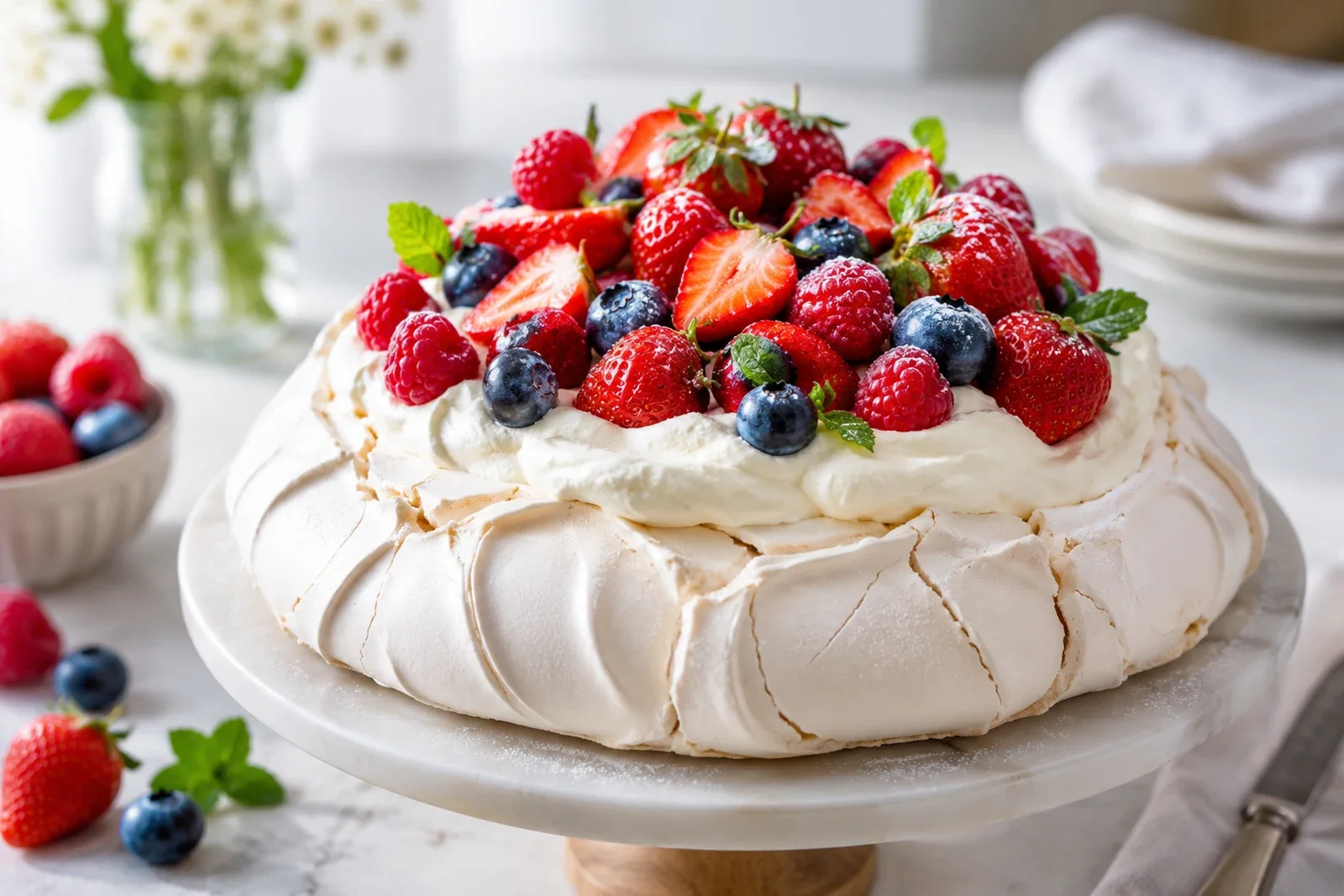
The pavlova should have a dry crisp exterior, a softer marshmallow-like center and enough structural strength to hold whipped cream and berries without collapsing into syrup.
Ingredients
What you need
Meringue
- 3 large egg whites, room temperature — About 90 to 105 g total.
- 1 pinch fine salt
- 1/2 tsp cream of tartar
- 198 g superfine sugar — Finer crystals dissolve more readily.
- 1 tbsp cornstarch
Topping
- 340 g heavy cream, cold — About 1 1/2 cups.
- 28 g confectioners' sugar
- 1 tsp vanilla extract
- 280 g mixed fresh berries, dry and chilled — Dry the fruit surface before topping the pavlova.
Method
Cook by the cues, not just the clock
Prepare
Heat the oven to 95°C / 200°F. Draw a 9-inch circle on parchment, flip the paper over and place it on a sheet pan.
Build the foam
Beat the egg whites with the salt and cream of tartar on medium-high until soft peaks form.
Add sugar gradually
Mix the superfine sugar with the cornstarch, then add it to the whipping whites a little at a time. Continue beating until the meringue is thick, glossy and holds stiff peaks.
Shape and bake
Spread the meringue inside the circle, building the rim slightly higher than the center. Bake for 1 hour.
Dry slowly
Turn the oven off and leave the door closed for at least 1 hour while the shell cools and dries. Cool completely before decorating.
Top just before serving
Whip the cream with confectioners' sugar and vanilla until thick. Spoon it into the cooled shell and add dry fresh berries shortly before serving.
Critical checkpoints
Stop here and check
Before baking: is the meringue glossy and nearly grit-free?
The foam holds stiff peaks and a small rubbed sample feels smooth rather than sandy.Keep whipping before baking if coarse sugar crystals are still obvious.
After baking: did it cool slowly in the dry oven?
The shell stays in the switched-off closed oven rather than being moved immediately into humid room air.Give it the full drying period before decorating.
Surface becoming wet or syrupy?
Beads, sticky syrup or a puddle appear on or under the meringue rather than just a few dry cracks.Use CookClue's meringue-weeping diagnosis to check humidity, sugar dissolution and drying conditions.
If yours looks different
Route the failure before changing the recipe
After cooking
Storage, reheating & substitutions
Storage
Store the untopped baked shell in a dry airtight environment. Refrigerate only the cream and fruit components separately.
Reheating
Do not reheat an assembled pavlova. If the unfilled shell has softened slightly from humidity, a very low dry oven may help, but severe weeping cannot be fully reversed.
Substitutions
Use superfine sugar for easier dissolution. Different fresh fruits can replace the berries, but very juicy toppings should be added at the last moment.
Evidence
Sources & methodology
Technical claims and method decisions are tied to sources. Recipe-specific advice is not presented as a universal food-science law.
- Meringue rules: What to abide and what to let slideKing Arthur Baking
King Arthur explains that sugar attracts moisture, humidity can make meringue harder to dry, and acid and starch can help support a more stable meringue structure.
publisherPassage verified - PavlovaKing Arthur Baking
King Arthur's pavlova uses egg whites, cream of tartar, superfine sugar and cornstarch, bakes at low temperature and dries in the switched-off closed oven before topping.
publisherPassage verified