Before you start
What this method is trying to achieve
The most important hash-brown step happens before frying: remove as much free water as possible. Wet shredded potatoes steam each other and cool the pan. Squeeze them dry, start in a hot fat-coated skillet, spread into a reasonably thin layer and resist moving them until the first crust has formed.
Success looks like
Know the target before you cook
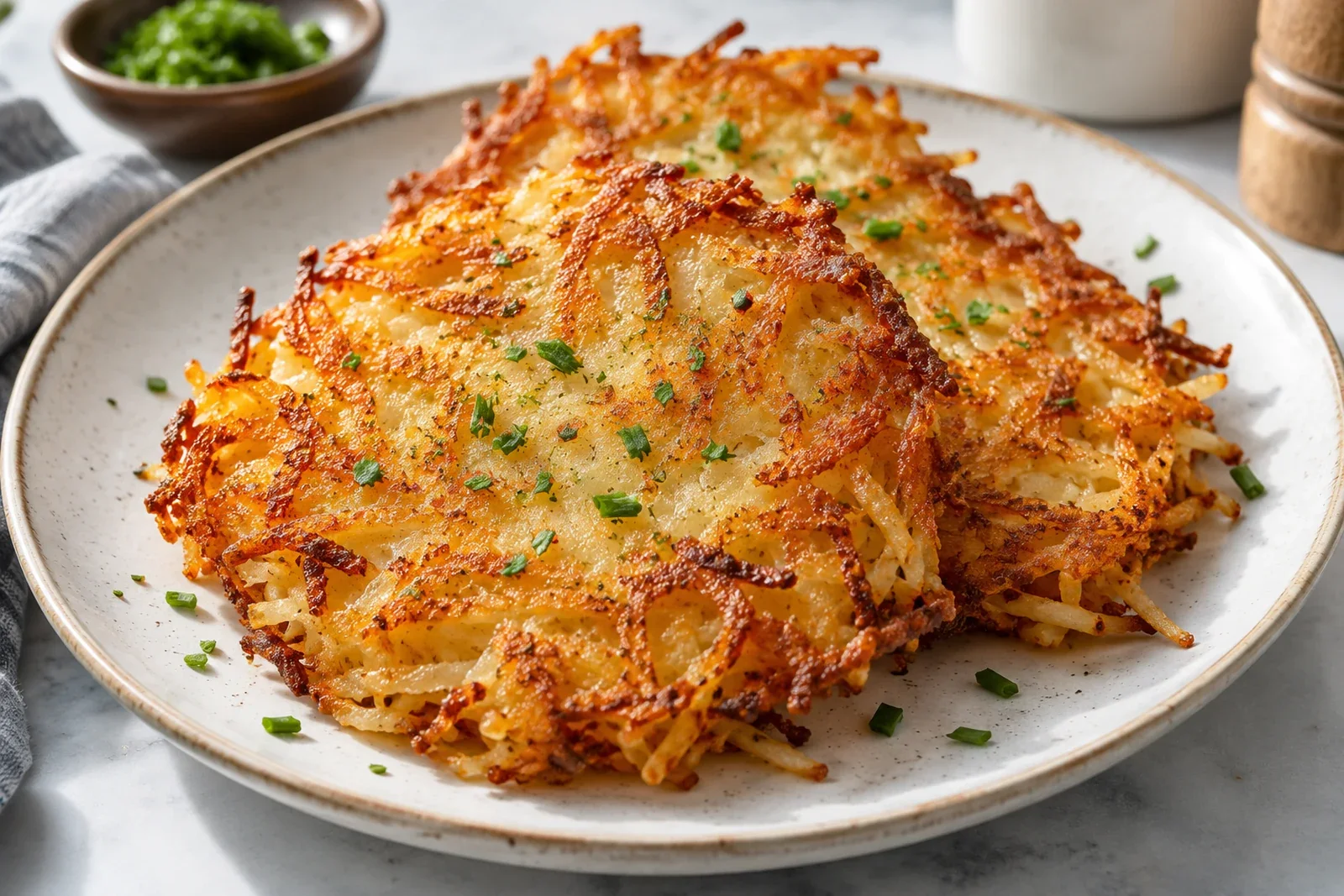
The hash browns should have deeply golden crisp surfaces and tender potato strands inside, without a pale wet center or greasy soggy underside.
Ingredients
What you need
Potatoes
- 900 g russet potatoes, peeled — About 4 medium potatoes.
Pan
- 30 g unsalted butter
- 1 tbsp neutral high-heat oil — Helps the butter tolerate skillet heat.
Seasoning
- 1 tsp kosher salt — Adjust to salt crystal size and taste.
- 1/2 tsp black pepper, freshly ground
- 1/2 tsp paprika — Optional for color and mild flavor.
Method
Cook by the cues, not just the clock
Shred and dry
Grate the potatoes on the large holes of a box grater. Wrap the shreds in a clean towel and squeeze very firmly over the sink until little additional liquid comes out.
Heat the pan
Heat a large skillet over medium-high heat. Add the butter and oil and let the fat become hot and fully melted before adding the potato.
Form a thin layer
Spread the dry shredded potatoes into an even layer about 1 cm / 3/8 inch thick. Season and press lightly just enough for good pan contact.
Brown undisturbed
Cook without stirring until the underside is deeply golden and releases as a cohesive crust, about 5 to 7 minutes. Divide into manageable sections and flip.
Finish
Cook the second side until browned and the potato strands are tender, about 5 to 7 minutes more. Serve immediately.
Critical checkpoints
Stop here and check
Before frying: did you squeeze hard enough?
The towel no longer releases a stream of potato water when twisted firmly.Keep squeezing before the shreds enter the skillet.
First side: did a real crust form before movement?
The underside is brown enough to hold together when a spatula slides beneath it.Wait longer before flipping if the potato still breaks into pale wet strands.
Finished but still limp or wet?
The potatoes remain pale, soft, greasy or steamy instead of crisp.Use CookClue's hash-browns-soggy diagnosis to separate excess water, crowding, pan heat and packing problems.
If yours looks different
Route the failure before changing the recipe
After cooking
Storage, reheating & substitutions
Storage
Refrigerate cooked leftovers promptly in a covered container.
Reheating
Reheat in a hot skillet, oven or air fryer in a thin layer. Microwaving softens the crust.
Substitutions
Russet potatoes are preferred for their starch and lower moisture. Clarified butter, ghee or a neutral high-heat oil can replace the butter-oil blend.
Evidence
Sources & methodology
Technical claims and method decisions are tied to sources. Recipe-specific advice is not presented as a universal food-science law.
- Neely's Homemade Hash BrownsFood Network
Food Network's homemade hash-brown method squeezes as much moisture as possible from the grated potato mixture before pressing it into a skillet and browning both sides.
publisherPassage verified - Hash BrownsFood Network Kitchen
Food Network Kitchen's hash-brown method grates russet potatoes, squeezes and blots away excess moisture and starts them in hot clarified butter without disturbing the first browning stage.
publisherPassage verified