Before you start
What this method is trying to achieve
Carne asada works best when a thin steak is seasoned deeply, stripped of excess wet marinade before searing, cooked quickly over strong heat and carved across the grain. The recipe keeps the marinade flavorful but avoids carrying so much liquid to the pan or grill that the meat steams.
Success looks like
Know the target before you cook
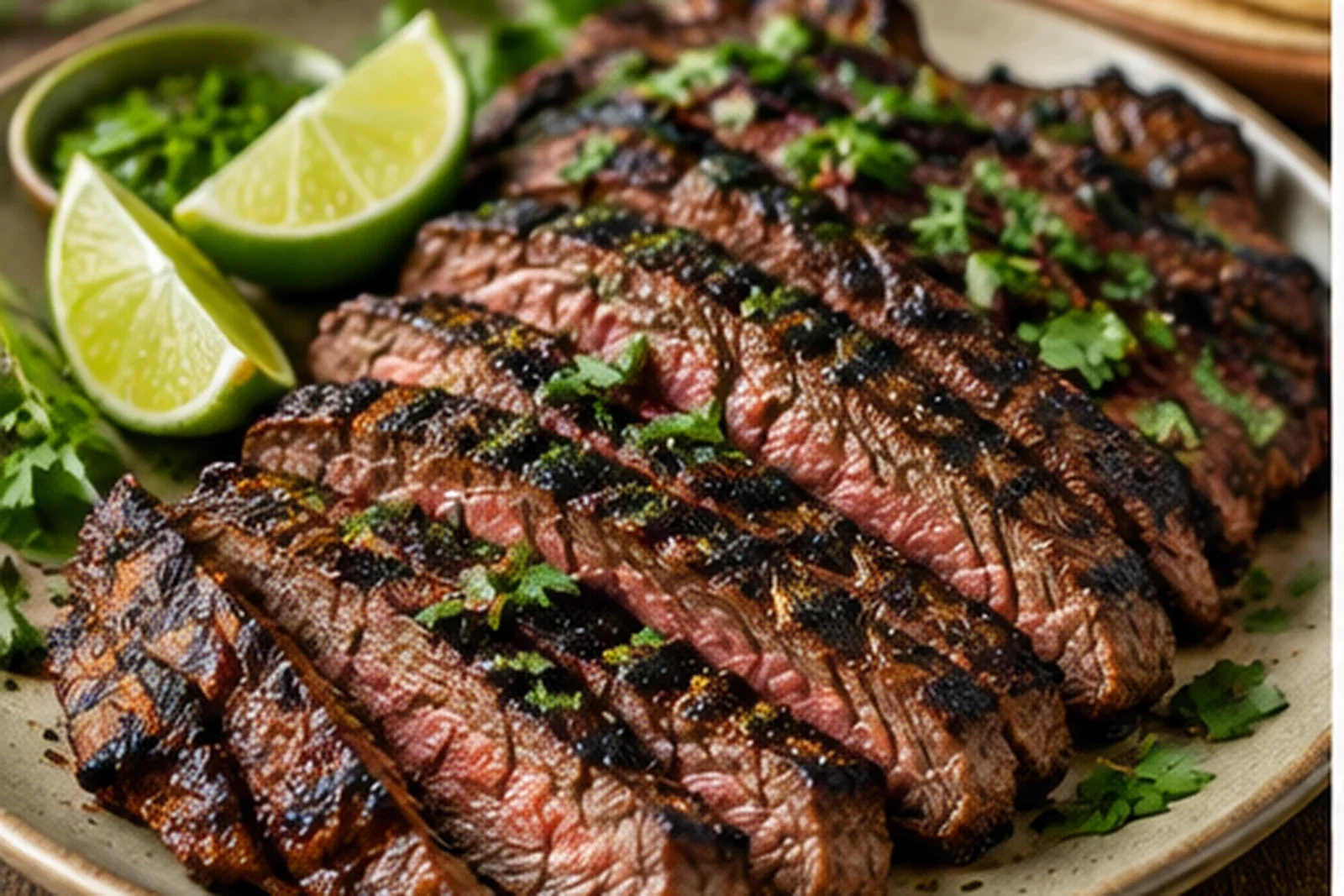
The steak should have dark charred patches, a juicy center cooked to a safe endpoint, and short tender fibers after thin across-the-grain slicing.
Ingredients
What you need
Steak
- 680 g skirt steak, trimmed
Marinade
- 60 ml fresh orange juice
- 45 ml fresh lime juice
- 2 tbsp neutral oil
- 3 cloves garlic, finely grated
- 1 tsp ground cumin
- 1 tsp dried oregano
- 1.5 tsp kosher salt
Finish
- 0.5 cup fresh cilantro, chopped
Serve
- 4 to 8 warm corn or flour tortillas — optional
Method
Cook by the cues, not just the clock
Marinate
Whisk orange juice, lime juice, oil, garlic, cumin, oregano and salt. Coat the steak and refrigerate 2 to 4 hours.
Dry and heat
Heat a grill or cast-iron skillet over high heat. Remove the steak from the marinade and blot away heavy surface liquid.
Sear
Cook the steak over strong heat, turning once, until deeply browned and the thermal center reaches at least 145°F / 62.8°C.
Rest
Transfer to a board and rest at least 3 minutes.
Slice and serve
Identify the direction of the long muscle fibers, then slice thinly across the grain on a diagonal. Finish with cilantro and serve with warm tortillas if desired.
Critical checkpoints
Stop here and check
Before searing: surface dry enough?
The steak is seasoned but not dripping wet marinade into the pan or fire.Blot excess liquid before cooking if the surface looks wet.
At the grill: strong browning without steaming?
Dark char develops quickly and liquid is not pooling around the steak.Increase effective heat or reduce pan crowding if the steak turns gray.
Before serving: safe center and short fibers?
The thermal center has reached at least 145°F / 62.8°C, rested 3 minutes, and slices run across the grain.Finish gently if below the safe endpoint; rotate the steak before slicing if fibers run lengthwise through each slice.
If yours looks different
Route the failure before changing the recipe
After cooking
Storage, reheating & substitutions
Storage
Refrigerate cooked sliced steak in a covered container for up to 4 days. Store toppings separately.
Reheating
Reheat briefly in a hot skillet with a spoonful of juices; prolonged reheating can toughen thin slices.
Substitutions
Flank steak may replace skirt steak. If using a thicker cut, extend cooking gently and rely on internal temperature rather than the clock.
Evidence
Sources & methodology
Technical claims and method decisions are tied to sources. Recipe-specific advice is not presented as a universal food-science law.
- Carne AsadaFood Network
Food Network marinates steak, cooks it over high heat, rests it, then slices thinly against the grain.
publisherPassage verified - Safe Minimum Internal Temperature ChartUSDA Food Safety and Inspection Service
USDA FSIS lists 145°F / 62.8°C followed by a 3-minute rest as the safe minimum for whole beef steaks, chops and roasts.
governmentPassage verified