Before you start
What this method is trying to achieve
Cast iron gives ribeye the sustained contact heat needed for browning. The key is to separate crust formation from internal doneness: dry the meat, preheat the pan thoroughly, sear without crowding, then use gentler heat as needed while watching the center temperature.
Success looks like
Know the target before you cook
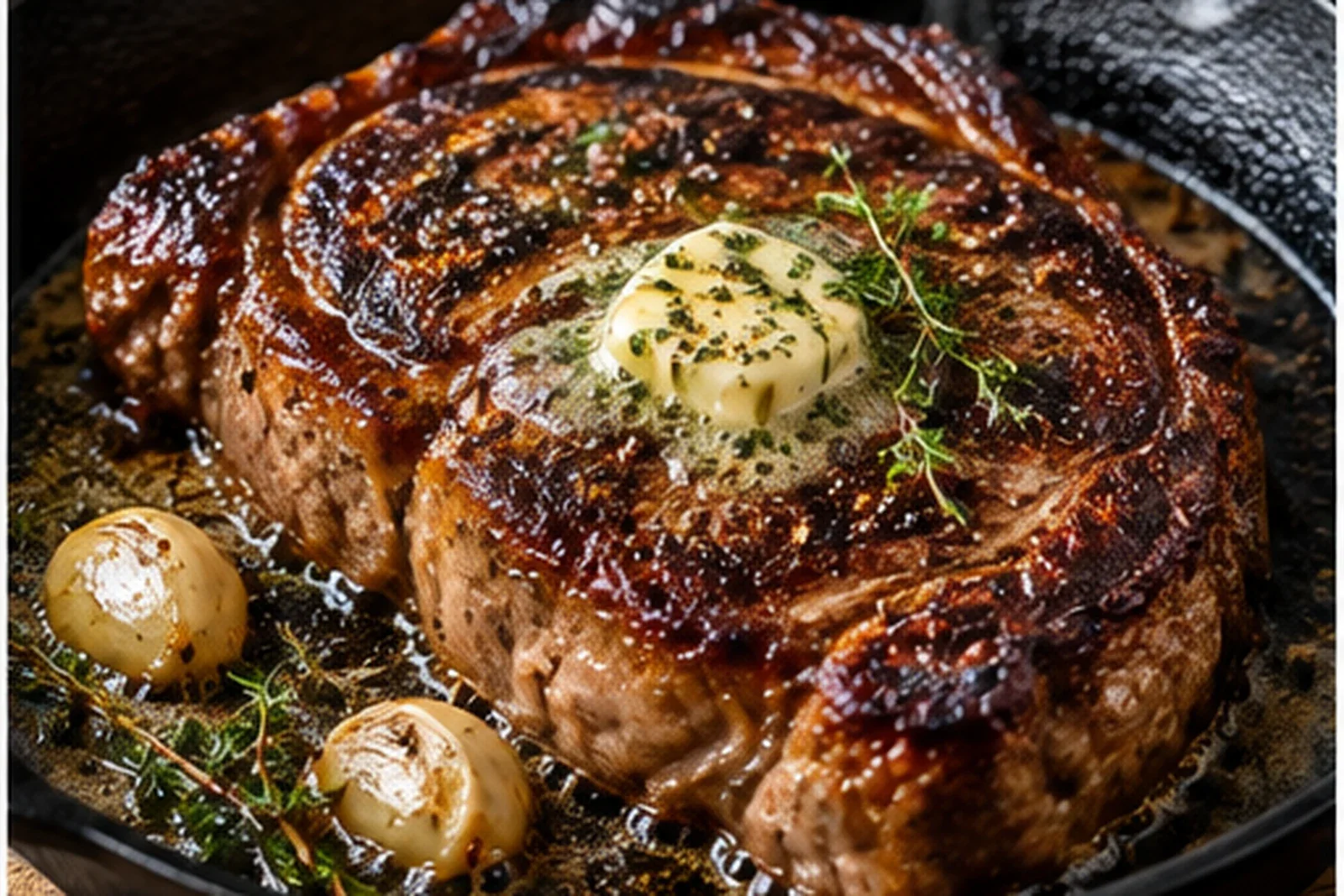
The steak should have a mahogany crust, rendered surface fat, a juicy interior at a safe endpoint and only a modest overcooked band beneath the crust.
Ingredients
What you need
Main
- 680 g boneless ribeye steak, about 1 1/2 inches thick
- 1.5 tsp kosher salt
- 1 tsp coarsely ground black pepper
- 1 tbsp neutral high-heat oil
Finish
- 1 tbsp unsalted butter
- 2 sprigs fresh thyme
- 2 cloves garlic, lightly crushed
Method
Cook by the cues, not just the clock
Dry and season
Pat the ribeye very dry. Season all over with salt and pepper.
Preheat cast iron
Heat the empty cast-iron skillet over high heat until fully hot, then add a thin film of oil.
Build the crust
Lay in the steak and leave the first side in firm contact until deeply browned. Turn and brown the second side and fat edge.
Control the center
Reduce the heat and add butter, thyme and garlic. Baste briefly, then finish with lower stovetop heat or a moderate oven until the center reaches at least 145°F / 62.8°C.
Rest and serve
Transfer the steak to a rack or plate and rest at least 3 minutes before slicing.
Critical checkpoints
Stop here and check
Pan ready?
The pan is fully hot and the steak gives an immediate vigorous sizzle.Keep preheating if the steak only whispers when it touches the pan.
Crust forming?
The first side releases with a dark brown crust rather than a wet gray film.If the surface stays gray, check moisture, pan temperature and crowding before extending time.
Safe center?
The thickest part reaches at least 145°F / 62.8°C followed by a 3-minute rest.Use lower finishing heat if the crust is dark but the center still needs time.
If yours looks different
Route the failure before changing the recipe
After cooking
Storage, reheating & substitutions
Storage
Refrigerate leftovers within 2 hours and use within 4 days.
Reheating
Reheat gently at low oven heat, then give the surface a very brief hot-pan refresh if needed.
Substitutions
A New York strip of similar thickness can use the same heat-control logic, though cooking time will differ.
Evidence
Sources & methodology
Technical claims and method decisions are tied to sources. Recipe-specific advice is not presented as a universal food-science law.
- Pan-Seared Rib-EyeFood Network
Food Network preheats cast iron aggressively, sears the ribeye without moving it, then finishes the steak in the oven.
publisherPassage verified - Safe Minimum Internal Temperature ChartUSDA Food Safety and Inspection Service
USDA FSIS lists 145°F / 62.8°C followed by a 3-minute rest as the safe minimum for whole beef steaks, chops and roasts.
governmentPassage verified