Before you start
What this method is trying to achieve
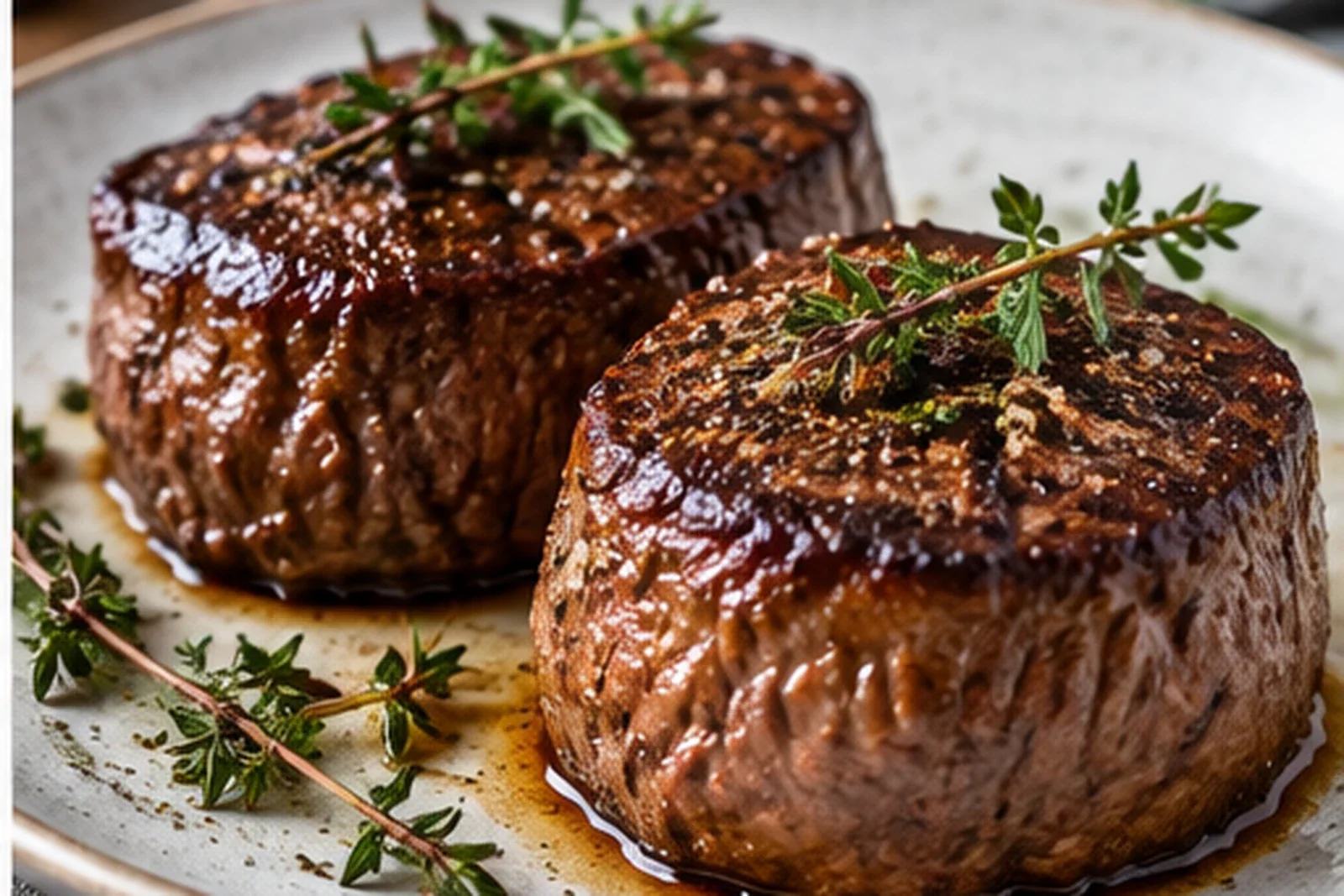
Filet mignon is thick and lean, which makes heat control more important than aggressive pan time. A gentle stage gives the center time to warm, while a short hot sear supplies the browned exterior. A thermometer is more reliable than crust color for the final endpoint.
Success looks like
Know the target before you cook
The filets should be evenly browned outside, juicy inside, and free from a thick gray overcooked band between crust and center.
Ingredients
What you need
Main
- 450 g filet mignon steaks, two center-cut steaks, about 1 1/2 inches thick
- 1.5 tsp kosher salt
- 0.75 tsp black pepper
Sear
- 2 tsp neutral high-heat oil
Finish
- 1 tbsp unsalted butter
- 2 sprigs fresh thyme
Method
Cook by the cues, not just the clock
Season
Pat the filets dry and season all over with salt and pepper. Set them on a rack while the oven heats to 200°F / 95°C.
Warm the center gently
Insert a probe from the side into the thermal center and cook on the rack until the filets approach the final target but remain below it.
Rest before searing
Remove the filets and rest uncovered for about 10 minutes while heating a cast-iron skillet over high heat.
Sear quickly
Brush with a very thin coat of oil and sear briefly on both main faces and the sides. Add butter and thyme only near the end.
Verify and rest
Confirm the center reaches at least 145°F / 62.8°C, then rest at least 3 minutes before serving.
Critical checkpoints
Stop here and check
Before low heat: thickness even?
Both filets are similar in thickness and the probe sits in the thermal center.Use separate temperature checks if the steaks differ substantially in size.
Before sear: pan fully hot?
The skillet is intensely hot and the filet surface is dry.Keep heating the empty pan if the sear would begin on a lukewarm surface.
After sear: exterior dark, center safe?
The crust is browned and the thermal center reaches at least 145°F / 62.8°C with a 3-minute rest.Use low heat to finish a lagging center instead of burning the exterior.
If yours looks different
Route the failure before changing the recipe
After cooking
Storage, reheating & substitutions
Storage
Refrigerate cooked filet in a covered container for up to 4 days.
Reheating
Reheat slowly at low oven temperature and avoid a long second sear.
Substitutions
Center-cut tenderloin steaks of similar thickness can substitute directly; thinner pieces need a shorter gentle-cooking stage.
Evidence
Sources & methodology
Technical claims and method decisions are tied to sources. Recipe-specific advice is not presented as a universal food-science law.
- Reverse-Sear Filet Mignon (or Ribeye Filet)Food Network
Food Network cooks thick filet gently with a probe thermometer, rests it, then gives it a short high-heat cast-iron sear.
publisherPassage verified - Safe Minimum Internal Temperature ChartUSDA Food Safety and Inspection Service
USDA FSIS lists 145°F / 62.8°C followed by a 3-minute rest as the safe minimum for whole beef steaks, chops and roasts.
governmentPassage verified