Before you start
What this method is trying to achieve
Pan pizza needs enough proofing to become pillowy, enough oil and pan heat to crisp the bottom, and restrained sauce so the thick crust does not turn heavy. The cast-iron pan handles the bottom browning while the final rack position balances the top.
Success looks like
Know the target before you cook
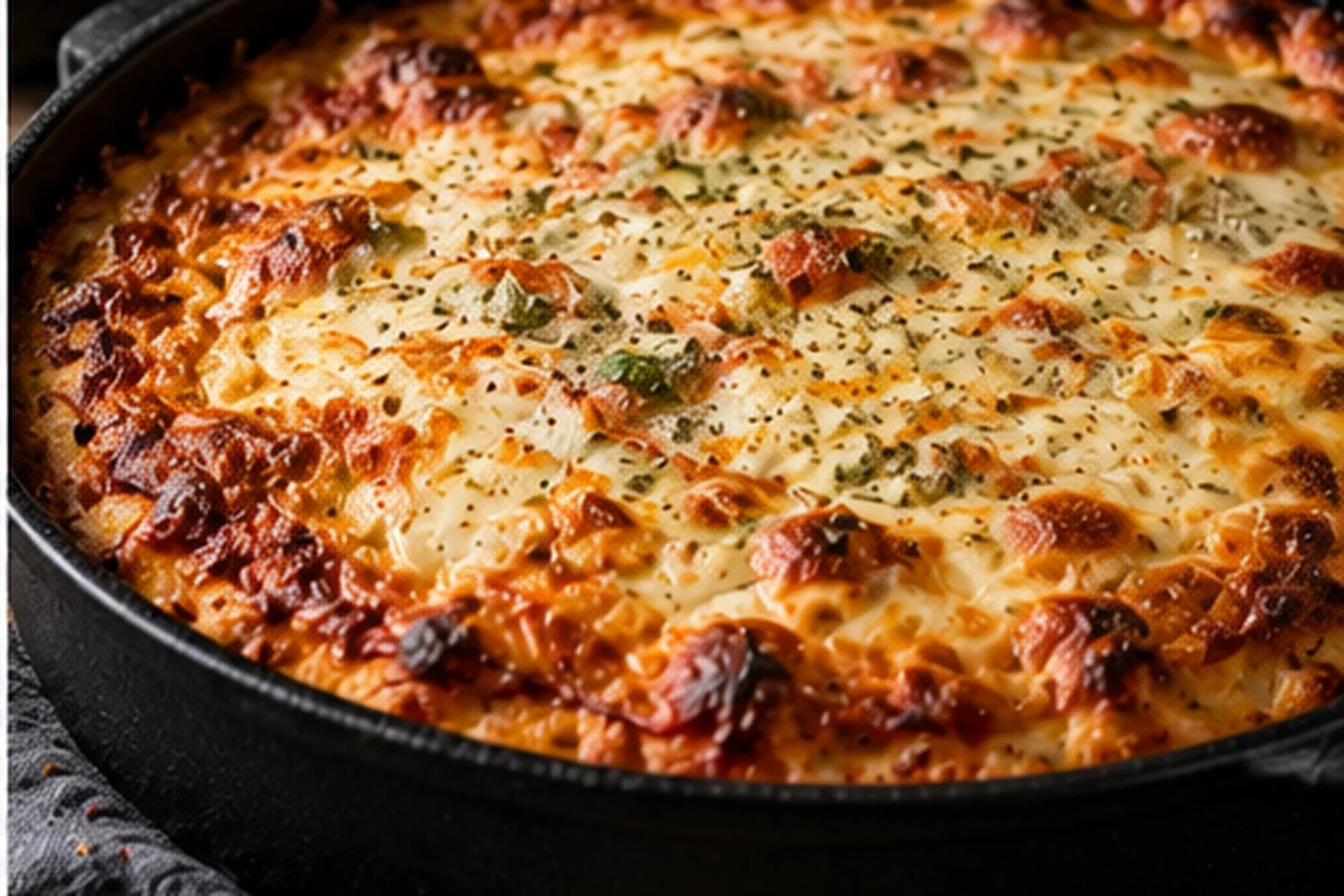
The crust should be tall and airy inside with a crisp golden bottom and caramelized edges, while the cheese bubbles and the sauce stays on top rather than soaking through.
Ingredients
What you need
Dough
- 240 g all-purpose flour
- 4.5 g table salt
- 1.5 g instant yeast
- 170 g lukewarm water
- 13 g olive oil
Pan
- 18 g olive oil
Topping
- 170 g low-moisture mozzarella, grated
- 100 g thick pizza sauce
Finish
- 20 g Parmesan, finely grated
- 1 tbsp fresh oregano or basil, chopped
Method
Cook by the cues, not just the clock
Build dough
Mix flour, salt, yeast, water and olive oil into a sticky dough and perform several folds at short intervals.
Cold ferment
Cover and refrigerate 12 to 72 hours.
Pan and proof
Oil the cast-iron skillet, coat the dough in the oil, press toward the edges with rests as needed and proof until soft, pillowy and jiggly.
Top and bake
Cover the dough with most of the mozzarella first, dollop sauce over it, add remaining cheese and bake at 450°F / 232°C on the lower rack until the bottom and edges are richly browned.
Balance and cool
If the bottom is brown but top pale, move to the upper rack briefly. Remove from the pan soon after baking and finish with Parmesan and herbs.
Critical checkpoints
Stop here and check
Before bake: pillowy and jiggly?
The proofed dough looks expanded and soft in the pan.Give it more room-temperature proofing if still tight.
Bottom vs top: balanced?
The bottom is golden at about the same time the cheese bubbles.Move racks rather than continuing to scorch one side.
Bottom too dark or too pale?
Top and bottom are finishing at different rates.Use the pizza heat-balance diagnoses for surface heat and rack position.
If yours looks different
Route the failure before changing the recipe
Why Does My Pizza Bottom Burn Before the Top Cooks?
Why Is My Pizza Crust Pale and Not Browning?
After cooking
Storage, reheating & substitutions
Storage
Refrigerate leftovers promptly after cooling.
Reheating
Reheat in a skillet or 350°F / 177°C oven until the bottom re-crisps and the center is hot.
Substitutions
A heavy oven-safe skillet or sturdy round cake pan can replace cast iron with different browning performance.
Evidence
Sources & methodology
Technical claims and method decisions are tied to sources. Recipe-specific advice is not presented as a universal food-science law.
- Crispy Cheesy Pan PizzaKing Arthur Baking
King Arthur uses repeated folds, a 12- to 72-hour cold rise, an oiled cast-iron pan and cheese beneath the sauce, then adjusts rack position based on top and bottom browning.
publisherPassage verified - How to make homemade pizza: a beginner's guideKing Arthur Baking
King Arthur highlights cast-iron pan pizza as a simple style that produces a puffy, chewy interior and crisp crust.
publisherPassage verified