Before you start
What this method is trying to achieve
Ribs need tenderization before glazing. Remove the membrane, season the rack, use a covered low oven until the meat begins to pull from the bones, then expose and glaze only after the connective tissue has softened.
Success looks like
Know the target before you cook
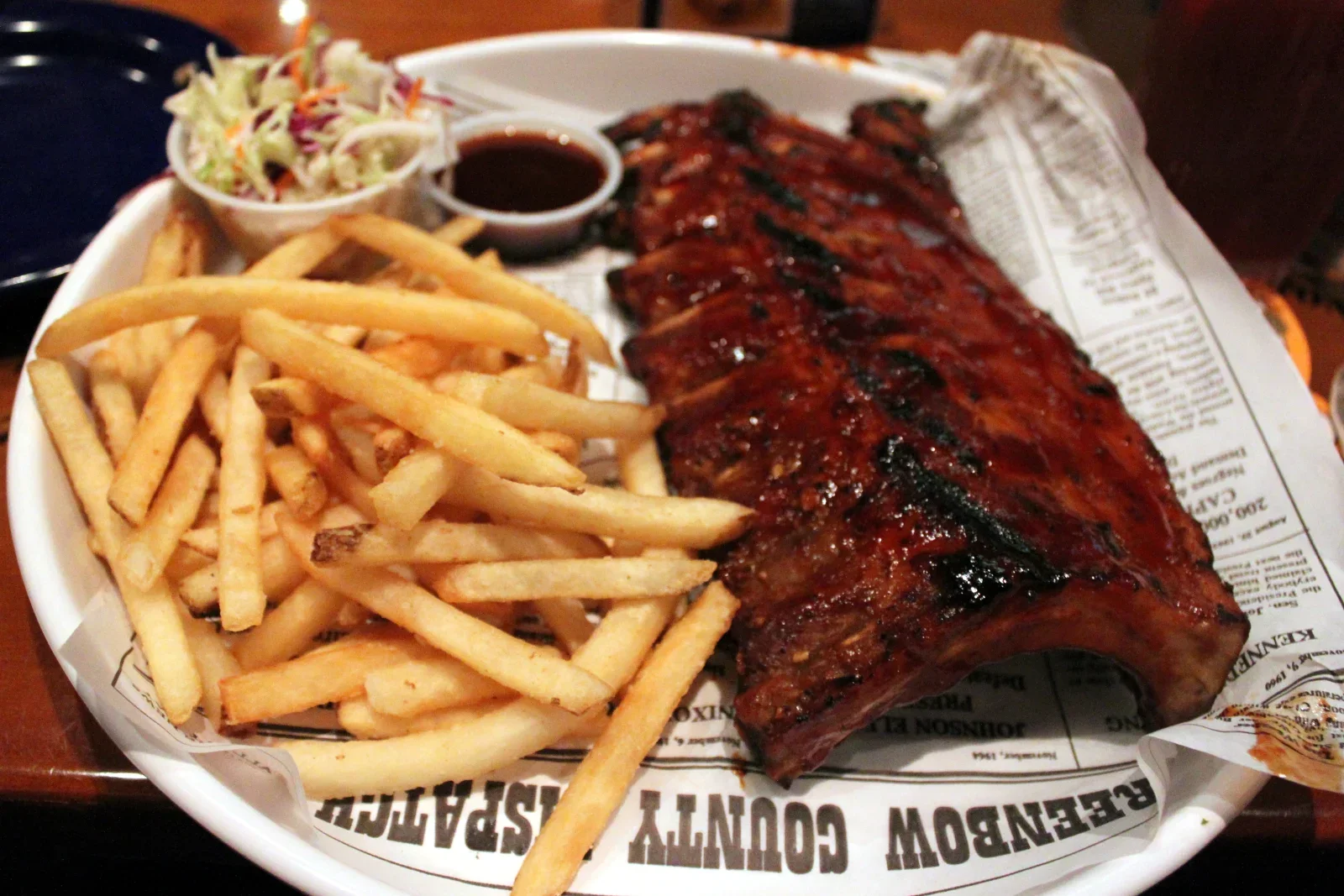
The rack should bend easily, the meat should pull cleanly from the bone with a bite, and the glaze should be sticky and caramelized rather than burnt.
Ingredients
What you need
Pork
- 2 racks baby back ribs, membrane removed
Rub
- 2 tsp kosher salt
- 1 tsp black pepper
- 2 tsp smoked paprika
- 1 tsp garlic powder
- 1 tsp onion powder
Braise
- 240 ml water, 1 cup
Glaze
- 240 ml barbecue sauce, 1 cup
- 1 tbsp apple cider vinegar
Finish
- 1 tbsp brown sugar
Method
Cook by the cues, not just the clock
Remove membrane and season
Heat the oven to 325°F / 165°C. Remove the thin membrane from the bone side of the racks, then season with salt, pepper, paprika, garlic powder and onion powder.
Cover for tenderization
Place ribs in a rimmed pan with water, cover the pan tightly with foil and bake.
Check tenderness
After about 2 hours, uncover carefully and test the rack. Continue covered cooking if the meat still resists strongly.
Glaze uncovered
Mix barbecue sauce, vinegar and brown sugar. Brush the ribs generously, raise the oven to 400°F / 205°C and bake uncovered until the glaze thickens and caramelizes.
Rest and cut
Rest the rack for 5 to 10 minutes, then cut between the bones and serve with extra sauce.
Critical checkpoints
Stop here and check
Before baking: membrane removed?
The bone side is free of the thin shiny membrane.Loosen an edge with a knife and peel it away before seasoning.
Before glazing: tender or resistant?
The rack bends more easily and meat has begun to pull from the bone ends.If the meat is still firmly resistant, continue the covered tenderizing stage.
After glazing: caramelized or burning?
The sauce is sticky, glossy and darkened without black scorched patches.Stop or reduce heat if the glaze begins to burn.
If yours looks different
Route the failure before changing the recipe
After cooking
Storage, reheating & substitutions
Storage
Cool leftovers promptly and refrigerate covered.
Reheating
Reheat covered at moderate heat with a little sauce or moisture, then uncover briefly to refresh the glaze.
Substitutions
Spareribs are larger and can require a different tenderness window; do not assume the same timing as baby back ribs.
Evidence
Sources & methodology
Technical claims and method decisions are tied to sources. Recipe-specific advice is not presented as a universal food-science law.
- Baby Back RibsFood Network
Food Network bakes baby back ribs covered at 325°F until tender enough to pull from the bone, then sauces and finishes them for caramelized edges.
publisherPassage verified - Sweet-and-Spicy Baby Back RibsFood Network Kitchen
Food Network Kitchen removes the membrane, roasts ribs covered, then brushes with sauce and finishes uncovered until browned and tender.
publisherPassage verified