Before you start
What this method is trying to achieve
Pan-seared pork chops are a thickness-and-temperature recipe. Dry the surface well, build color in a hot skillet, then lower the heat and finish by thermometer rather than by a fixed clock. The key is to stop cooking when the thickest part reaches 145°F / 63°C and give the chops a short rest.
Success looks like
Know the target before you cook
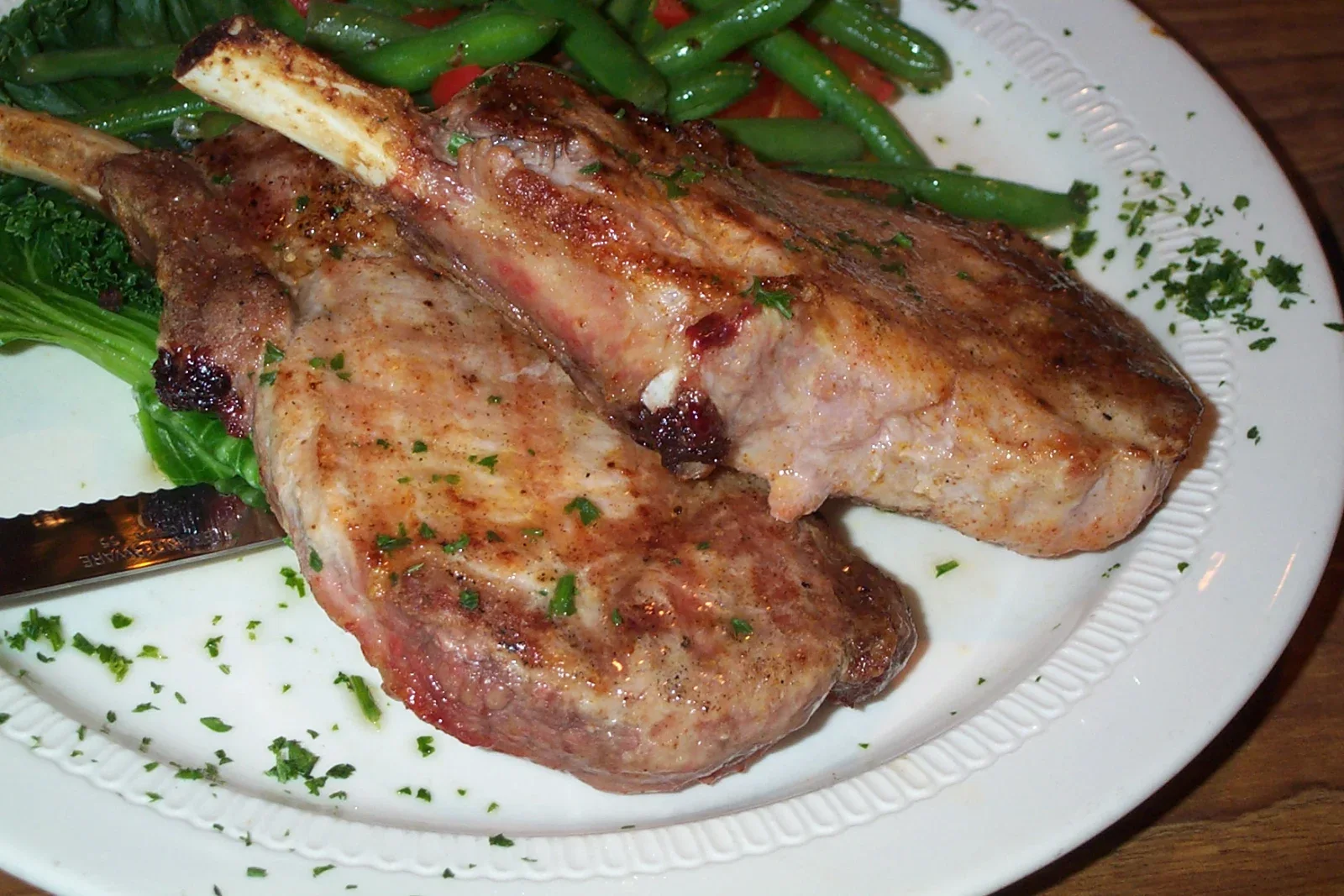
The chops should have a deeply browned exterior, a juicy center and clean slices that are tender rather than chalky or chewy.
Ingredients
What you need
Pork
- 4 bone-in pork chops, about 1 to 1 1/2 inches thick
Seasoning
- 1 1/2 tsp kosher salt
- 1 tsp black pepper, freshly ground
Searing
- 1 tbsp neutral oil
Basting
- 2 tbsp unsalted butter
- 3 cloves garlic, lightly crushed
- 4 sprigs fresh thyme
Finish
- 1 tsp Dijon mustard, optional, for a quick pan sauce
- 60 ml low-sodium chicken broth, about 1/4 cup; optional for pan sauce
Method
Cook by the cues, not just the clock
Dry and season
Pat the pork chops very dry and season both sides with salt and pepper.
Sear first side
Heat a heavy skillet over medium-high heat, add oil, then add the chops without crowding. Sear until the first side develops a deep brown crust.
Turn and baste
Turn the chops, reduce heat to medium, add butter, garlic and thyme, and spoon the foaming butter over the meat.
Finish by temperature
Continue cooking, turning if needed, until an instant-read thermometer in the thickest part away from bone reads 145°F / 63°C.
Rest and serve
Transfer the chops to a plate and rest at least 3 minutes. If desired, deglaze the skillet with broth and mustard for a quick pan sauce.
Critical checkpoints
Stop here and check
Before searing: dry or wet surface?
The chops look dry and matte rather than shiny with surface water.Pat again with paper towel before they enter the skillet.
Near the finish: what does the thermometer say?
The thickest part reads 145°F / 63°C without the probe touching bone.Remove from heat and rest; do not keep cooking for a whiter center.
At slicing: juicy or chalky?
Slices look moist and tender. Dry, firm or chalky meat matches the pork-chop failure route.Use CookClue pork-chops-dry-or-tough if the chop is dry or tough.
If yours looks different
Route the failure before changing the recipe
After cooking
Storage, reheating & substitutions
Storage
Cool leftovers promptly and refrigerate in a covered container.
Reheating
Reheat gently with a splash of broth or pan juices; strong prolonged heat can dry the chops further.
Substitutions
Bone-in or boneless chops can work, but thickness changes the cooking time. Start checking thinner chops earlier.
Evidence
Sources & methodology
Technical claims and method decisions are tied to sources. Recipe-specific advice is not presented as a universal food-science law.
- Pan-Seared Pork ChopsFood Network
Food Network's pan-seared method uses thick center-cut chops, a strong sear and controlled finishing rather than cooking blindly by time.
publisherPassage verified - How to Cook Pork Chops on the Stove (and Keep Them Juicy)Food Network Kitchen
Food Network explains that pork-chop juiciness depends on avoiding overcooking and adjusting stovetop timing to chop thickness.
publisherPassage verified