Before you start
What this method is trying to achieve
Carnitas need two different textures in sequence: tender shoulder first, crisp edges second. Trying to crisp pork before the connective tissue has softened leaves tough meat; keeping it submerged after it is tender prevents the characteristic browned edges.
Success looks like
Know the target before you cook
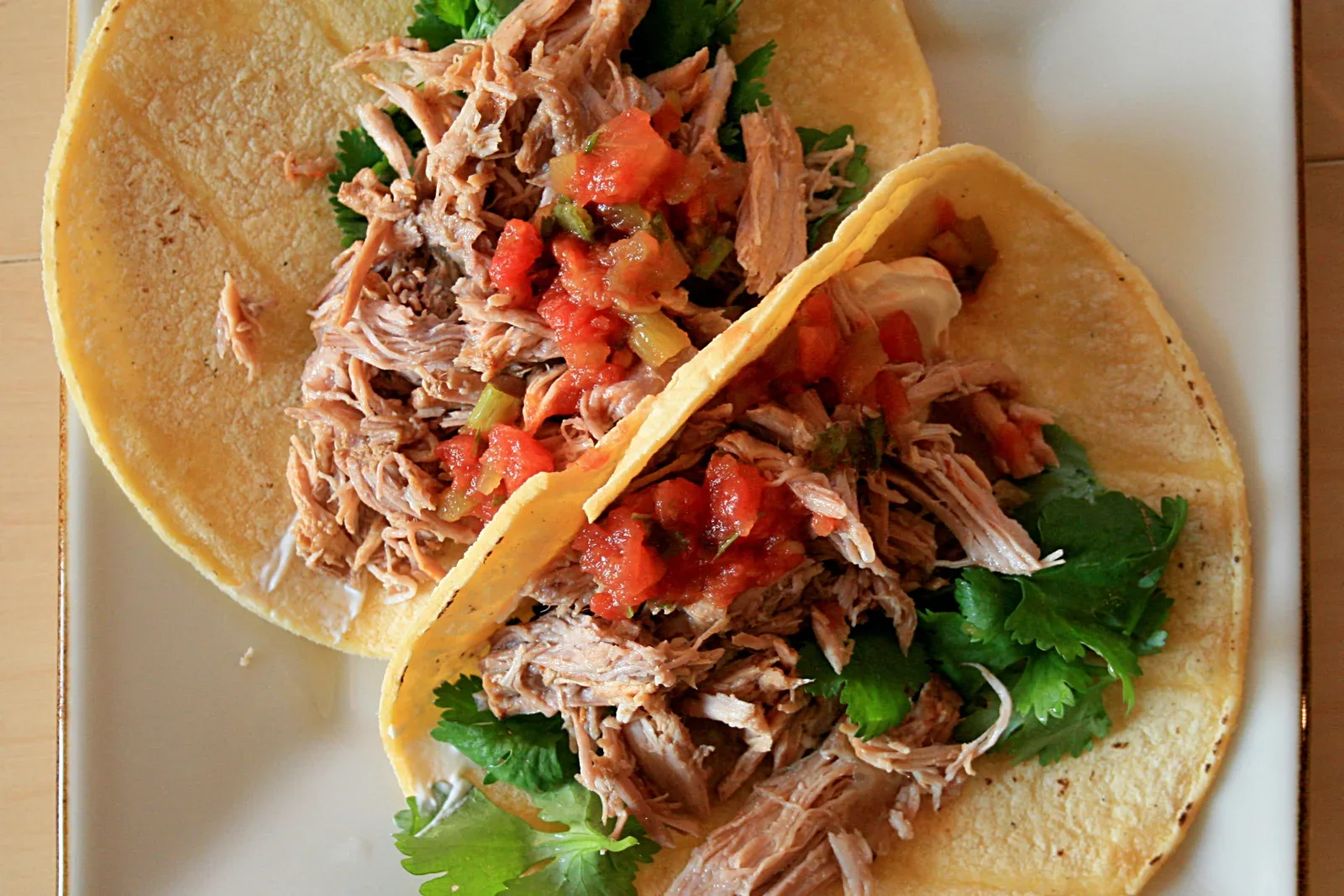
The pork should be easy to shred, juicy inside and browned at the edges after the final crisping stage.
Ingredients
What you need
Pork
- 1.4 kg boneless pork shoulder, about 3 lb; cut into 2-inch chunks
Seasoning
- 2 tsp kosher salt
- 1 tsp ground cumin
- 1 tsp dried oregano
- 1/2 tsp black pepper
Aromatics
- 1 orange, halved
- 4 cloves garlic, crushed
Cooking
- 120 ml neutral oil or rendered pork fat, 1/2 cup
Serve
- 12 small corn tortillas, warmed
- 1 cup chopped onion and cilantro, mixed
- 2 limes, cut into wedges
Method
Cook by the cues, not just the clock
Season the shoulder
Season pork shoulder chunks with salt, cumin, oregano and pepper.
Start the braise
Put the pork in a Dutch oven with orange, garlic, oil and enough water to come partway up the meat. Bring to a gentle simmer.
Cook until tender
Cover partially and cook at a low simmer until the pork yields easily to a fork, turning pieces occasionally.
Reduce and brown
Remove the orange. Uncover and continue cooking until excess liquid evaporates and the pork begins to fry and brown in its rendered fat. Break the meat into large shreds.
Crisp and serve
Crisp the pork in batches if needed, then serve in warm tortillas with onion, cilantro and lime.
Critical checkpoints
Stop here and check
Before crisping: does a fork enter easily?
The pork shoulder is tender enough to pull apart without force.If it is still moist but resistant, keep tenderizing before trying to brown it.
During the transition: simmering or sizzling?
The watery simmer fades and the sound changes to a distinct fry/sizzle as liquid evaporates.Do not crowd the final crisping stage with excess liquid.
At serving: crisp edges, juicy center?
Some edges are deeply browned while thicker shreds remain moist inside.Stop crisping before every strand becomes dry.
If yours looks different
Route the failure before changing the recipe
After cooking
Storage, reheating & substitutions
Storage
Cool promptly and refrigerate shredded pork with a small amount of its cooking juices.
Reheating
Reheat portions in a hot skillet or under the broiler so the edges re-crisp rather than steaming the whole batch.
Substitutions
Pork shoulder is the intended cut. Lean tenderloin will not produce the same tender-shredded and crisp-edged result.
Evidence
Sources & methodology
Technical claims and method decisions are tied to sources. Recipe-specific advice is not presented as a universal food-science law.
- Pork CarnitasFood Network
Food Network's carnitas method uses pork shoulder and targets tender, juicy pork with crisp, golden edges.
publisherPassage verified - CarnitasFood Network Kitchen
Food Network describes carnitas as seasoned pork cooked slowly in oil or lard until tender, then fried to produce crisp bites.
publisherPassage verified