Before you start
What this method is trying to achieve
This CookClue method is designed around the failures that usually stop roast potatoes from crisping. The potatoes are parboiled until the centers are nearly tender, drained until surface moisture is gone, deliberately roughed up to create a starchy coating, then roasted hot and uncrowded until the crust is deep golden. The timer is a guide; the visible surface is the real endpoint.
Success looks like
Know the target before you cook
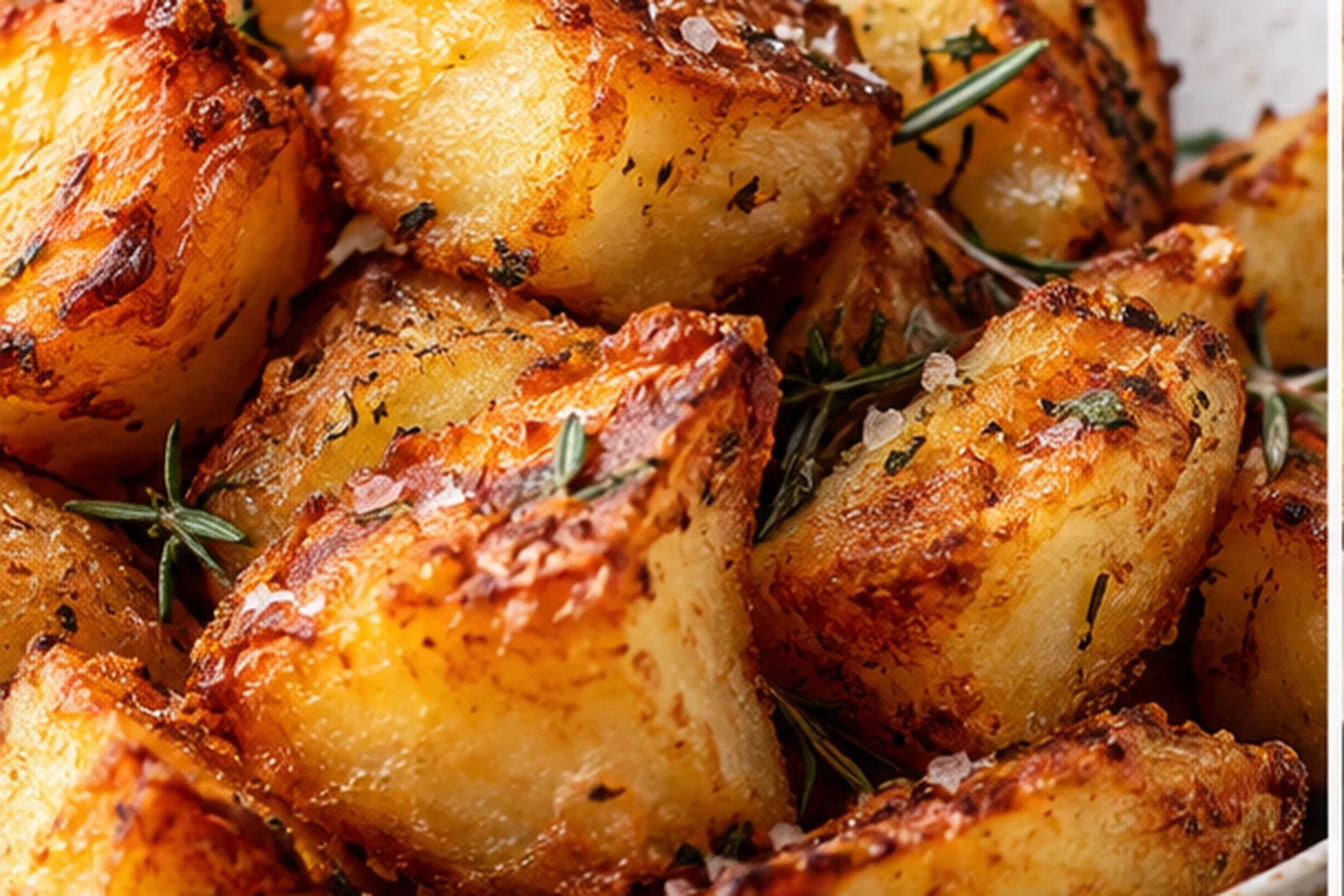
The finished potatoes should have a dry, crackly, deeply browned exterior with visible rough edges and a fluffy or creamy center. When you press a hot piece lightly with a fork, the crust should resist before the interior gives way.
Ingredients
What you need
Potatoes
- 1.5 kg russet or Yukon Gold potatoes, peeled and cut into large, even chunks — Large chunks give a strong crisp-outside/fluffy-inside contrast.
Parboil
- 2 L water
- 2 tbsp kosher salt — Season the cooking water; adjust if using fine table salt.
- 1/2 tsp baking soda — A mildly alkaline boil helps soften the exterior so it can rough up into a crisping starch layer.
Roast
- 4 tbsp olive oil — Use enough to coat the roughened surfaces, not to pool on the tray.
Finish
- 1 tsp fresh rosemary, finely chopped — Optional.
- 2 cloves garlic, finely minced — Optional; add late or infuse the oil so it does not burn during the full roast.
- black pepper, freshly ground — To taste.
Method
Cook by the cues, not just the clock
Prepare
Heat the oven to 230°C / 450°F conventional, or about 205°C / 400°F convection, with a rack near the center. Have a large rimmed metal baking sheet ready.
Parboil
Bring the water to a boil with the salt and baking soda. Add the potato chunks, return to a gentle boil, then simmer until a thin knife enters the center with little resistance while the chunks still hold their shape, usually about 8 to 12 minutes after the water returns to temperature.
Dry and rough
Drain thoroughly. Leave the potatoes in the hot colander or pot for 1 to 2 minutes so visible steam can escape. Add the oil and toss firmly enough to scuff the edges and build a rough, mashed-potato-like coating on the surface.
Roast
Spread the potatoes on a large rimmed metal baking sheet in one layer with space between pieces. Roast without moving for about 20 minutes so the first crust can set. Turn with a thin spatula, then continue roasting 30 to 40 minutes, turning once or twice more, until deeply browned and crisp on multiple sides.
Finish
Season while hot. If using garlic or delicate herbs, add them near the end or toss them through after roasting so they do not burn during the long high-heat stage. Serve uncovered and promptly.
Critical checkpoints
Stop here and check
Before roasting: is the surface dry and rough?
The chunks should have visibly scuffed, floury-looking edges with no water pooling on them.If they are glossy or wet, let them steam-dry longer before adding more fat. A wet surface will spend oven time steaming instead of browning.
At the first turn: did a crust actually set?
The underside should be golden and should release with a thin spatula instead of smearing or sticking like wet potato paste.If the potatoes are still pale and glued to the tray, leave them undisturbed longer. If the tray is crowded or wet, separate the pieces before continuing.
At serving: were they crisp and then softened?
The potatoes left the oven crisp but became soft while sitting, especially if covered or piled deeply.Move them back to an uncovered hot tray for a short re-crisp and serve without trapping steam.
If yours looks different
Route the failure before changing the recipe
Why Are My Roast Potatoes Not Crispy?
Why Are My Potatoes Mushy Outside but Hard Inside?
After cooking
Storage, reheating & substitutions
Storage
Cool leftovers promptly and refrigerate in a covered container. For best texture, avoid stacking them while they are still steaming.
Reheating
Reheat uncovered on a metal tray in a hot oven until the exterior is dry and crisp again. A microwave will heat the center but softens the crust.
Substitutions
Russets produce a fluffier center and especially crisp rough edges; Yukon Golds produce a creamier center and can brown more deeply. Olive oil works well; another high-heat cooking fat can be used if its flavor suits the meal.
Evidence
Sources & methodology
Technical claims and method decisions are tied to sources. Recipe-specific advice is not presented as a universal food-science law.
- The Best Crispy Roast Potatoes EverSerious Eats
Serious Eats documents alkaline parboiling with baking soda, roughing the softened exterior into a starchy slurry, high-heat roasting at 450°F / 230°C (400°F / 200°C convection), a first 20-minute undisturbed roast, and visual monitoring because browning time varies by potato.
publisherPassage verified