Before you start
What this method is trying to achieve
Fluffy mash is mostly a starch-management problem. Use a floury potato, rinse away loose starch before cooking, cook gently until fully tender, then rinse the drained potatoes briefly with hot water to remove more surface starch. After a short steam-dry, pass them through a ricer or food mill and fold in butter and warm milk gently. Once the mash is smooth and airy, stop working it.
Success looks like
Know the target before you cook
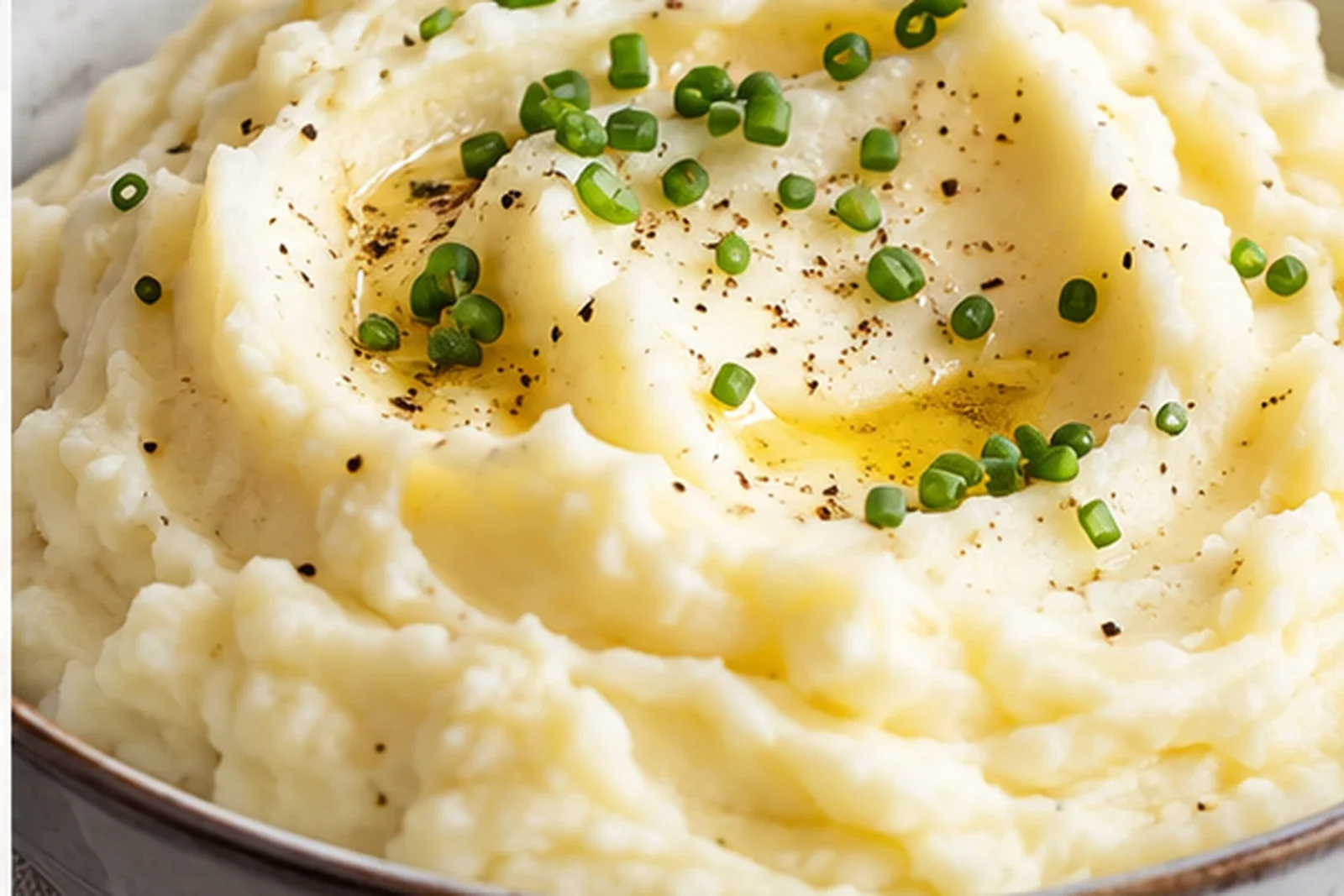
The mash should hold a soft mound on a spoon while still looking airy rather than elastic. It should separate cleanly when spooned, with no stretchy strands, glossy glue-like pull, or watery ring around the bowl.
Ingredients
What you need
Potatoes
- 1 kg russet potatoes, peeled and cut into even 4 to 5 cm chunks — A floury potato needs less aggressive processing to become smooth.
Cooking
- cold water — Enough to cover the potato pieces by a few centimeters.
- 1 tbsp kosher salt — For the cooking water; adjust for salt crystal size.
Finish
- 85 g unsalted butter, softened and cut into pieces
- 120 ml whole milk, warmed — Add gradually; use only as much as the potatoes need.
- fine salt — To taste.
- black pepper, freshly ground — Optional.
Method
Cook by the cues, not just the clock
Rinse and start cold
Rinse the cut potatoes in cold water, changing the water until most loose starch is washed away. Cover with fresh cold water, salt it, and bring the pot gradually to a boil.
Simmer gently
Once boiling, reduce to a steady simmer and cook until every piece is fully tender all the way through, usually around 15 minutes after the simmer begins.
Drain and dry
Drain the fully tender potatoes in a colander, rinse them under hot running water for about 30 seconds to wash away surface starch, then let them steam for about 1 minute so excess moisture can escape.
Rice, do not blend
Pass the hot potatoes through a ricer or food mill into the warm pot. Do not use a food processor or blender.
Finish gently
Fold in the butter with a spatula. Add the warm milk gradually, folding just until the texture is soft and even. Season and stop mixing as soon as the mash is where you want it.
Critical checkpoints
Stop here and check
Before mashing: are the centers completely tender?
A knife slides through each chunk without a firm core, but the potato is not disintegrating into water.If the center is still hard, continue at a gentle simmer rather than turning the boil up aggressively.
After draining: did you remove surface starch and excess water?
The cooked potatoes were briefly rinsed with hot water, then allowed to steam without a puddle collecting.Give them the brief hot rinse, then let them steam for about a minute before ricing. This removes loose starch while preventing extra water from diluting the mash.
While mixing: is the mash turning stretchy or glossy?
The potatoes begin to pull in elastic strands, cling heavily to the spoon, or look paste-like instead of fluffy.Stop mixing immediately. More beating will release more starch and make glueyness worse.
If yours looks different
Route the failure before changing the recipe
Why Are My Mashed Potatoes Gluey?
Why Are My Potatoes Mushy Outside but Hard Inside?
After cooking
Storage, reheating & substitutions
Storage
Cool promptly and refrigerate in a covered container. Mashed potatoes thicken as they chill.
Reheating
Warm gently with a small splash of milk and a little butter, folding rather than vigorously beating. High-speed reheating or repeated whipping can push the texture toward gluey.
Substitutions
Russets are the easiest route to a fluffy texture. Yukon Golds make a naturally creamier, denser mash. Cream can replace part of the milk for richness, but add liquid gradually so the potatoes do not become loose.
Evidence
Sources & methodology
Technical claims and method decisions are tied to sources. Recipe-specific advice is not presented as a universal food-science law.
- Ultra-Fluffy Mashed PotatoesSerious Eats
Serious Eats supports russet potatoes for fluffy mash, rinsing loose starch before and after cooking, a brief steam-dry, using a ricer or food mill to minimize starch-releasing shear, and gently folding in butter and milk.
publisherPassage verified