Before you start
What this method is trying to achieve
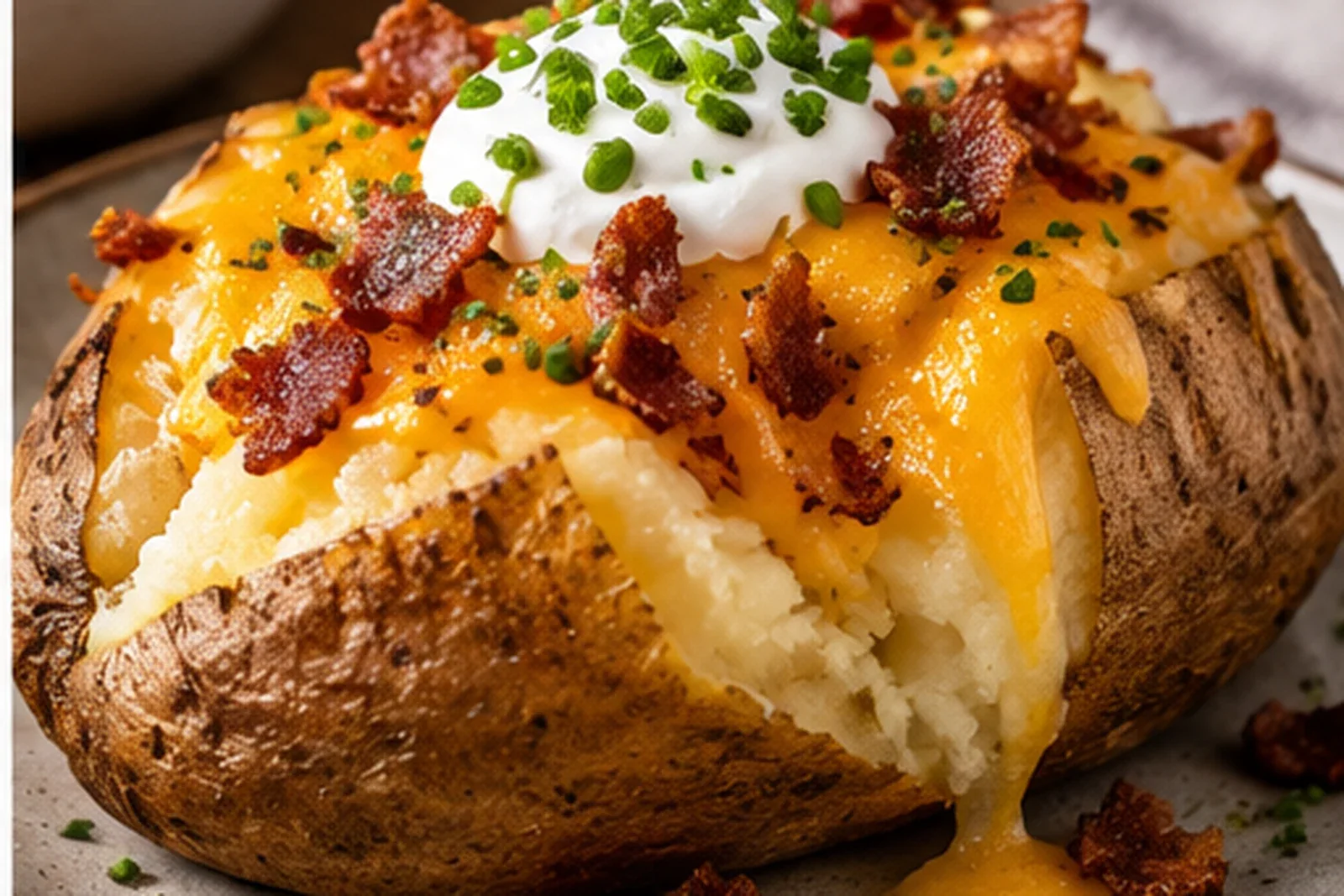
A loaded baked potato only works if the potato is fully cooked before the toppings go on. Use a russet, oil and salt the skin, bake until the center gives easily to a knife, then open and fluff before adding cheese, bacon, sour cream and chives.
Success looks like
Know the target before you cook
The skin should be dry and crisp, the center should be fully tender and fluffy with no hard core, and the toppings should stay distinct rather than masking an undercooked potato.
Ingredients
What you need
Potatoes
- 4 large russet potatoes, scrubbed and dried
- 1 1/2 tbsp extra-virgin olive oil
- 2 tsp kosher salt, for the skins
Toppings
- 4 slices bacon, cooked crisp and crumbled
- 120 g sharp cheddar cheese, shredded
- 120 g sour cream
- 3 tbsp fresh chives, thinly sliced
- 2 tbsp unsalted butter
Finish
- 1/4 tsp freshly ground black pepper
Method
Cook by the cues, not just the clock
Prep
Heat the oven to 400°F (205°C). Scrub and dry the russets completely, rub with olive oil and season the skins evenly with salt.
Bake
Place on a baking sheet and bake 45 to 60 minutes, depending on size. Begin testing at 45 minutes.
Test
Protect your hand and squeeze gently, then insert a thin knife into the deepest center. It should slide in and out with almost no resistance.
Open and fluff
Rest 5 minutes, cut a deep lengthwise slit, squeeze the ends toward the center, and fluff the exposed flesh with a fork. Mix in a little butter and pepper.
Load
Top with cheddar and bacon so the cheese starts melting from the potato's heat, then add sour cream and chives. Serve immediately.
Critical checkpoints
Stop here and check
Before baking: skins dry and seasoned?
Potatoes are dry, lightly oiled and salted with no foil wrapping.Dry again if water remains on the skin.
Near finish: center tested, not just skin?
A knife enters the middle easily and the potato gives when gently squeezed.Keep baking in 10-minute intervals if the center resists.
After opening: center fluffy?
The interior separates into fluffy dry flakes with no dense hard core.Use the linked diagnosis if a hard core remains despite a finished-looking skin.
If yours looks different
Route the failure before changing the recipe
After cooking
Storage, reheating & substitutions
Storage
Refrigerate baked potatoes and toppings separately when possible for up to 4 days.
Reheating
Reheat the plain baked potato in a hot oven until steaming, then add fresh sour cream and chives after reheating.
Substitutions
Plain Greek yogurt can replace sour cream. Turkey bacon may replace pork bacon. Use a flavorful melting cheese if cheddar is unavailable.
Evidence
Sources & methodology
Technical claims and method decisions are tied to sources. Recipe-specific advice is not presented as a universal food-science law.
- Baked Potato BiteFood Network Kitchen
Food Network Kitchen uses cheddar, sour cream, bacon and chives as classic baked-potato toppings.
publisherPassage verified - Perfect Baked PotatoesFood Network Kitchen
Food Network Kitchen recommends russets, oils and salts the skins, bakes at 400°F, and checks doneness by softness and whether a knife or fork slides easily into the center.
publisherPassage verified