Before you start
What this method is trying to achieve
The biggest French-fry mistake is treating every limp fry as the same failure. This method builds the crust in stages. The potato sticks are first cooked in lightly acidified water so they can soften without falling apart, then dried thoroughly, fried briefly, cooled, and finished in hotter oil. The method is more involved than a single fry, but each stage has a visible checkpoint so you can stop before a whole batch goes wrong.
Success looks like
Know the target before you cook
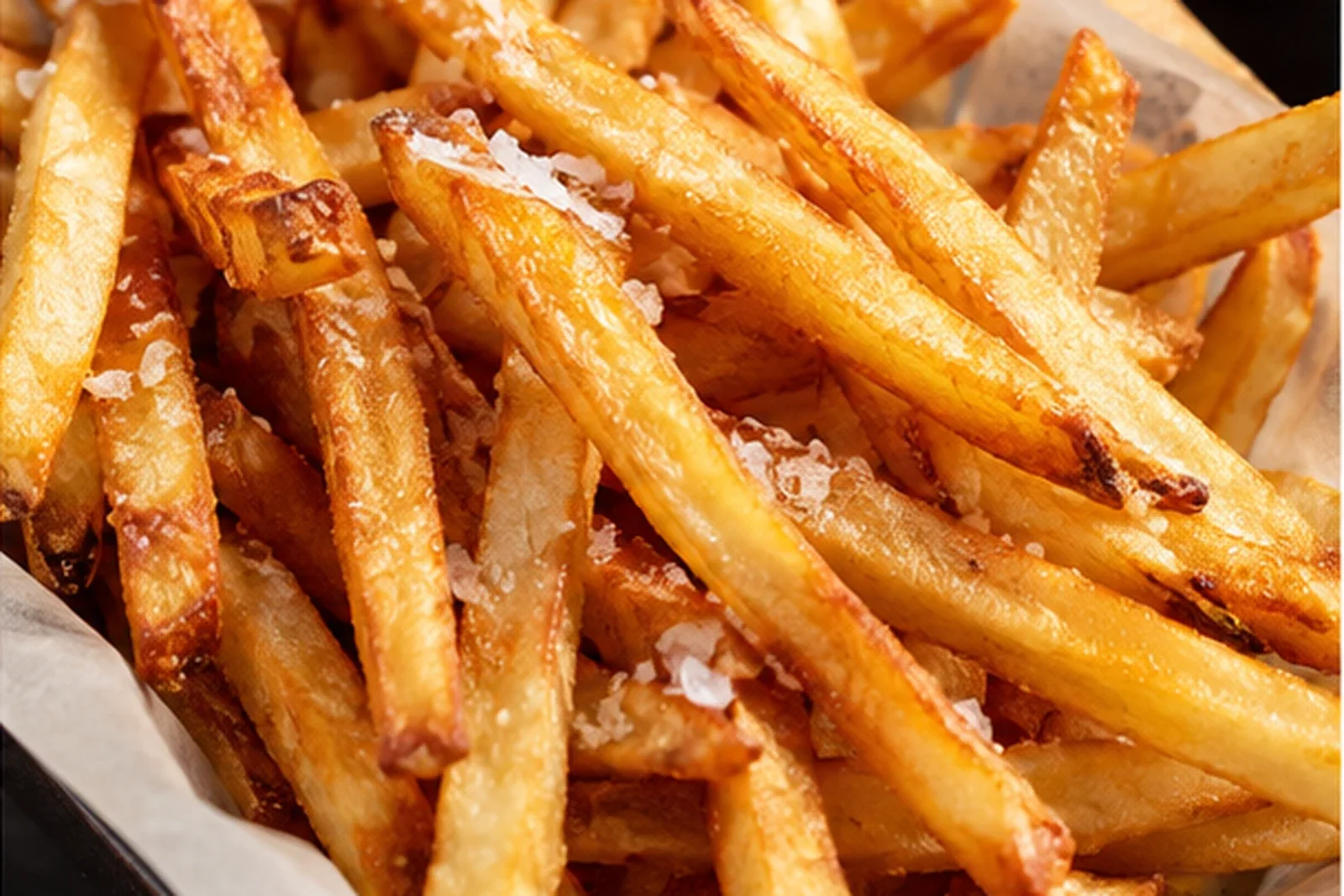
The finished fries should be light golden rather than dark brown, rigid enough to hold straight when lifted, crisp on the outside, and fluffy rather than hollow or gummy inside. They should stay crisp for the first several minutes of eating instead of collapsing immediately.
Ingredients
What you need
Fries
- 1 kg russet potatoes, peeled or scrubbed, cut into even 6 to 7 mm sticks — Even thickness matters more than perfect cosmetic shape.
Parboil
- 2 L water
- 2 tbsp white vinegar — Acid slows pectin breakdown so the softened sticks stay intact.
- 2 tbsp kosher salt — For about 2 L of cooking water; adjust if using fine table salt.
Frying
- 2 L neutral high-heat frying oil — Actual amount depends on pot size; maintain safe headroom.
Finish
- fine salt — Season immediately after the final fry.
Method
Cook by the cues, not just the clock
Cut and rinse
Cut the potatoes into even thin sticks and rinse under cold water until obvious loose surface starch is reduced. Keep the sticks together by size so thin pieces do not finish far ahead of thicker ones.
Acidified parboil
Place the cut potatoes in a saucepan with the water, vinegar and kosher salt. Bring to a boil over high heat, then boil for about 10 minutes. The fries should be fully tender but still intact.
Dry
Drain very carefully and spread the fries on towels or a rack until the surfaces are dry and no steam or droplets remain. Do not put visibly wet fries into hot oil.
First fry
Heat the frying oil to 204°C / 400°F. Add about one-third of the fries; the oil should drop toward roughly 182°C / 360°F. Fry for about 50 seconds, agitating occasionally, then drain. Let the oil return to 204°C / 400°F before each remaining first-fry batch.
Cool
Cool the first-fried potatoes to room temperature, about 30 minutes. You can continue once cool, but for the fluffiest interior and best make-ahead result, freeze them at least overnight before the final fry.
Final fry
Return the oil to 204°C / 400°F. Fry about half the potatoes at a time until crisp and light golden, about 3 1/2 minutes, adjusting the heat so the oil runs around 182°C / 360°F during frying. Drain and season immediately.
Critical checkpoints
Stop here and check
After parboiling: do the sticks bend but stay intact?
The fries are fully tender after the acidified boil but still intact enough to transfer without crumbling.If the center is still firm, keep boiling briefly. If pieces are beginning to break, drain immediately.
Before oil: are the surfaces completely dry?
There are no visible droplets and the potato surface is matte rather than wet.Dry longer before frying. Wet fries are both dangerous around hot oil and more likely to steam instead of forming a clean crust.
During the final fry: did the oil recover?
The oil is near 204°C / 400°F before a batch goes in and settles around roughly 182°C / 360°F while it fries.Allow full recovery between batches and reduce batch size if the temperature stays too low.
Five minutes later: did the fries collapse?
The fries left the oil crisp but become bendy quickly while piled, covered or left in a deep bowl.Drain on a rack, avoid covering, season and serve promptly. If necessary, re-crisp briefly in fully hot oil rather than extending a low-temperature hold.
If yours looks different
Route the failure before changing the recipe
Why Are My French Fries Soggy?
Why Are My Sweet Potato Fries Soggy?
After cooking
Storage, reheating & substitutions
Storage
French fries are best eaten immediately. If a staged batch must wait, cool the first-fried fries completely before the final fry rather than holding finished fries covered.
Reheating
Reheat finished leftovers in a hot dry oven or air fryer in a single layer. Avoid microwaving when crispness matters.
Substitutions
Use a high-starch potato such as russet for the fluffiest interior. A neutral high-heat frying oil can replace peanut oil. This method is for regular potatoes; sweet-potato fries behave differently.
Evidence
Sources & methodology
Technical claims and method decisions are tied to sources. Recipe-specific advice is not presented as a universal food-science law.
- Perfect Thin and Crispy French FriesSerious Eats
Serious Eats uses an acidified boil to protect pectin and keep tender fries intact, a 400°F oil start that drops to about 360°F during a 50-second first fry, cooling to room temperature, optional overnight freezing for a fluffier interior, and a final fry started at 400°F and maintained around 360°F until light golden and crisp.
publisherPassage verified