Before you start
What this method is trying to achieve
Cacio e pepe is simple in ingredients and unforgiving in temperature. Use a relatively small volume of pasta water so it becomes starch-rich, grate the Pecorino very finely and move the pan away from aggressive heat before the cheese goes in. Add the cheese gradually while tossing so it emulsifies with the starchy water instead of seizing.
Success looks like
Know the target before you cook
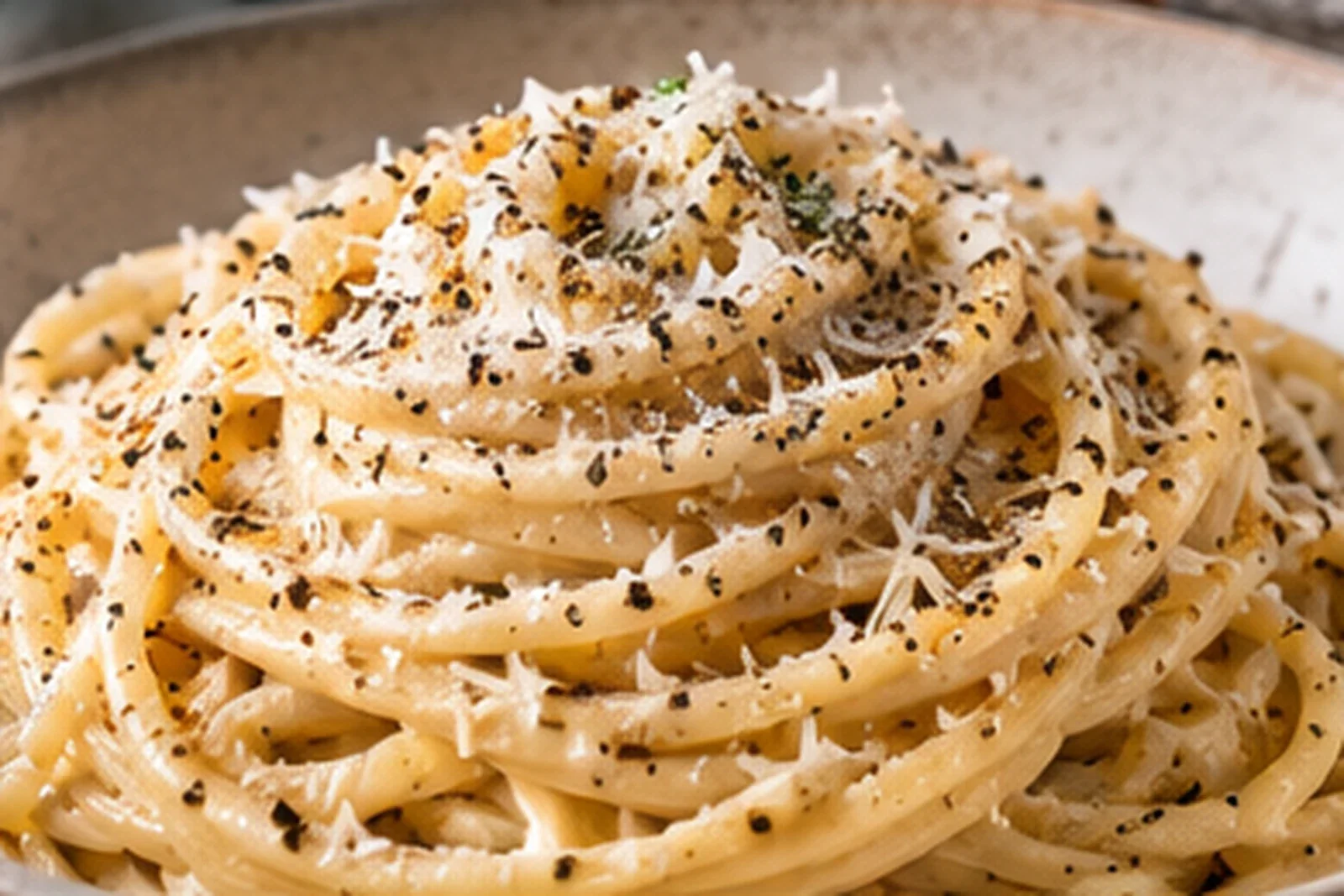
The pasta should be coated in a glossy creamy film of Pecorino and pepper with no rubbery cheese balls or greasy separated puddles.
Ingredients
What you need
Pasta
- 340 g bucatini, spaghetti or linguine — Long pasta works best for vigorous tossing.
- 2.4 L water — A relatively modest pasta-water volume helps concentrate starch.
Seasoning
- 1 tbsp kosher salt — Pecorino is salty, so do not oversalt blindly.
Sauce
- 1 tbsp whole black peppercorns, coarsely crushed
- 28 g extra-virgin olive oil — About 2 tablespoons.
- 115 g Pecorino Romano, very finely grated — Fine particles disperse more readily.
Method
Cook by the cues, not just the clock
Cook pasta
Bring the water to a boil in a wide deep skillet, salt it and cook the pasta until just al dente. Reserve at least 500 ml / 2 cups of the cloudy pasta water before draining.
Bloom pepper
Toast the crushed pepper briefly in the olive oil over medium heat until fragrant, then add about 120 ml / 1/2 cup reserved pasta water.
Toss pasta
Add the al dente pasta and toss over low heat until the starchy water begins coating the noodles. Add another splash of water if the pan dries.
Add cheese off aggressive heat
Move the pan off the burner or reduce the heat to its lowest setting. Add the finely grated Pecorino a small handful at a time while tossing continuously, adding reserved pasta water as needed.
Serve immediately
Keep tossing until the pasta looks glossy and evenly coated. Adjust with a final splash of water if too tight and serve at once with extra pepper.
Critical checkpoints
Stop here and check
Before cheese: is the pasta water visibly starchy?
The reserved water is cloudy rather than crystal clear.Use the starchy reserved water rather than plain tap water for the cheese emulsion.
At cheese addition: is the pan calm rather than sizzling?
The pasta is hot but not frying aggressively in the pan.Move off heat before adding Pecorino if necessary.
Cheese becoming ropes or clumps?
The cheese collects into sticky strings or balls instead of forming a coating.Use CookClue's cacio-e-pepe-clumped diagnosis to distinguish excess heat, weak starch and cheese-addition problems.
If yours looks different
Route the failure before changing the recipe
After cooking
Storage, reheating & substitutions
Storage
Serve immediately. The sauce thickens quickly as it cools and is difficult to restore exactly after refrigeration.
Reheating
If reheating leftovers, use very gentle heat and a splash of water, understanding the emulsion will not fully match the fresh dish.
Substitutions
Traditional cacio e pepe uses Pecorino Romano. Parmesan changes the salt level, flavor and melting behavior.
Evidence
Sources & methodology
Technical claims and method decisions are tied to sources. Recipe-specific advice is not presented as a universal food-science law.
- Phase behavior of Cacio e Pepe saucearXiv
The experimental study maps how starch concentration affects Pecorino-water sauce stability and reports increased aggregation when starch is too low, with a more stable window at moderate starch concentrations.
technical referencePrimary source - Classic Cacio E PepeFood Network Kitchen
Food Network Kitchen's classic cacio e pepe uses a relatively small volume of pasta water, finely grated Pecorino Romano and active tossing to build a smooth sauce around al dente pasta.
publisherPassage verified