Before you start
What this method is trying to achieve
Good risotto is not a mound of sticky rice. The grains should retain a slight bite while sitting in a creamy sauce loose enough to spread when the plate is shaken. Add broth in manageable increments so you can coordinate grain doneness and sauce consistency, then finish with cold butter and Parmesan off the heat and serve immediately.
Success looks like
Know the target before you cook
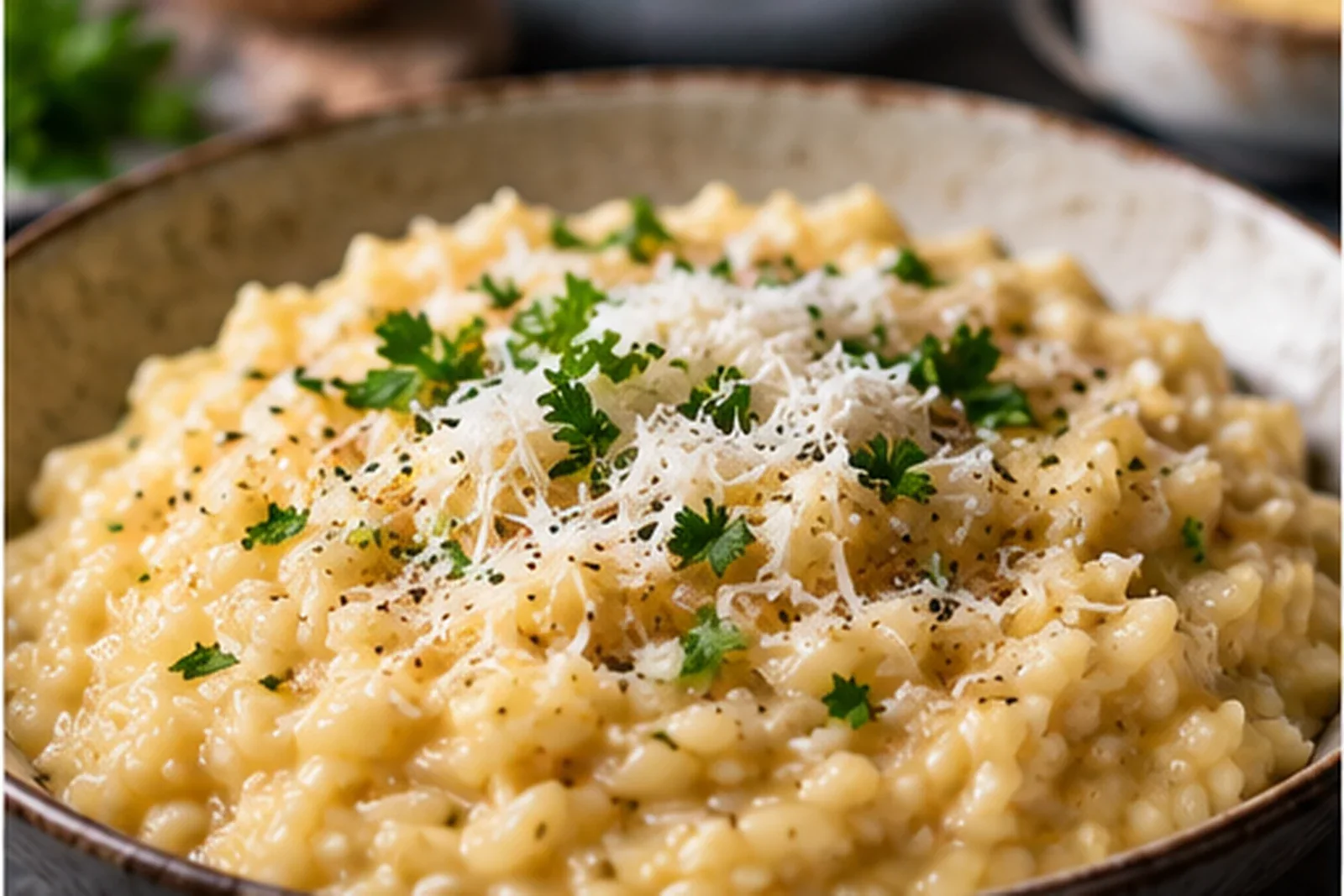
The risotto should settle into a shallow pool rather than stand in a stiff heap. Individual grains remain visible and al dente while the surrounding sauce is creamy, glossy and fluid.
Ingredients
What you need
Base
- 3 tbsp extra-virgin olive oil
- 110 g yellow onion, very finely minced — Keep pieces small so they integrate with the rice.
Rice
- 300 g Carnaroli or Arborio risotto rice — Carnaroli generally retains structure better; Arborio softens more readily.
- 90 ml dry white wine — Optional; replace with stock if avoiding alcohol.
- 1.5 L low-sodium chicken or vegetable stock, kept hot — You may not need every drop; final texture decides.
Finish
- 65 g Parmigiano-Reggiano, finely grated
- 45 g unsalted butter, cold and cubed
Seasoning
- kosher salt — Season gradually because stock and Parmesan both contribute salt.
Method
Cook by the cues, not just the clock
Soften onion
Heat the olive oil over medium heat. Add the onion with a small pinch of salt and cook, stirring often, until soft and translucent but not browned, about 5 minutes.
Toast rice
Increase to medium-high, add the rice and stir constantly for 2 to 3 minutes until the grains smell nutty and look translucent around their edges with cloudy centers.
Wine and broth
Add the wine and stir until almost completely evaporated. Add hot stock about 120 ml / 1/2 cup at a time, stirring as it is absorbed before adding more. Continue until the rice is almost tender but still has a noticeable bite in the center, usually 15 to 20 minutes.
Set final looseness
Add enough final stock that the risotto flows slowly like lava when stirred. Remove the pan from the heat while it is slightly looser than you think you want it.
Mantecatura
Off the heat, add the Parmesan and cold butter and stir or toss vigorously until fully emulsified into a glossy sauce. Add another splash of hot stock if needed, season and serve immediately.
Critical checkpoints
Stop here and check
Mid-cook: does each grain still have structure?
The rice is softening outside but retains a distinct bite in the center.Keep tasting as you add stock; do not wait until the grains become fully soft like ordinary boiled rice.
Before the finish: does it flow?
The rice and sauce move together across the pan rather than forming a thick sticky paste.Add hot stock in small amounts until it moves freely before adding butter and cheese.
On the plate: did it tighten into glue?
The risotto becomes very thick, sticky or pasty within moments of plating.Serve faster and finish looser next time; use CookClue's risotto-gluey diagnosis to distinguish overcooking from a normal cooling effect.
If yours looks different
Route the failure before changing the recipe
Why Is My Risotto Gluey?
Why Is My Rice Mushy?
After cooking
Storage, reheating & substitutions
Storage
Risotto is best eaten immediately because it keeps absorbing liquid and thickening. Cool leftovers promptly and refrigerate; they are better repurposed than held as fresh risotto.
Reheating
Gently loosen leftovers with hot stock or water over low heat, understanding that reheated risotto will not exactly reproduce the original al dente texture.
Substitutions
Carnaroli is especially forgiving; Arborio works but softens more readily. Use vegetable stock for a vegetarian version and omit the wine if preferred, replacing it with a small amount of stock.
Evidence
Sources & methodology
Technical claims and method decisions are tied to sources. Recipe-specific advice is not presented as a universal food-science law.
- The Key Techniques for Perfect RisottoSerious Eats
Serious Eats' updated 2025 classic risotto guide describes toasting the rice, adding stock in increments, stopping with an al dente center and free-flowing consistency, then emulsifying Parmigiano and cold butter off heat and serving immediately because risotto thickens quickly.
publisherPassage verified