Before you start
What this method is trying to achieve
This method is intentionally specific to long-grain white rice. Rinsing removes loose surface starch, the covered simmer cooks the grains without agitation, and the final rest gives trapped steam time to finish the center before you fluff. Do not transfer the same water ratio blindly to short-grain, brown, basmati or jasmine rice; those varieties have their own targets.
Success looks like
Know the target before you cook
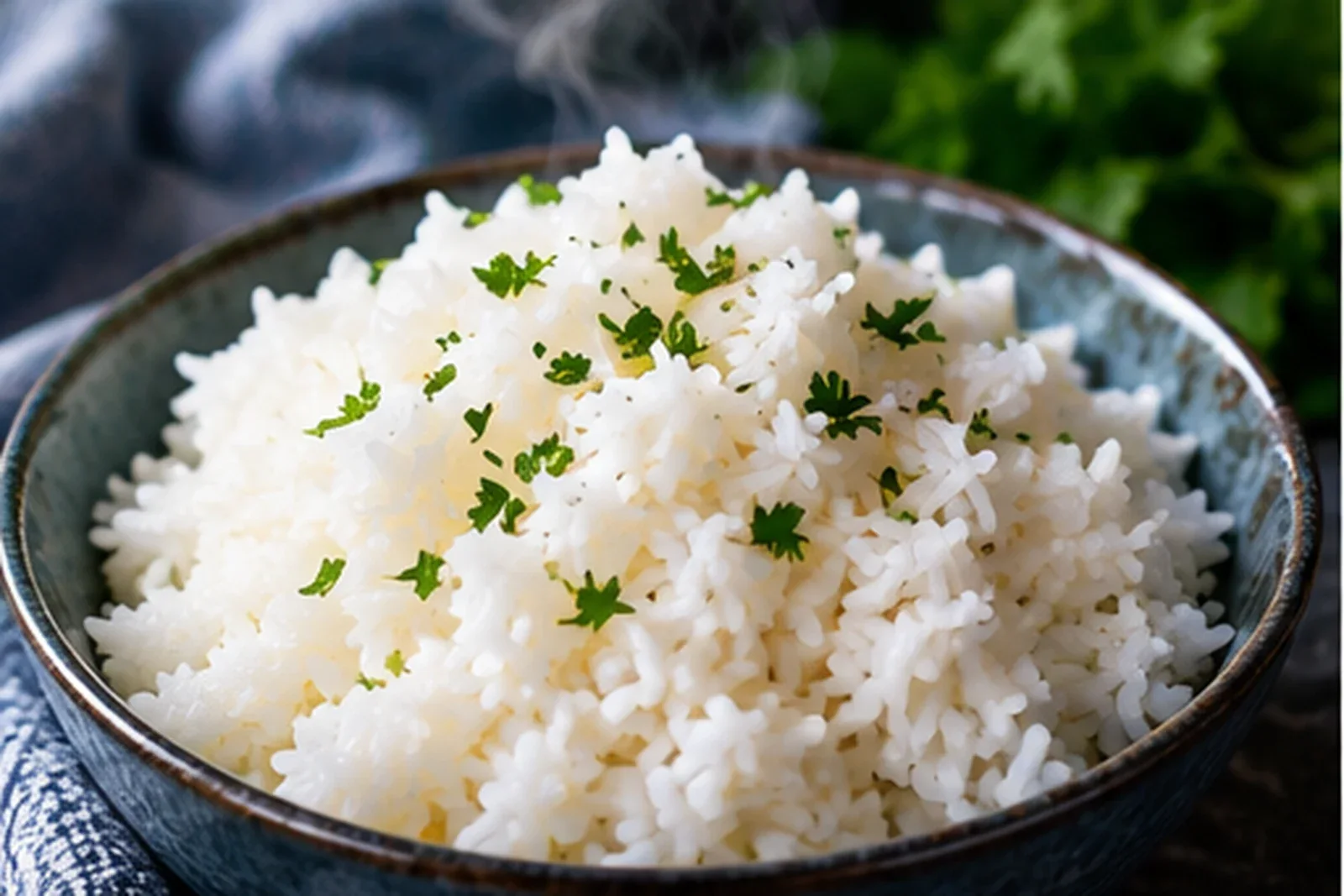
The rice should be tender all the way through with distinct, fluffy grains. The bottom of the pot should not hold a puddle, and the rice should not form a wet paste or a dense sticky mass.
Ingredients
What you need
Rice
- 1 1/2 cups long-grain white rice — Use a standard measuring cup and keep the same volume measure for the water.
- 3 cups water — Food Network's classic stovetop guide uses 2 parts water to 1 part long-grain white rice by volume.
Seasoning
- 1 tsp kosher salt — Adjust to taste and salt crystal size.
Optional
- 1 tbsp unsalted butter — Optional for flavor; it is not required for fluffy texture.
Method
Cook by the cues, not just the clock
Rinse
Put the rice in a fine-mesh strainer and rinse under cool running water, gently agitating the grains, until the draining water is much clearer. Let excess water drain away.
Bring to a boil
Bring the water and salt to a full boil in a medium saucepan. Add the drained rice and butter, if using, and stir once only to distribute the grains.
Cover and simmer
As soon as the pot returns to a simmer, reduce the heat to low and cover with a tight-fitting lid. Cook without lifting the lid for about 18 minutes, until the water is absorbed.
Rest
Turn off the heat and leave the pot covered for 10 minutes. Do not stir during the rest.
Fluff
Open the lid and fluff gently with a fork, lifting and separating rather than pressing the rice. Serve promptly.
Critical checkpoints
Stop here and check
Before cooking: was the loose surface starch rinsed away?
The final rinse water is much clearer than the first rinse rather than opaque white.Continue rinsing and draining before the rice goes into the measured cooking water.
During cooking: are you stirring or lifting the lid?
The rice is at a gentle covered simmer and has been left undisturbed.Stop stirring and keep the lid on until the cook time is complete.
After resting: separate grains, sticky clumps or wet paste?
The grains should separate when fluffed. A wet, swollen mass points to excess water or overcooking; unusually adhesive grains can have different causes.Use the CookClue rice diagnoses to distinguish mushy rice from sticky rice before changing the next batch.
If yours looks different
Route the failure before changing the recipe
Why Is My Rice Mushy?
Why Is My Rice Sticky Instead of Fluffy?
After cooking
Storage, reheating & substitutions
Storage
Cool leftovers promptly and refrigerate in a covered shallow container. Reheat until steaming hot and avoid leaving cooked rice sitting warm at room temperature for long periods.
Reheating
Add a small splash of water, cover and reheat gently until steaming, then fluff again.
Substitutions
This exact water ratio is for long-grain white rice. For jasmine, basmati, short-grain, brown rice or a rice cooker, follow the variety or appliance instructions rather than forcing this ratio.
Evidence
Sources & methodology
Technical claims and method decisions are tied to sources. Recipe-specific advice is not presented as a universal food-science law.
- How to Cook Rice: A Step-by-Step GuideFood Network Kitchen
Food Network's July 2026 guide specifies rinsing long-grain white rice, a 2:1 water-to-rice volume ratio for the classic stovetop method, a covered low simmer for about 18 minutes, no stirring during cooking, then a 10-minute covered rest and fork fluffing.
publisherPassage verified