Before you start
What this method is trying to achieve
Pesto does not need a simmer. Blend the basil sauce separately, reserve pasta water, then toss pesto with the hot drained pasta away from direct burner heat. A little pasta water helps the pesto spread without becoming oily or clumpy.
Success looks like
Know the target before you cook
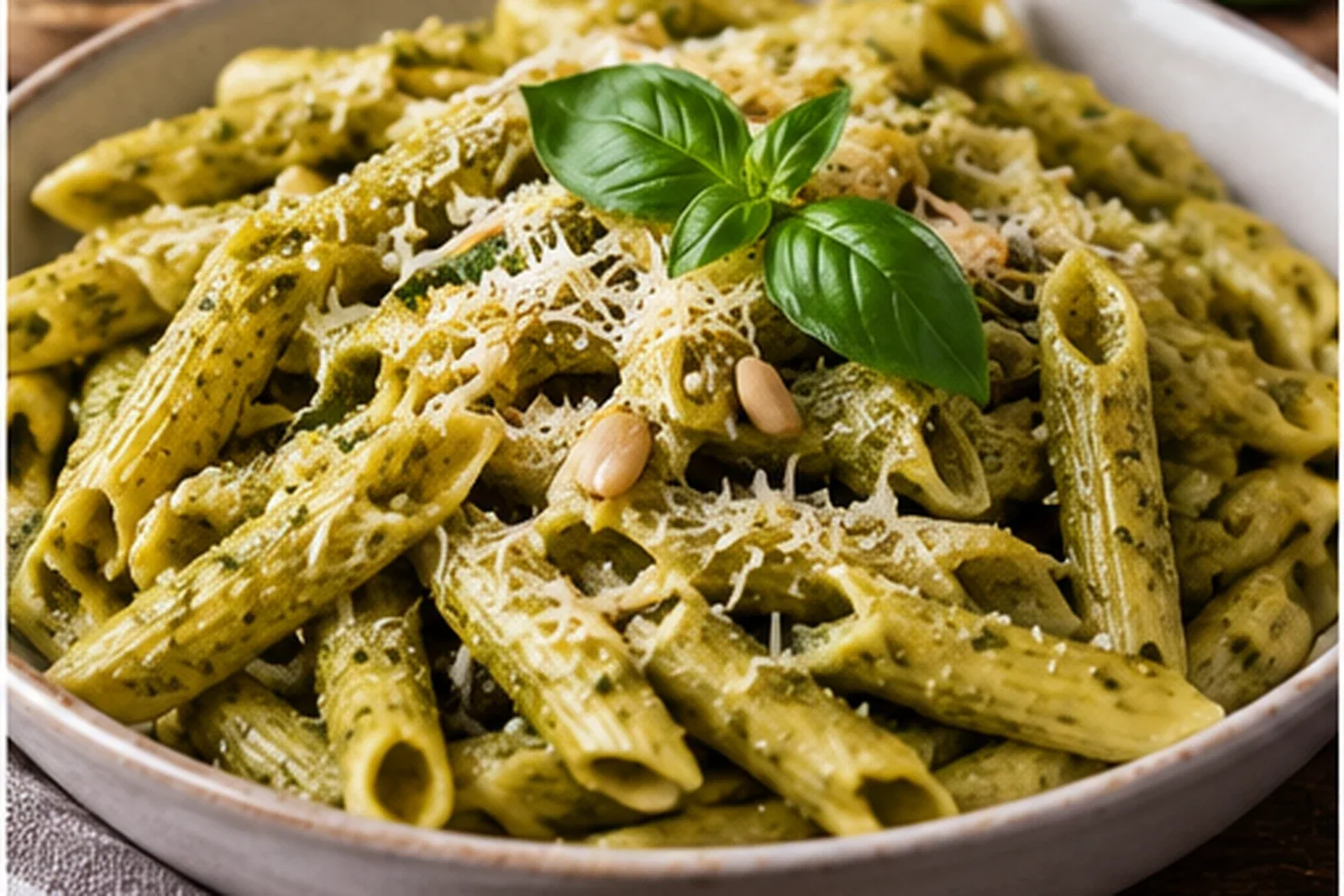
The pasta should be evenly green and glossy with basil aroma, no oily pool and no dense paste stuck in patches.
Ingredients
What you need
Pesto
- 80 g fresh basil leaves — About 4 packed cups.
- 2 cloves garlic
- 60 g pine nuts, lightly toasted — About 1/2 cup.
- 240 ml extra-virgin olive oil — About 1 cup; add gradually.
- 90 g Parmesan, finely grated — About 1 cup.
Pasta
- 450 g penne — About 1 lb.
Seasoning
- kosher salt — To taste.
Method
Cook by the cues, not just the clock
Make pesto
Pulse basil, garlic, salt and pine nuts until finely chopped. Stream in olive oil while processing just until a cohesive sauce forms.
Add cheese
Pulse or stir in the Parmesan only until incorporated. Set the pesto aside away from direct heat.
Cook pasta
Boil penne in salted water until al dente. Reserve about 240 ml / 1 cup pasta water, then drain without rinsing.
Toss off heat
Put the hot pasta in a large bowl, add pesto and toss away from direct burner heat.
Loosen
Add reserved pasta water a tablespoon at a time until the pesto spreads into a thin glossy coating. Finish with extra Parmesan if desired.
Critical checkpoints
Stop here and check
Pasta unrinsed and still hot?
The noodles retain surface starch and enough heat to loosen the pesto.Do not rinse before tossing.
Pesto added off direct heat?
The sauce is warmed by the pasta rather than cooked in a pan.Remove from burner before adding pesto.
Pesto oily or patchy instead of coating?
Oil separates or pesto stays in dense clumps while pasta remains bare.Use CookClue's pasta-sauce-wont-cling diagnosis to check rinsing, starch and finishing.
If yours looks different
Route the failure before changing the recipe
After cooking
Storage, reheating & substitutions
Storage
Refrigerate promptly. A thin film of olive oil over extra pesto helps reduce surface oxidation.
Reheating
Pesto pasta is best warmed gently; high heat dulls basil aroma and can make the sauce oily.
Substitutions
Walnuts can replace pine nuts with a different flavor. Fusilli or trofie can replace penne.
Evidence
Sources & methodology
Technical claims and method decisions are tied to sources. Recipe-specific advice is not presented as a universal food-science law.
- PestoFood Network
Food Network's pesto combines basil, garlic, salt and pine nuts, streams in olive oil and adds Parmigiano-Reggiano at the end.
publisherPassage verified - How to Make Pesto Step-By-StepFood Network Kitchen
Food Network recommends tossing pesto directly with freshly cooked pasta rather than cooking the pesto, allowing residual pasta heat to release its aromas.
publisherPassage verified