Before you start
What this method is trying to achieve
A useful Bolognese-style sauce needs both time and final integration. Build the aromatic base, brown the meats, simmer until the sauce is thick and cohesive, then toss a portion of the ragù with hot pasta before plating.
Success looks like
Know the target before you cook
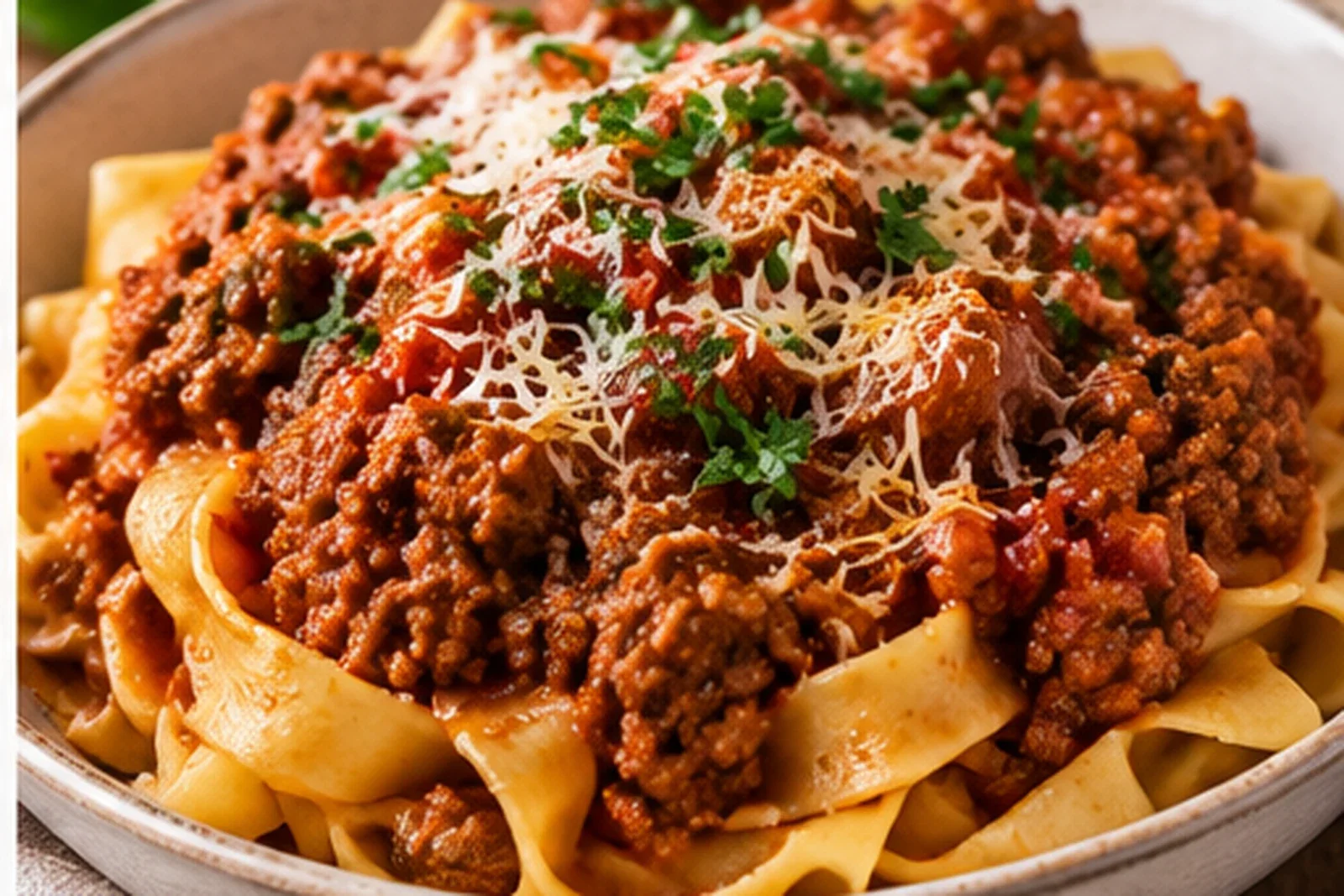
The ragù should be thick enough to hold to the pasta, with tender meat, concentrated tomato flavor and no watery layer on the plate.
Ingredients
What you need
Base
- 2 tbsp olive oil
- 1 medium onion, finely chopped
- 1 medium carrot, finely chopped
- 1 stalk celery, finely chopped
Meat
- 225 g ground beef — About 1/2 lb.
- 225 g ground pork — About 1/2 lb.
Sauce
- 120 ml dry wine — About 1/2 cup.
- 800 g crushed tomatoes — About one 28-oz can.
- 240 ml beef or chicken broth — About 1 cup.
Pasta
- 450 g spaghetti or tagliatelle — About 1 lb.
Finish
- 50 g Parmesan, finely grated — Plus more to serve.
Method
Cook by the cues, not just the clock
Cook aromatics
Heat the oil and cook onion, carrot and celery over medium heat until softened and sweet-smelling, about 8 minutes.
Brown meat
Add beef and pork, break them into small crumbles and cook until no raw color remains and some browned bits develop.
Deglaze and simmer
Add the wine and cook until mostly reduced. Stir in tomatoes and broth, lower the heat and simmer gently for about 60 to 75 minutes until thick and cohesive.
Cook pasta
Boil the pasta in salted water until al dente. Reserve about 240 ml / 1 cup pasta water before draining.
Toss before serving
Toss the hot pasta with enough ragù to coat it, adding a small amount of pasta water if needed. Fold in Parmesan and serve with extra sauce only after the noodles are already coated.
Critical checkpoints
Stop here and check
Ragù thick before pasta?
A spoon drawn through the sauce leaves a path briefly before it closes.Keep simmering if the sauce still runs like broth.
Pasta tossed with sauce before plating?
The noodles enter the sauce while hot and starchy.Do not rely only on spooning sauce over plain drained pasta.
Meat sauce sliding off?
The ragù separates from the spaghetti or pools underneath.Use CookClue's pasta-sauce-wont-cling diagnosis to check sauce thickness, starch and finishing.
If yours looks different
Route the failure before changing the recipe
After cooking
Storage, reheating & substitutions
Storage
The ragù can be refrigerated or frozen separately from pasta.
Reheating
Reheat sauce gently, then toss with freshly cooked or separately reheated pasta.
Substitutions
All beef can be used if pork is unavailable, though the richness changes.
Evidence
Sources & methodology
Technical claims and method decisions are tied to sources. Recipe-specific advice is not presented as a universal food-science law.
- Bolognese SauceFood Network
Food Network's Bolognese builds a soffritto-style aromatic base, browns beef and pork, deglazes with wine and simmers the sauce to develop body.
publisherPassage verified - Spaghetti BologneseFood Network
Food Network's spaghetti Bolognese reduces the sauce until thick and flavorful, then tosses the cooked pasta with the sauce and cheese rather than spooning it only on top.
publisherPassage verified