Before you start
What this method is trying to achieve
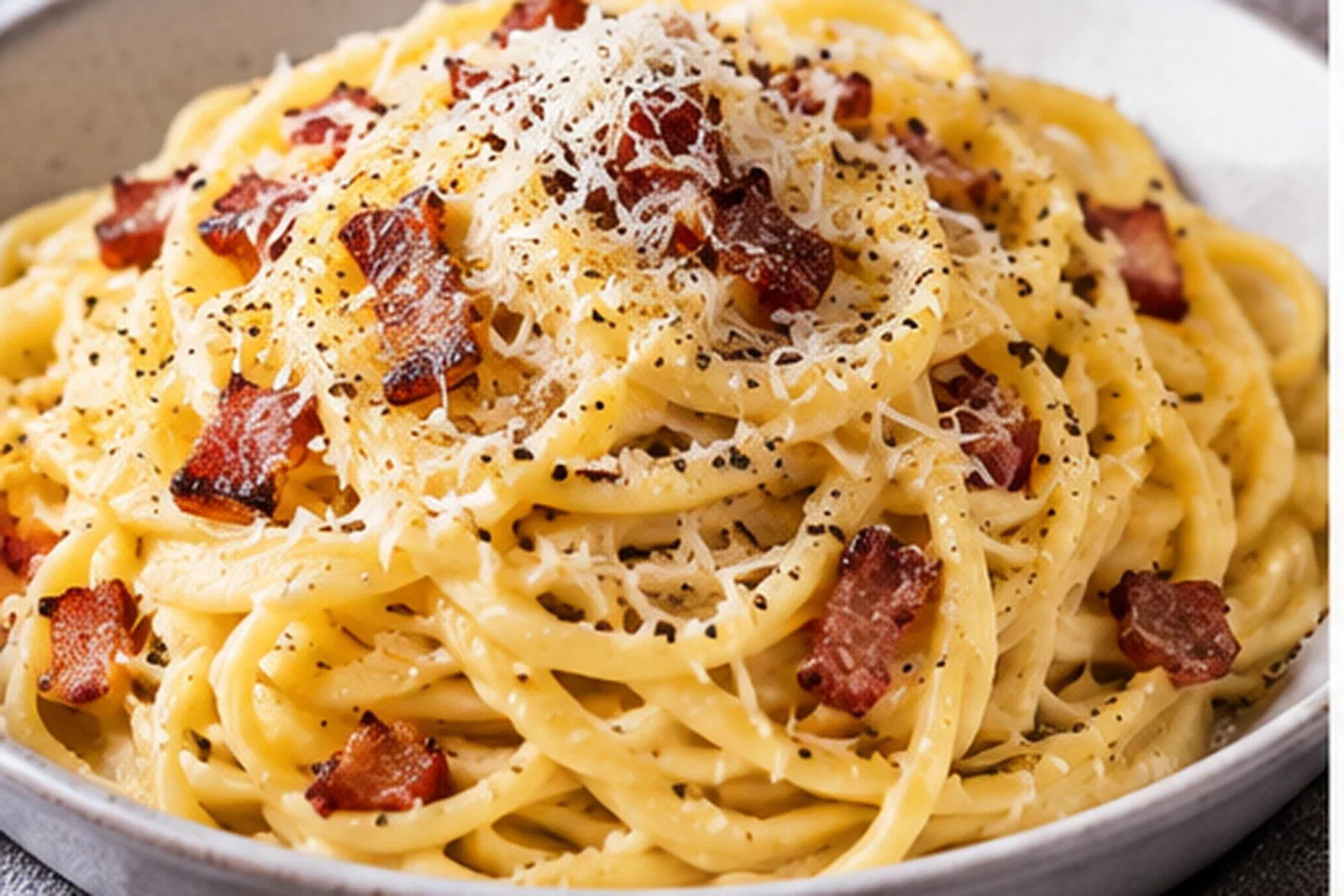
Carbonara is a heat-control recipe. Render the pork, cook the pasta al dente, mix eggs and cheese separately, then combine quickly with hot pasta while controlling direct heat. The goal is a glossy coating, not visible cooked egg curds.
Success looks like
Know the target before you cook
The sauce should cling in a thin glossy layer to the spaghetti, with no scrambled egg pieces and no greasy puddle.
Ingredients
What you need
Pasta
- 340 g spaghetti — About 12 oz.
Pork
- 170 g guanciale, pancetta or thick-cut bacon, cut into small pieces
Sauce
- 3 large eggs
- 75 g Parmesan, finely grated
- 50 g Pecorino Romano, finely grated
Seasoning
- 1 tsp freshly ground black pepper — Plus more to finish.
- kosher salt — For pasta water; account for salty cheese and pork.
Method
Cook by the cues, not just the clock
Render pork
Cook the pork in a wide skillet over medium heat until the fat renders and the pieces are crisp at the edges. Remove the skillet from direct heat once ready.
Mix egg base
Whisk the eggs, Parmesan, Pecorino and black pepper in a bowl until thick and uniform.
Cook pasta
Boil the spaghetti in salted water until al dente. Reserve at least 240 ml / 1 cup of starchy pasta water before draining.
Temper and toss
Toss the hot spaghetti with the rendered pork and fat. Whisk a few tablespoons of hot pasta water into the egg mixture, then add the egg mixture to the pasta off direct heat and toss continuously.
Adjust texture
Add reserved pasta water a tablespoon at a time while tossing until the sauce is glossy and coats each strand. Serve immediately with extra cheese and pepper.
Critical checkpoints
Stop here and check
Before eggs: pan off direct heat?
The pork and pasta are hot, but the skillet is no longer over active burner heat.Move off heat before adding the egg mixture.
During tossing: glossy, not curdled?
The egg-cheese mixture forms a smooth coating rather than visible curds.Add a little pasta water and keep tossing if the sauce is too tight.
Carbonara scrambled or clumpy?
Egg curds, cheese clumps or a broken greasy sauce appear.Use CookClue's carbonara-scrambled-or-clumpy diagnosis to separate heat, cheese and water causes.
If yours looks different
Route the failure before changing the recipe
After cooking
Storage, reheating & substitutions
Storage
Best served immediately. Refrigerate leftovers promptly, but expect the egg-and-cheese emulsion to tighten when chilled.
Reheating
Reheat very gently with a spoonful of water; high heat can further set the egg proteins.
Substitutions
Pancetta or thick-cut bacon can replace guanciale, with a different smoke and salt profile.
Evidence
Sources & methodology
Technical claims and method decisions are tied to sources. Recipe-specific advice is not presented as a universal food-science law.
- Spaghetti CarbonaraFood Network
Food Network emphasizes timing and minimal heat, noting that combining the egg mixture off heat helps avoid scrambled-egg pasta.
publisherPassage verified - Spaghetti CarbonaraFood Network Kitchen
Food Network Kitchen combines eggs and cheese separately, tempers them with reserved pasta water and tosses quickly with hot pasta so the sauce turns creamy rather than scrambled.
publisherPassage verified