Before you start
What this method is trying to achieve
Most holiday hams are already cooked, so the job is controlled reheating, not prolonged roasting. Keep water in the pan, cover during most of the warm-up and save the sugary glaze for the final stage.
Success looks like
Know the target before you cook
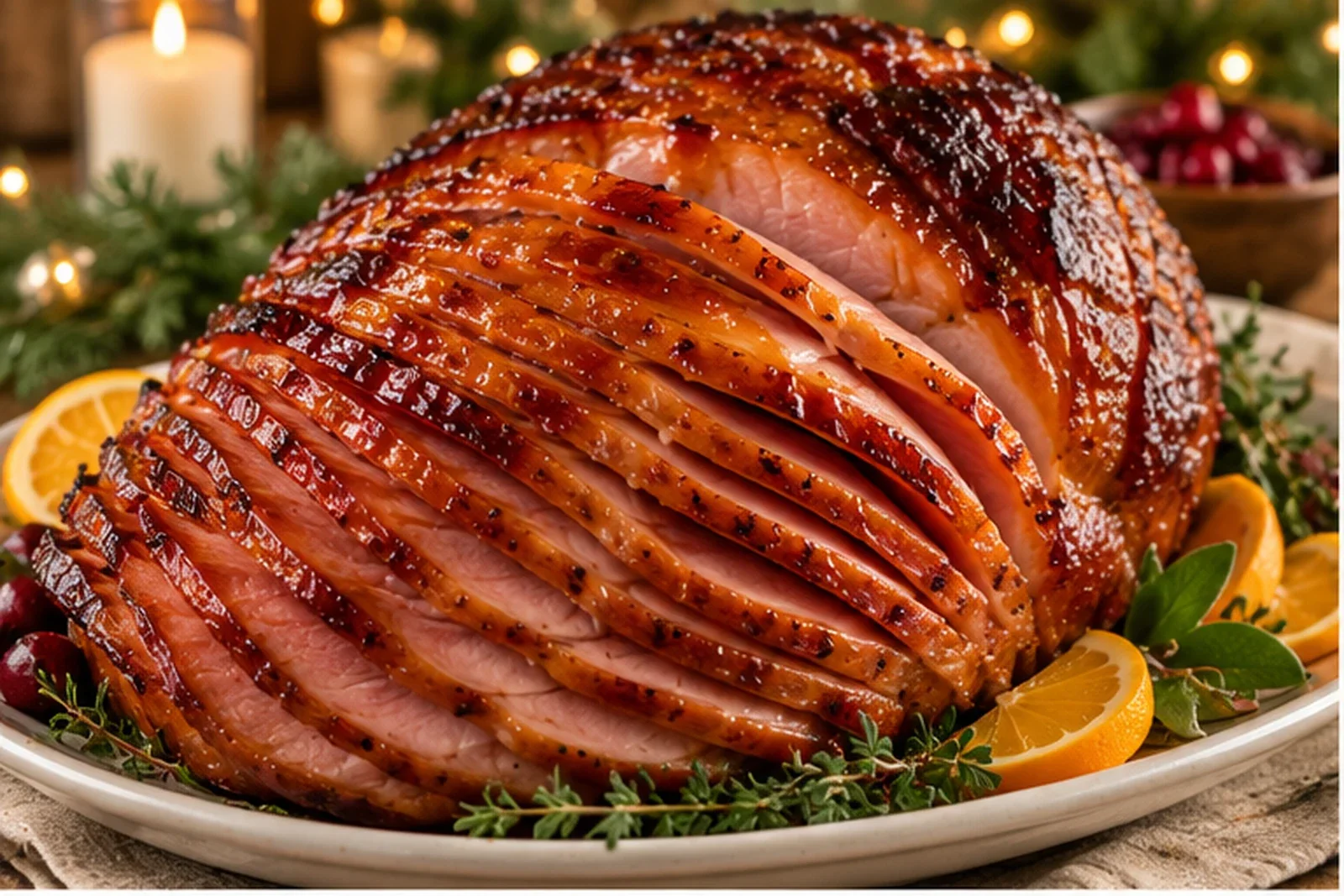
The ham should be hot through the center, juicy in the slices and coated in a glossy caramelized glaze without dry spiral edges.
Ingredients
What you need
Ham
- 1 fully cooked bone-in or spiral ham, about 4.5 to 5.5 kg / 10 to 12 lb
Pan
- 240 ml water
Glaze
- 170 g honey
- 80 g brown sugar
- 60 g Dijon mustard
- 60 ml orange juice
- 1 tbsp apple cider vinegar
- 0.5 tsp ground cinnamon
- 0.25 tsp ground cloves
Method
Cook by the cues, not just the clock
Prepare ham
Heat the oven to 325°F / 163°C. Place the ham cut-side down on a rack, add water to the pan and cover loosely with foil.
Reheat gently
Warm the ham until the center approaches the label-appropriate reheating endpoint, checking with a thermometer rather than relying only on time.
Make glaze
Simmer honey, brown sugar, Dijon, orange juice, vinegar and spices until smooth and slightly syrupy.
Glaze late
Uncover, brush with glaze and raise heat briefly to 425°F / 218°C, brushing again as the surface caramelizes.
Rest and carve
Rest 15 minutes, then carve and spoon over a little warm glaze or pan juice.
Critical checkpoints
Stop here and check
Pan still moist?
A shallow layer of water remains in the roasting pan.Add hot water if it evaporates early.
Center hot enough, not overheated?
The ham reaches the label-appropriate safe reheating endpoint without excessive extra time.Stop active heating once the target is reached.
Ham turning dry?
Spiral edges are firm or the whole ham loses juiciness.Use glazed-ham-dry to check final temperature, slice exposure, pan water, glaze timing and holding.
If yours looks different
Route the failure before changing the recipe
After cooking
Storage, reheating & substitutions
Storage
Refrigerate leftovers promptly in a covered container.
Reheating
Reheat slices gently with a little pan juice or glaze to limit further drying.
Substitutions
Maple syrup can replace part of the honey; Dijon can replace whole-grain mustard.
Evidence
Sources & methodology
Technical claims and method decisions are tied to sources. Recipe-specific advice is not presented as a universal food-science law.
- Classic Glazed HamFood Network Kitchen
Food Network Kitchen reheats the ham with water in the pan, uses a thermometer and applies glaze late at higher heat.
publisherPassage verified - Safe Minimum Internal Temperature ChartUSDA Food Safety and Inspection Service
USDA FSIS distinguishes fully cooked ham reheating guidance from fresh or uncooked ham minimum temperatures.
governmentPrimary source