Before you start
What this method is trying to achieve
Prime rib is a temperature-control recipe, not a minutes-per-pound recipe. Place the probe in the thickest central meat, cook with moderate heat and verify the coldest center before serving.
Success looks like
Know the target before you cook
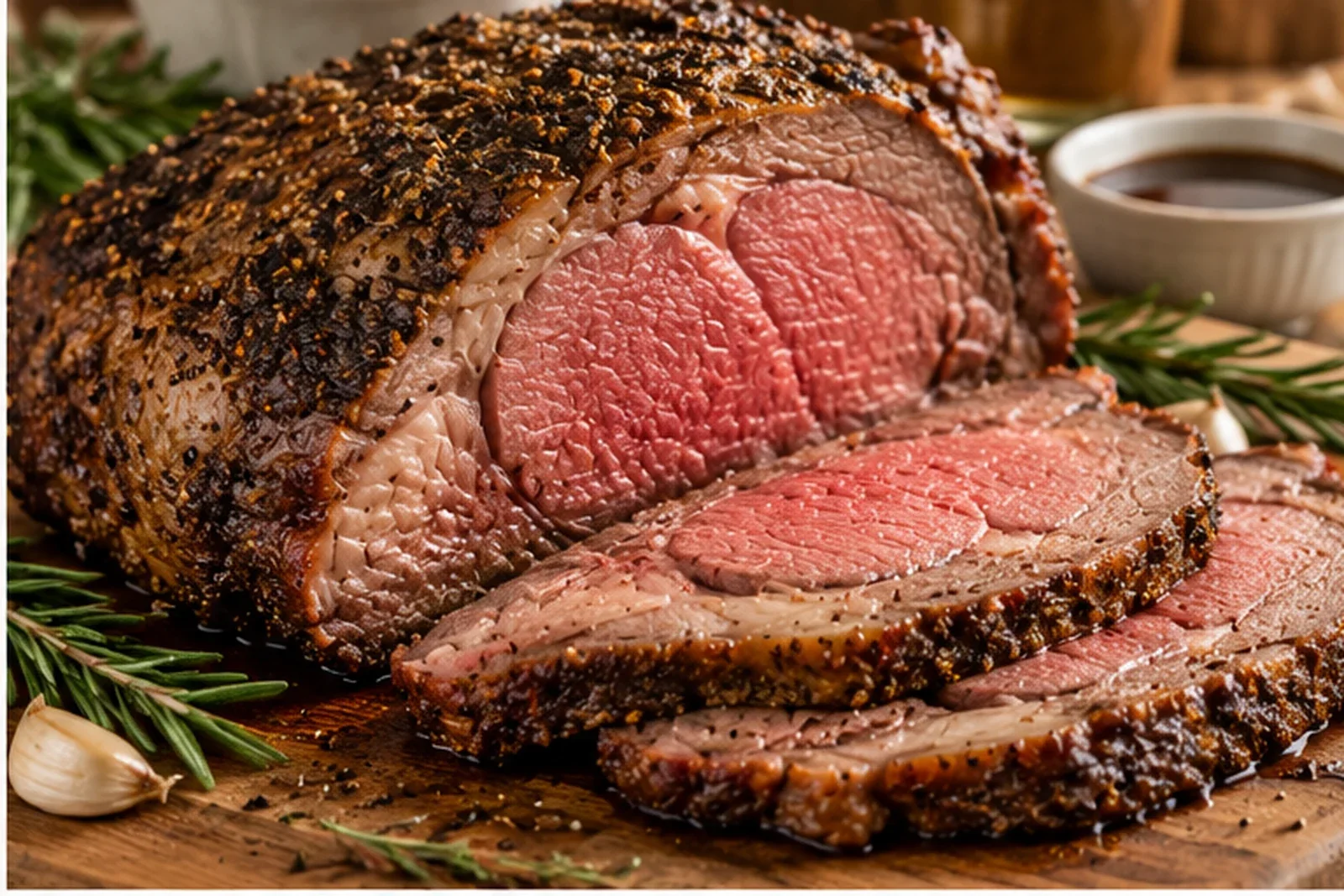
The roast should have a deeply browned crust, a juicy center and only a narrow overcooked gray band beneath the exterior.
Ingredients
What you need
Roast
- 1 bone-in standing rib roast, about 2.5 to 3 kg / 5.5 to 6.5 lb
Seasoning
- 2 tbsp kosher salt
- 2 tsp freshly ground black pepper
- 2 tbsp fresh rosemary, finely chopped
- 1 tbsp fresh thyme, finely chopped
- 4 cloves garlic, finely grated
- 2 tbsp olive oil
Method
Cook by the cues, not just the clock
Season
Pat the roast dry and coat with salt, pepper, rosemary, thyme, garlic and olive oil.
Probe correctly
Set the roast bone-side down on a rack and place a probe in the thickest central meat, away from bone and large fat seams.
Roast
Roast at 325°F / 163°C until the coldest verified center reaches at least 145°F / 62.8°C for USDA whole-roast safety.
Rest
Transfer to a board and rest at least 3 minutes; for a roast this large, 20 to 30 minutes makes carving easier.
Carve
Remove the rib bones in one piece if desired, then slice across the grain.
Critical checkpoints
Stop here and check
Probe truly centered?
The probe tip sits in the thickest central meat away from bone.Reposition if the reading seems inconsistent.
Cross-section balanced?
Center slices are juicier and less done than the natural end pieces, without a very thick gray ring.Use a lower heat profile next time if the gray band is broad.
Prime rib gray?
The center is gray or a thick gray band surrounds the rosy interior.Use prime-rib-gray-instead-of-pink to separate center overcooking, gray band, end-slice effect, carryover and probe placement.
If yours looks different
Route the failure before changing the recipe
After cooking
Storage, reheating & substitutions
Storage
Refrigerate leftovers promptly.
Reheating
Warm slices gently at low heat with jus to limit further doneness.
Substitutions
Use a boneless rib roast with the same thermometer-first approach; cooking time will differ.
Evidence
Sources & methodology
Technical claims and method decisions are tied to sources. Recipe-specific advice is not presented as a universal food-science law.
- Standing Rib RoastFood Network Kitchen
Food Network Kitchen uses a probe in the thickest part, rests the roast and notes that end slices are more cooked than the center.
publisherPassage verified - Safe Minimum Internal Temperature ChartUSDA Food Safety and Inspection Service
USDA FSIS lists 145°F / 62.8°C with at least a 3-minute rest for whole beef roasts.
governmentPrimary source