Before you start
What this method is trying to achieve
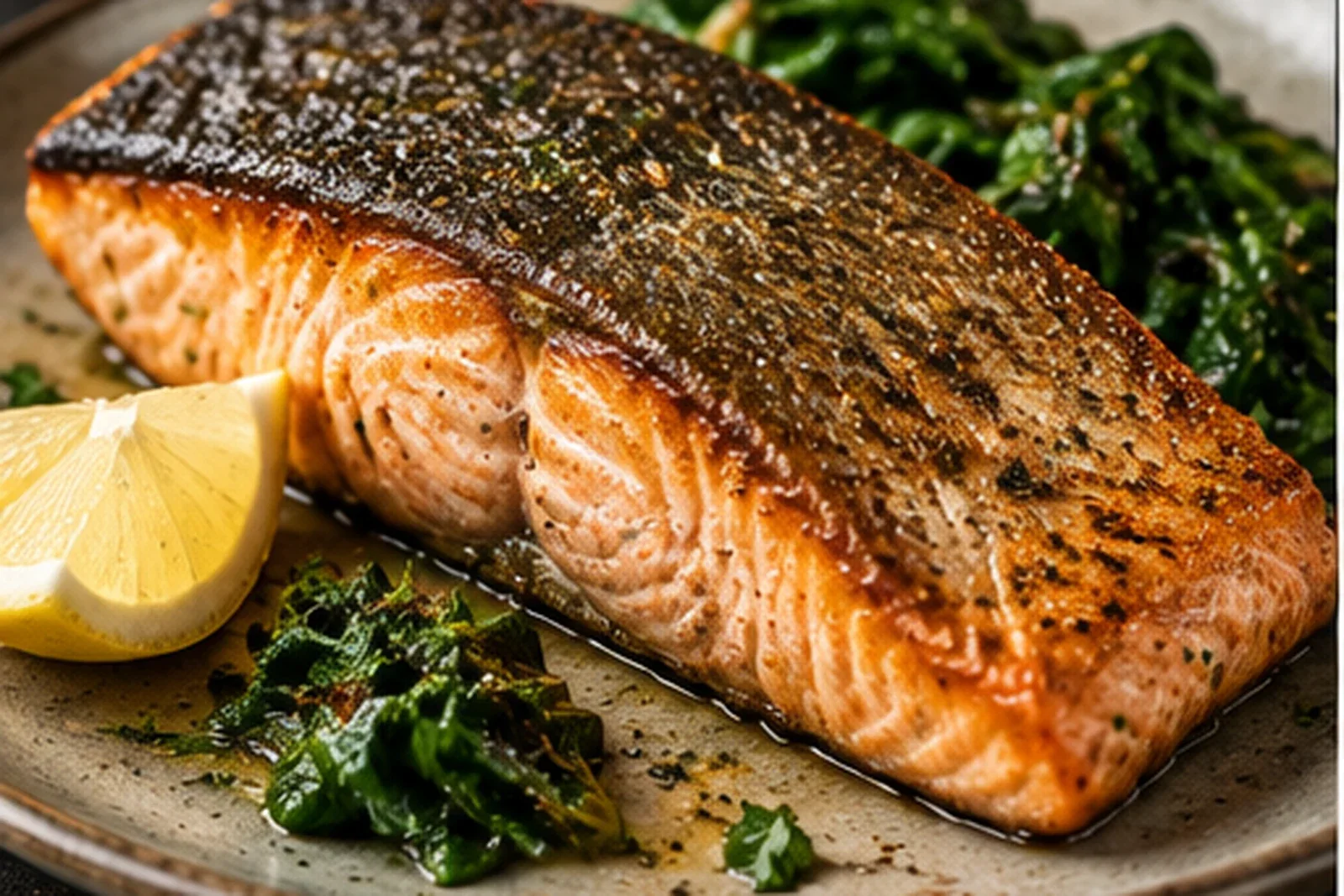
Crisp salmon skin is a surface-management problem. Dry the fish thoroughly, preheat the skillet, use enough oil for even contact and resist moving the salmon until the skin has browned and releases more easily.
Success looks like
Know the target before you cook
The skin should be evenly browned and crisp while the flesh remains moist and tender.
Ingredients
What you need
Salmon
- 4 skin-on center-cut salmon fillets, about 140 to 170 g each
- 1 tbsp neutral high-heat oil
Seasoning
- 1 tsp kosher salt
- 0.5 tsp black pepper
Finish
- 1 tbsp unsalted butter
- 1 clove garlic, lightly crushed
- 1 lemon, cut into wedges
- 2 tbsp fresh dill or parsley, chopped
Method
Cook by the cues, not just the clock
Dry and season
Pat the salmon very dry, especially the skin. Season the flesh and skin lightly with salt and pepper.
Preheat
Heat a heavy skillet over medium-high heat and add the oil. Wait until the oil is hot and shimmering.
Sear skin-side
Lay the salmon skin-side down and press gently with a fish spatula for the first 10 to 20 seconds to keep it flat. Then leave it undisturbed.
Flip and finish
When the skin is deeply browned and releases more easily, flip the salmon. Add butter and garlic and cook briefly on the flesh side until just done.
Serve skin-up
Transfer to plates with the skin facing up, spoon over a little butter and finish with lemon and herbs.
Critical checkpoints
Stop here and check
Before pan: skin completely dry?
The skin feels dry to the touch with no visible surface water.Blot again before cooking.
Before flip: skin releases?
A thin fish spatula slides under more easily once the crust has set.Wait rather than forcing the fillet free.
Skin soft or patchy?
The skin is pale, leathery, patchy or stuck.Use salmon-skin-not-crispy to check moisture, heat, curling, movement and steam.
If yours looks different
Route the failure before changing the recipe
Why Isn’t My Salmon Skin Crispy?
Why Is My Salmon Falling Apart?
After cooking
Storage, reheating & substitutions
Storage
Cool promptly and refrigerate covered.
Reheating
Reheat gently. Crisp skin will soften in storage, so avoid prolonged reheating that dries the fish.
Substitutions
Use avocado or another neutral high-heat oil. Dill, parsley or chives all work as a finish.
Evidence
Sources & methodology
Technical claims and method decisions are tied to sources. Recipe-specific advice is not presented as a universal food-science law.
- Pan-Seared Salmon with Kale and Apple SaladFood Network Kitchen
Food Network Kitchen uses center-cut salmon fillets and a short pan-seared cooking method.
publisherPassage verified - Why Your Salmon Always Sticks to the Pan—and the Easy, Foolproof FixSerious Eats
Serious Eats emphasizes fully dry skin, sufficient oil, a hot pan, brief pressure and waiting for natural release before moving salmon.
publisherPassage verified