Before you start
What this method is trying to achieve
The most important Pad Thai step is stopping the noodle soak early enough. The rice noodles should enter the wok pliable but still firm, then finish cooking in the sauce over strong heat.
Success looks like
Know the target before you cook
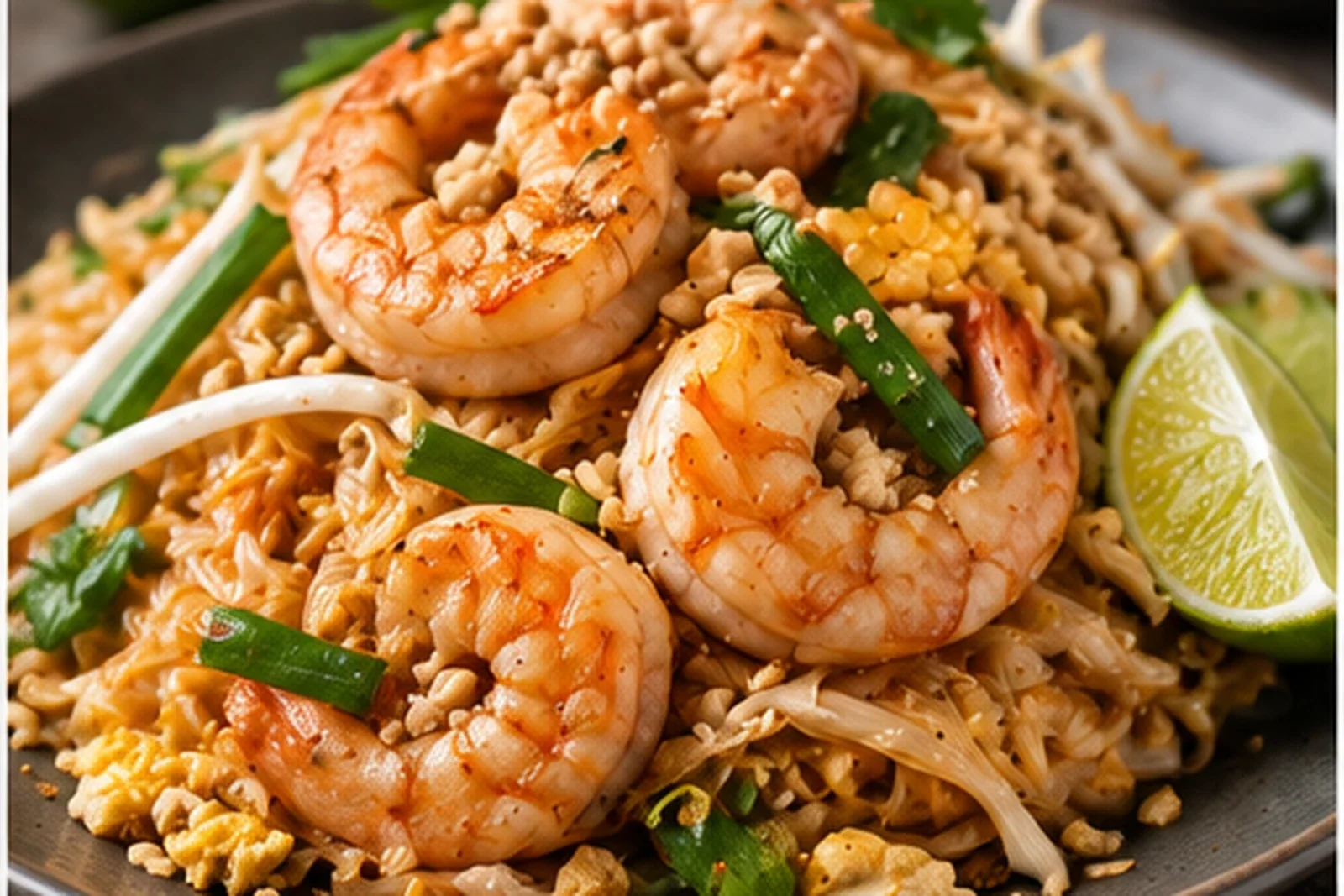
The noodles should be tender-chewy and separate, lightly glazed with sauce, with no gluey clumps or wet puddle in the wok.
Ingredients
What you need
Noodles
- 225 g Pad Thai rice noodles
Sauce
- 120 ml hot water
- 1.5 tbsp tamarind paste
- 5 tbsp fish sauce
- 5 tbsp palm sugar or brown sugar
- 0.5 tsp cayenne or minced fresh chile
Stir-fry
- 3 tbsp neutral oil
- 1 shallot, finely chopped
- 3 cloves garlic, minced
- 300 g raw shrimp, peeled and deveined
- 2 large eggs
Finish
- 150 g bean sprouts
- 3 scallions, sliced
- 30 g cilantro, chopped
- 50 g roasted peanuts, chopped
- 1 lime, cut into wedges
Method
Cook by the cues, not just the clock
Soak noodles
Cover the rice noodles with hot or warm water and soak only until pliable but still firm, then drain very thoroughly.
Mix sauce
Stir hot water, tamarind, fish sauce, sugar and chile until the sugar dissolves.
Start stir-fry
Heat the wok strongly, add oil, shallot and garlic, then cook the shrimp until nearly done. Push aside and scramble the eggs.
Finish noodles
Add drained noodles and sauce, tossing quickly until the noodles become tender and the sauce thickens around them.
Finish and serve
Fold in bean sprouts and scallions briefly, then plate with cilantro, peanuts and lime.
Critical checkpoints
Stop here and check
After soak: pliable but firm?
The noodle bends but still feels underdone in the center.Drain now rather than waiting for full softness.
Wok: sauce reducing rather than pooling?
The sauce coats the noodles and leaves little free liquid.Increase heat or reduce the sauce load if a puddle persists.
Pad Thai sticky?
Noodles glue together into dense clumps.Use pad-thai-noodles-sticky to check soaking, draining, wok heat, sauce amount and tossing.
If yours looks different
Route the failure before changing the recipe
Why Are My Pad Thai Noodles Clumpy or Sticky?
Why Are My Rice Noodles Breaking Apart?
After cooking
Storage, reheating & substitutions
Storage
Best served fresh. Refrigerate leftovers promptly.
Reheating
Reheat quickly in a hot skillet with only a small splash of water if needed.
Substitutions
Use chicken or tofu instead of shrimp. Soy sauce can replace fish sauce for a vegetarian-style variation, though flavor will differ.
Evidence
Sources & methodology
Technical claims and method decisions are tied to sources. Recipe-specific advice is not presented as a universal food-science law.
- Pad ThaiFood Network
Food Network soaks noodles until soft but not fully cooked, then finishes them quickly in the pan with sauce.
publisherPassage verified - Pad ThaiFood Network / Kelsey Nixon
Food Network softens the rice noodles before stir-frying and uses a tamarind, fish-sauce and palm-sugar style sauce.
publisherPassage verified