Before you start
What this method is trying to achieve
Classic beef stew is a browning, tenderness and reduction recipe. This version separates those jobs: brown the beef without crowding, braise until the chuck yields, then finish the vegetables and sauce uncovered so excess water can escape.
Success looks like
Know the target before you cook
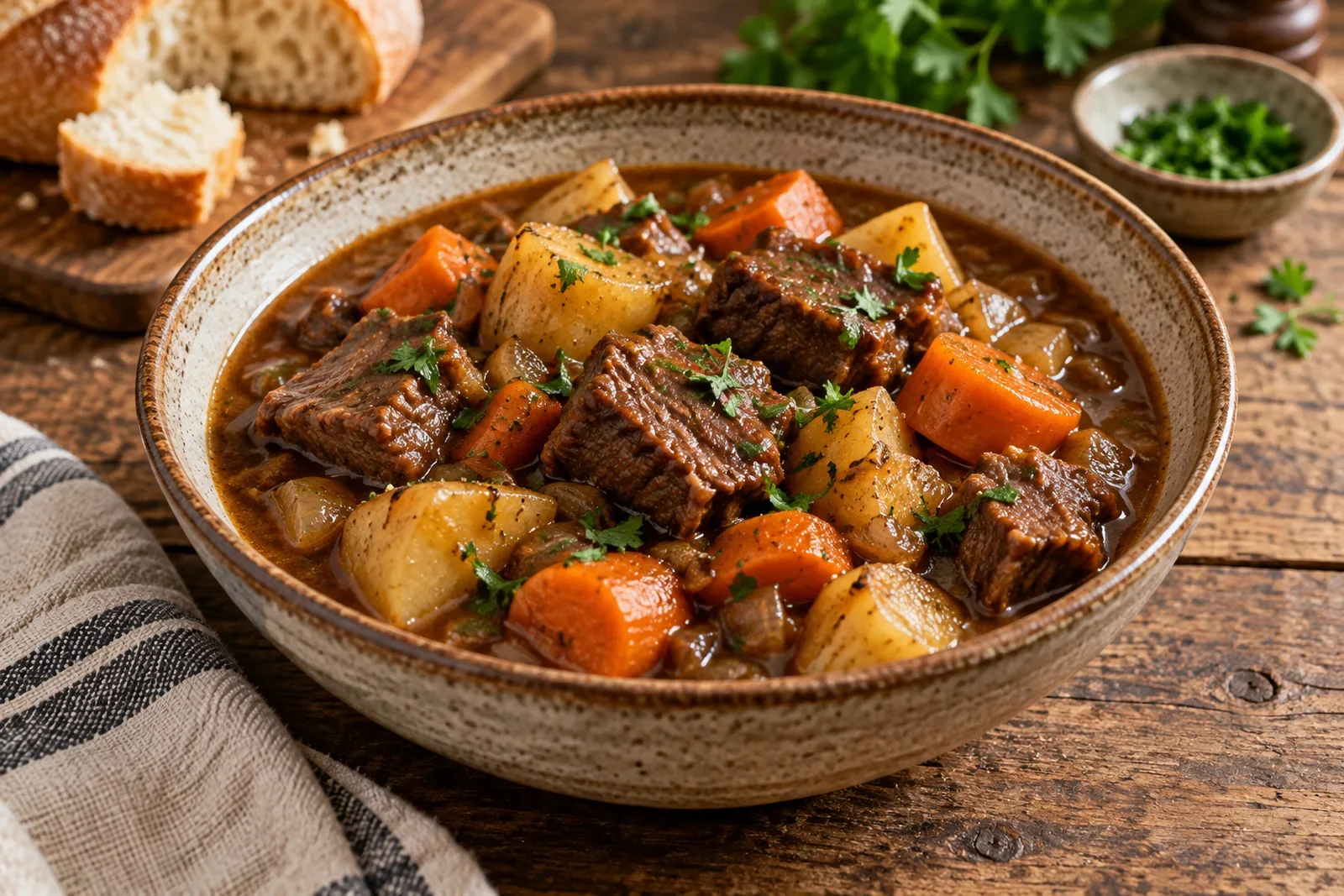
The beef should separate easily with a fork, the vegetables should be tender but intact, and the gravy should cling to the meat and spoon without a thin watery puddle.
Ingredients
What you need
Beef
- 900 g boneless beef chuck, cut into 4 cm / 1 1/2-inch pieces — About 2 lb.
Seasoning
- 1 1/2 tsp kosher salt
- 1 tsp black pepper
Browning
- 2 tbsp neutral oil
Thickening
- 30 g all-purpose flour — About 1/4 cup.
Aromatics
- 1 yellow onion, diced
- 3 cloves garlic, minced
Base
- 2 tbsp tomato paste
- 180 ml dry red wine — Optional; replace with extra broth if preferred.
- 720 ml low-sodium beef broth — 3 cups.
Herbs
- 1 tsp dried thyme
- 2 bay leaves
Vegetables
- 450 g Yukon Gold potatoes, cut into chunks — About 1 lb.
- 3 carrots, cut into thick pieces
- 2 celery stalks, cut into thick pieces
Finish
- 2 tsp red wine vinegar
- 2 tbsp chopped parsley
Method
Cook by the cues, not just the clock
Brown beef
Pat the beef dry, season with salt and pepper, and brown it in two or three batches in hot oil. Transfer each browned batch to a plate.
Build the base
Lower the heat, cook the onion until softened, then add garlic and tomato paste. Stir in the flour and cook briefly before adding the wine and broth while scraping up browned bits.
Braise the beef
Return the beef and juices to the pot with thyme and bay. Bring to a gentle simmer, cover, and cook in a 325°F / 165°C oven until the beef is nearly fork-tender, about 75 to 90 minutes.
Finish vegetables uncovered
Add potatoes, carrots and celery. Return to a simmer and cook uncovered until the vegetables are tender and the beef is fully fork-tender, about 40 to 50 minutes.
Adjust the gravy
Remove bay leaves. Stir in vinegar and parsley. If the gravy is still loose, simmer a little longer; if it is too thick, loosen with a small splash of broth.
Critical checkpoints
Stop here and check
After browning: crust or gray steam?
Beef has browned surfaces and the pot has dark fond, not a pool of released water.Brown in smaller batches if the meat is steaming.
Before vegetables finish: is the beef yielding?
A fork begins to slide into the chuck with much less resistance.Keep braising if the beef is still dense and springy.
At serving: gravy coating or watery pool?
The gravy coats the spoon. Thin liquid collecting under the solids signals the watery-stew failure.Use CookClue beef-stew-too-thin-or-watery if the stew remains loose.
If yours looks different
Route the failure before changing the recipe
After cooking
Storage, reheating & substitutions
Storage
Cool promptly and refrigerate in a covered container for up to 4 days. The chilled stew may thicken as it rests.
Reheating
Reheat gently on the stovetop, adding a small splash of broth or water only if the gravy has become too tight.
Substitutions
Use boneless chuck for the intended braising texture. Small waxy or Yukon Gold potatoes hold their shape better than very floury potatoes.
Evidence
Sources & methodology
Technical claims and method decisions are tied to sources. Recipe-specific advice is not presented as a universal food-science law.
- The Best Beef StewFood Network Kitchen
Food Network Kitchen builds flavor by browning chuck in batches and cooks the stew low and slow until tender.
publisherPassage verified - 12 Hearty Stew Recipes for St. Patrick’s Day and BeyondSerious Eats
Serious Eats describes American beef stew using browned chuck and staged vegetables, with collagen and gelatin contributing body while the stew cooks.
publisherPassage verified